Originally published at: https://www.naturephotographers.network/articles/creative/fleeting-reflections-access-obsession-and-the-discipline-of-patience/
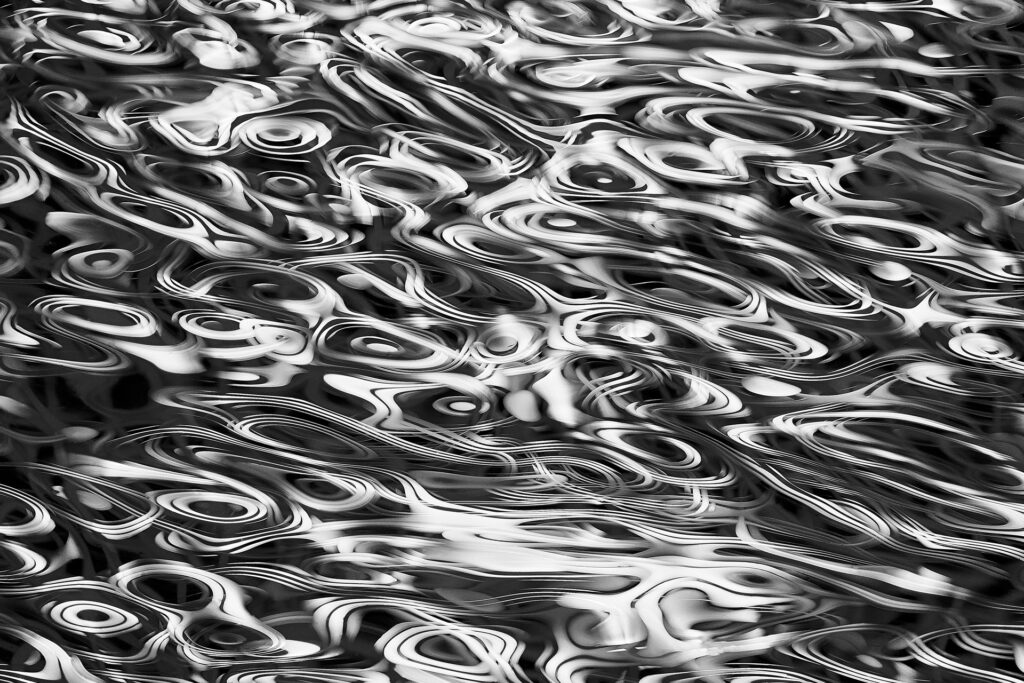
When someone sees one of my Fleeting Reflections images for the first time, they often assume it was created in Photoshop. I always enjoy telling them that it wasn’t. What they’re looking at is light bouncing off glass and steel, breaking on the surface of water, and being recorded in-camera – sometimes as a single frame, sometimes as carefully layered in-camera multiple exposures. No tricks. Just attention, repetition, and time.
That last word – time – is at the heart of this work. Over more than a decade, photographing in and around the docks of Canary Wharf in London, I’ve come to understand that meaningful creative work in nature and abstract photography rests on three pillars:
- Accessibility
- Repeatability
- Patience
People tend to focus on the technical side of photography: cameras, lenses, modes. For me, those are supporting characters. The real engine of the Fleeting Reflections series is the relationship between place, persistence, and discipline.
Accessibility: Be Somewhere You Can Actually Reach
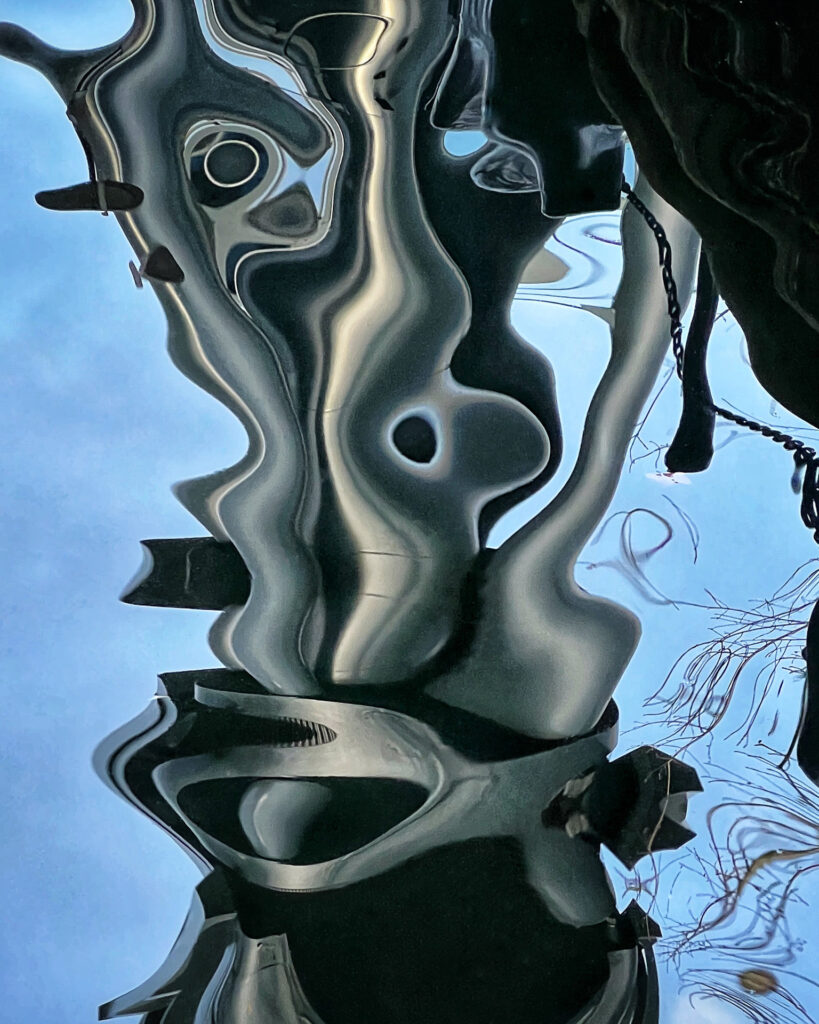
There is a quiet myth in nature photography that you have to travel to dramatic, remote locations to make worthwhile images. I don’t believe that anymore. My entire series has largely come from one square mile of water surrounded by office towers.
Canary Wharf is known as a steel-and-glass financial district. I see it as a set of light sources. Those towers throw colour and line onto the surface of the docks. Wind sculpts that reflected light into waves, ribbons, and fractures. My job is to listen to it.
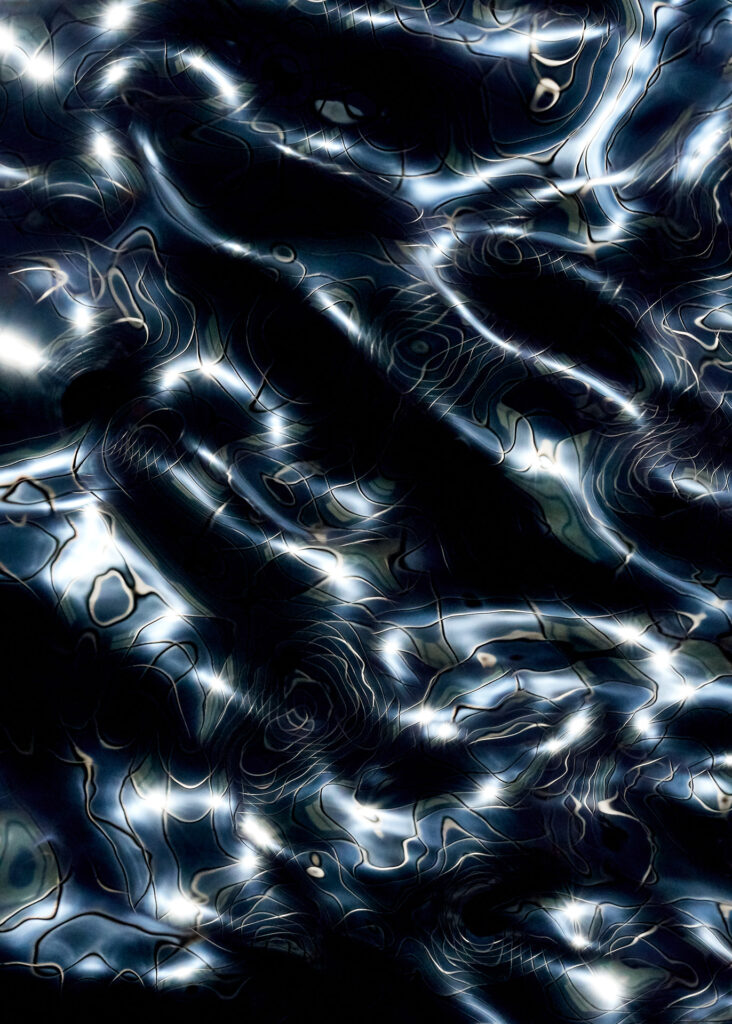
The only reason I’ve been able to listen so closely is because the place is accessible to me. I can get there. I can walk it. I can return. I don’t need a flight, a permit, a week off, or a 4 a.m. hike. I can go when I have 40 minutes. I can go when the light is “bad” by conventional standards. I can go when it’s raining and the surface of the water turns to hammered metal.
Accessibility sounds almost boring, but it is absolutely fundamental. If you can’t physically and practically get to your subject often, you will never build the level of familiarity that lets you move past the obvious. The more easily you can stand in front of your subject, the more honestly you can study it.
Repeatability: Return Until It Starts Talking Back
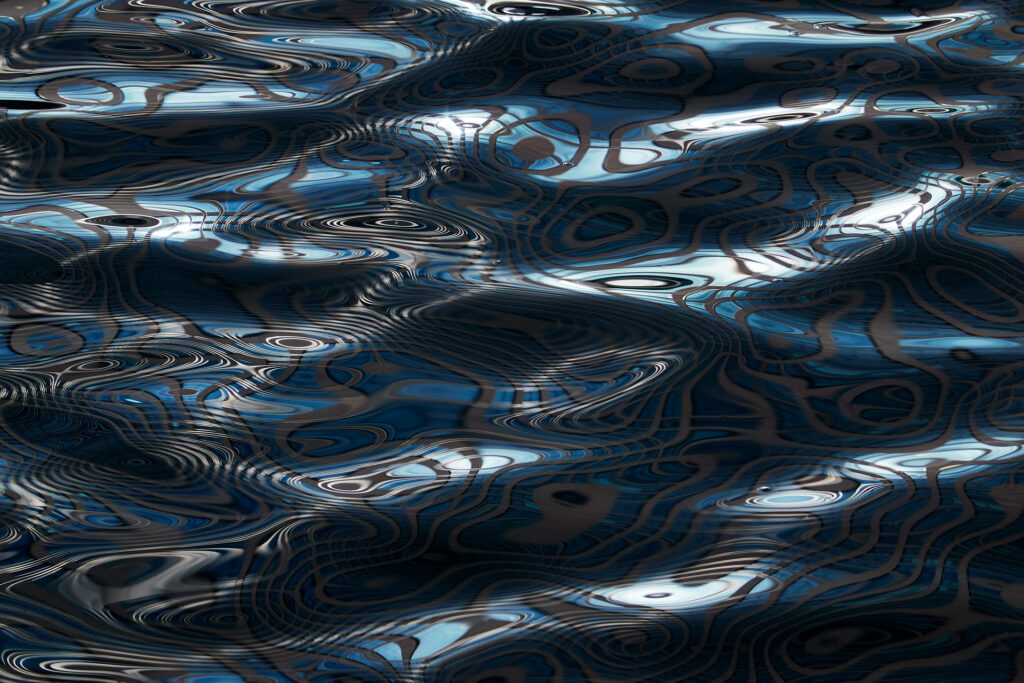
The second pillar is repeatability. By this I mean choosing a subject that will continue to change, surprise you, and offer new possibilities every time you meet it.
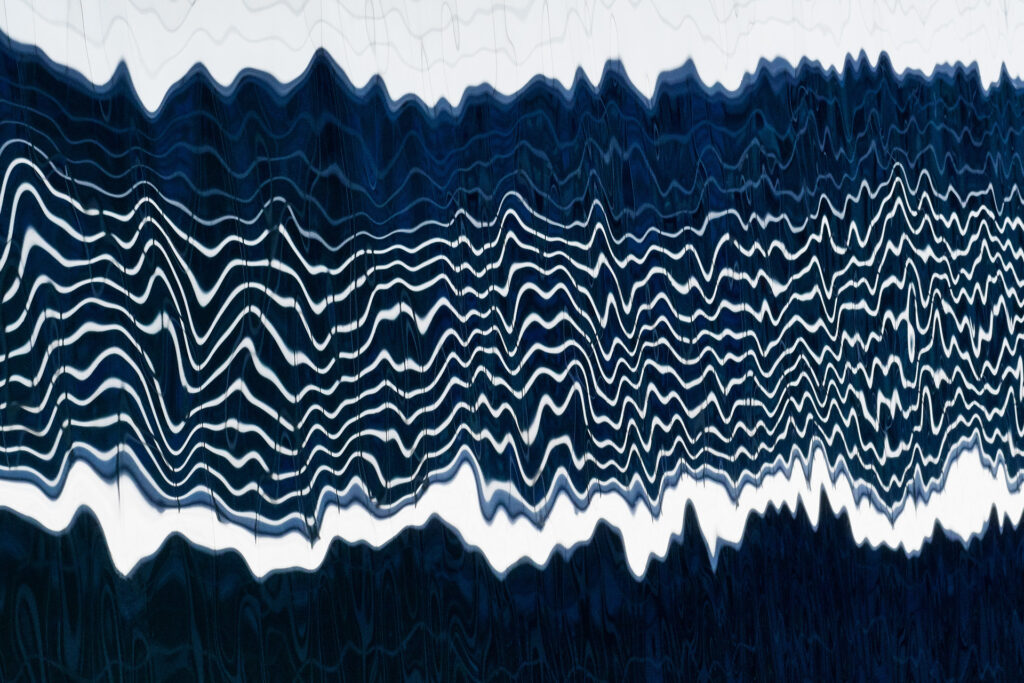
The docks at Canary Wharf deliver that in abundance. Nothing there is ever truly the same twice. A calm morning gives long, glassy pulls of colour. A gusty afternoon shatters those same buildings into serrated lines that remind me of Joy Division’s Unknown Pleasures waveform. A passing boat will smear the reflections into something that looks drawn by hand. Diesel on the surface creates iridescent interference patterns that might only last a few minutes and never come back.
Because the environment is repeatable, I can legitimately photograph the “same” scene hundreds or thousands of times and still feel like I’m doing new work. I will sometimes stay in one spot for hours, watching a single patch of water cycle through personalities. I’m not photographing architecture at that point; I’m photographing behaviour.
This is where in-camera technique matters – fast burst rates to freeze micro-moments in the water before they collapse, and multiple exposure modes to layer gestures and extend the abstraction that is already there. But those techniques only matter because the subject keeps offering me new raw material. The palette shifts with the weather. The geometry bends with the wind. The mood changes with the tide.
Without repeatability you get postcards. With repeatability you get a body of work.

Patience: The Quiet, Unglamorous Core
The final pillar is patience, and it’s the one people underestimate the most.
Patience starts long before I press the shutter. I have to wait for the right weather to line up with the time I’m actually free. Hard sun on still water does one thing. Flat light in drizzle does something completely different. Not every combination is useful. Sometimes I’ll walk for miles, checking angles in the water, and find nothing that fits the conditions that day.
Even when the conditions are promising, patience becomes a physical exercise. I may stand at one location for up to four hours, taking as many as 3,000 frames of what is, to a passerby, “the same scene.” I’m looking for that one instant where colour, rhythm, structure, and tension all lock into place. You cannot rush that. You can only remain present long enough to recognise it.
The patience continues when I get home. I’ll download thousands of nearly identical-looking images and begin the slow, deliberate sift on my iMac. This is where discipline matters. I move through them purposefully, looking for the exact frame where everything aligns, and I reject the rest. The keep rate is brutally low.
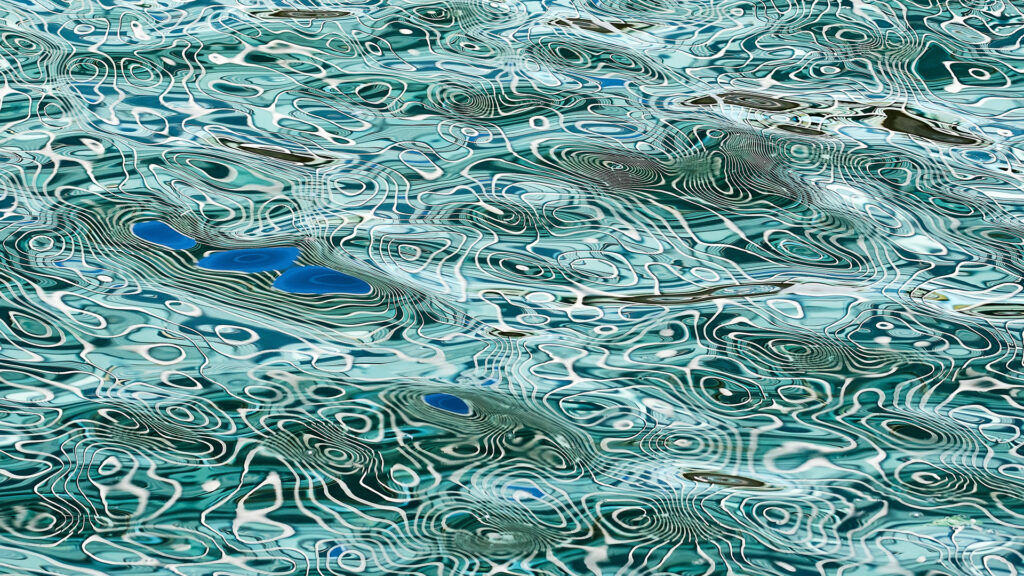
My processing is equally restrained. I work in Capture One and use very global adjustments – levels, clarity, sharpness, and contrast. I do not manipulate shapes in Photoshop. I’m not “creating” the forms; I’m revealing what was already there in the water. That choice is philosophical as much as aesthetic. The honesty of the work matters to me. I want to be able to say, hand on heart, “this happened.”
And then there is the longest form of patience: the patience to wait for the work to mature.
I didn’t show this project publicly in any serious way for years. I just kept going back, shooting, refining, learning what felt essential and what was just visual noise. It took around seven years before I felt I had something coherent enough to present to a publisher. That eventually became my first book, Fleeting Reflections, which was published in 2017 by Triplekite. From there came exhibitions at the Greenwich Gallery in 2017 and Anise Gallery in London in 2019, and later a second volume, Fleeting Reflections II, in 2023.
People sometimes see those milestones and assume it all happened quickly, or smoothly. It didn’t. It was slow, deliberate, and obsessive. In truth, the photographs themselves are only the visible tip of the project. Underneath them sits thousands of hours of walking, watching, waiting, shooting, editing, rejecting, and returning.
What This Means for Other Photographers
If there’s one thing I hope people take from this work, it’s that you don’t need a dramatic landscape or exotic location to create something personal and distinctive. What you need is access, repeatability, and patience.
Find somewhere you can reach easily and often – even if it’s a canal, a harbour wall, a marsh on the edge of town, or rainwater pooling in a car park. Return in all moods and all weathers until you can predict how that place will respond. Then commit to the slow work: walking, waiting, refining, and being honest with yourself in the edit.
Patience is not passive. It’s highly active. It’s a decision to invest yourself in a subject for as long as it takes to understand it. Over time, that patience becomes visible in the photographs. Viewers might first see colour and shape, but what they’re actually seeing is attention.