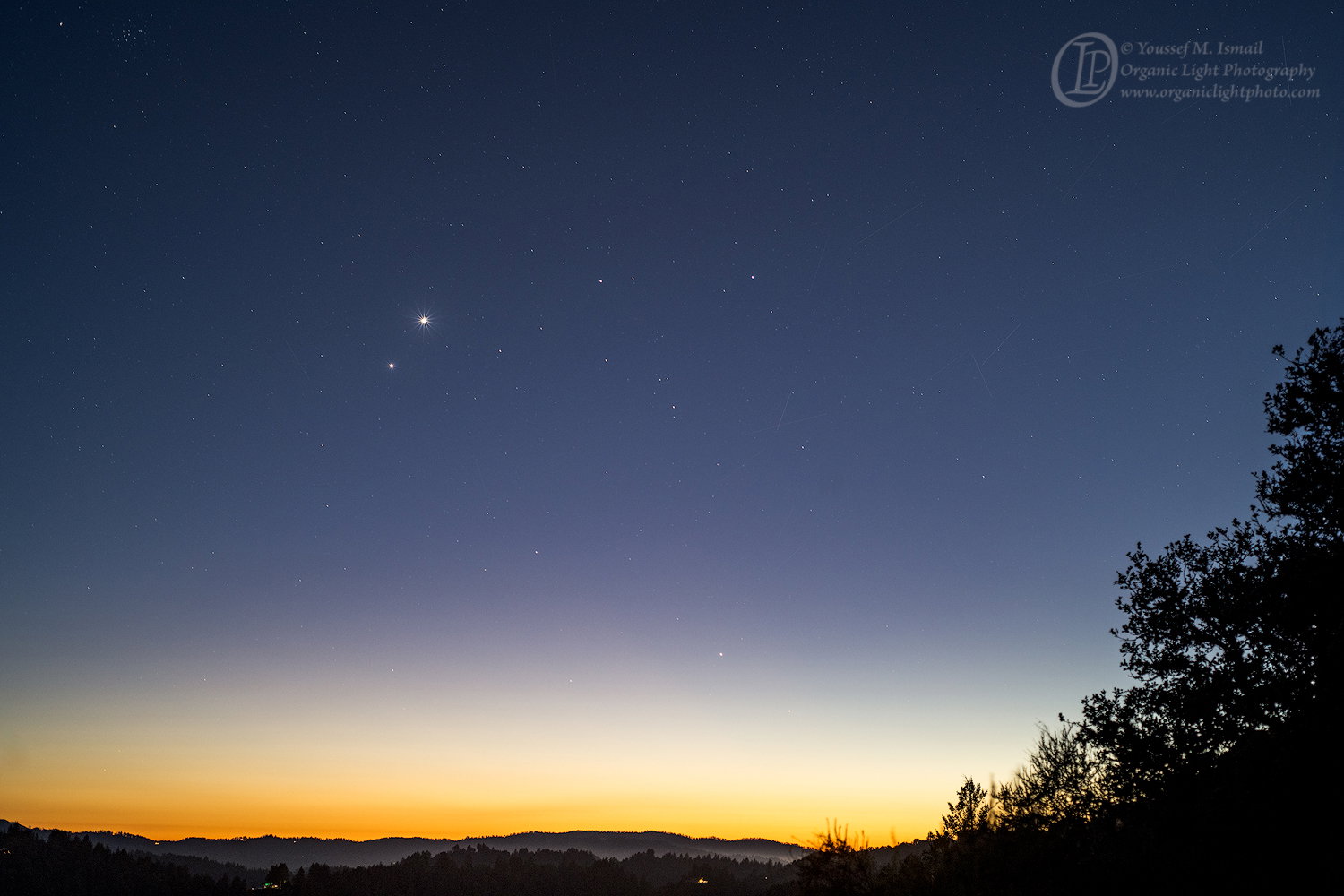
Without Constellation Lines
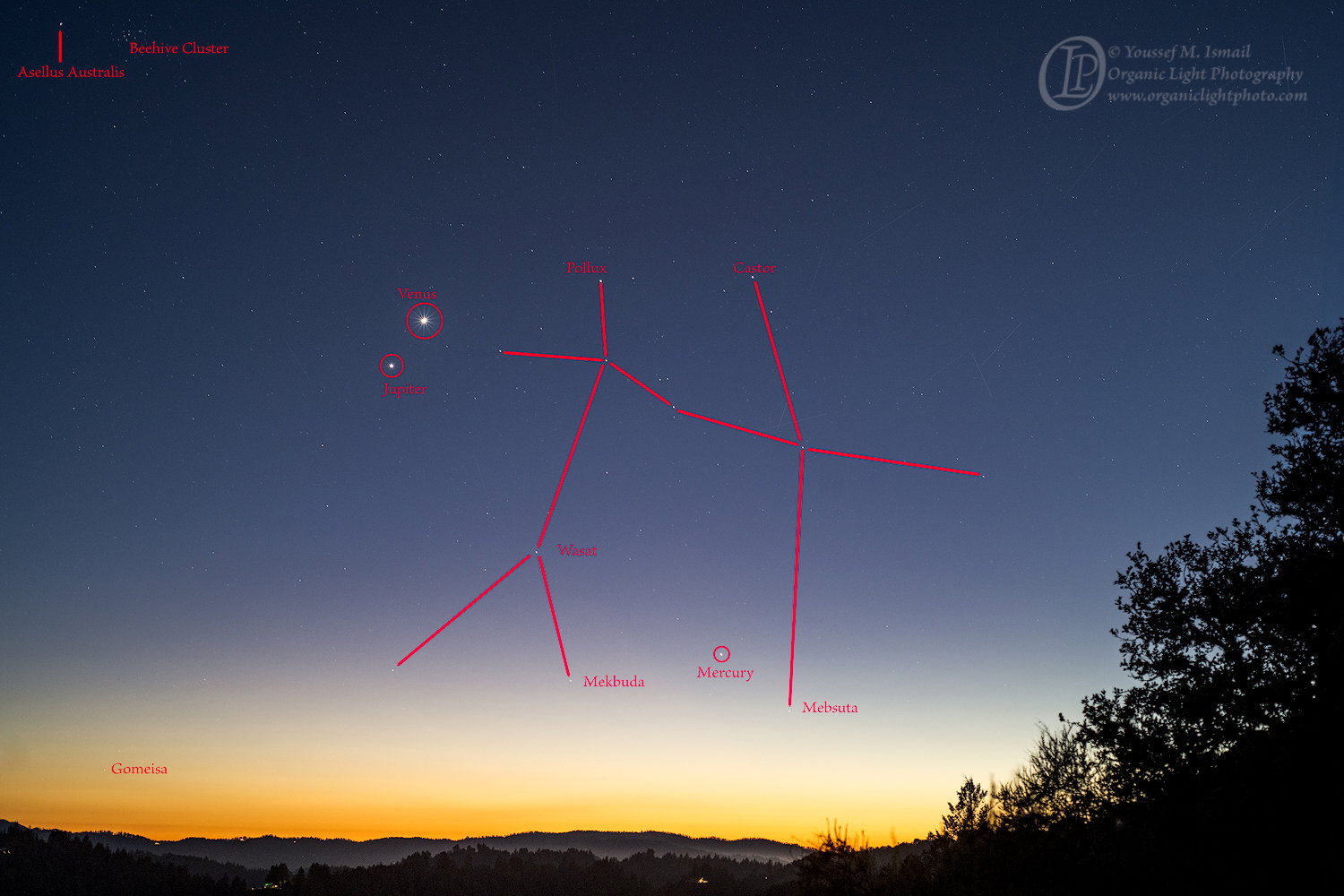
With Constellation Lines
The photographer is looking for thoughtful feedback on the image as a whole, especially around the areas noted below.
About This Image
This was the western sky on June 9th of 2026 when Jupiter came its closest to Venus. Mercury was along for the ride as well sitting in between the Twins of Gemini, Pollux and Castor. We have such an amazing opportunity in our modern age to explore the night sky with the camera equipment we have now. While Jupiter and Venus were clearly visible to my eyes that evening, Mercury was so faint. And the stars Pollux and Castor were visible as well, but one had to really look hard. The camera on the other hand, well give it 10 seconds and a sturdy tripod and it will reveal so much more than can ever be imagined. I added the second image with the constellation line of Gemini, circled the three planets and labeled them as well as labeling the named stars that I could identify.
Pollux and Castor are the head stars in Gemini, with Castor being just a bit brighter than Pollux. Wasat and Mekbuda are in the Pollux twin, while Mebsuta is in the Castor twin. The remaining four stars in Gemini were either below the horizon at 9:38 PM when I took this or were to deep in the twilight glow to be picked up.
Gomeisa is the second star in Canis Minor. The Alpha star, Procyon was out of the frame
The Beehive Star cluster in Cancer is in the ULC, as well as Asellus Australis, the southern main body star of Cancer.
Feedback Requested
Any feedback or thoughts are appreciated.
Technical Details
Without Constellation Lines
Camera: NIKON D850
Lens: 50 mm f/1.8
Focal length: 50mm
Shutter speed: 10s
Aperture: f/4
ISO: 800
With Constellation Lines
Camera: NIKON D850
Lens: 50 mm f/1.8
Focal length: 50mm
Shutter speed: 10s
Aperture: f/4
ISO: 800
Processing software: ACR and PS
Major adjustments: Adjusted exposure and contrast, Clarity and Dehaze in ACR. No major edits in PS other than adding the constellation lines.
Blending/stacking: None
Other notes: Sometimes the photos come out of the camera ready to go, almost.
 when I went to college, I thought about majoring an astrophysics until I realized how difficult it was. Things worked out a lot differently than I thought.