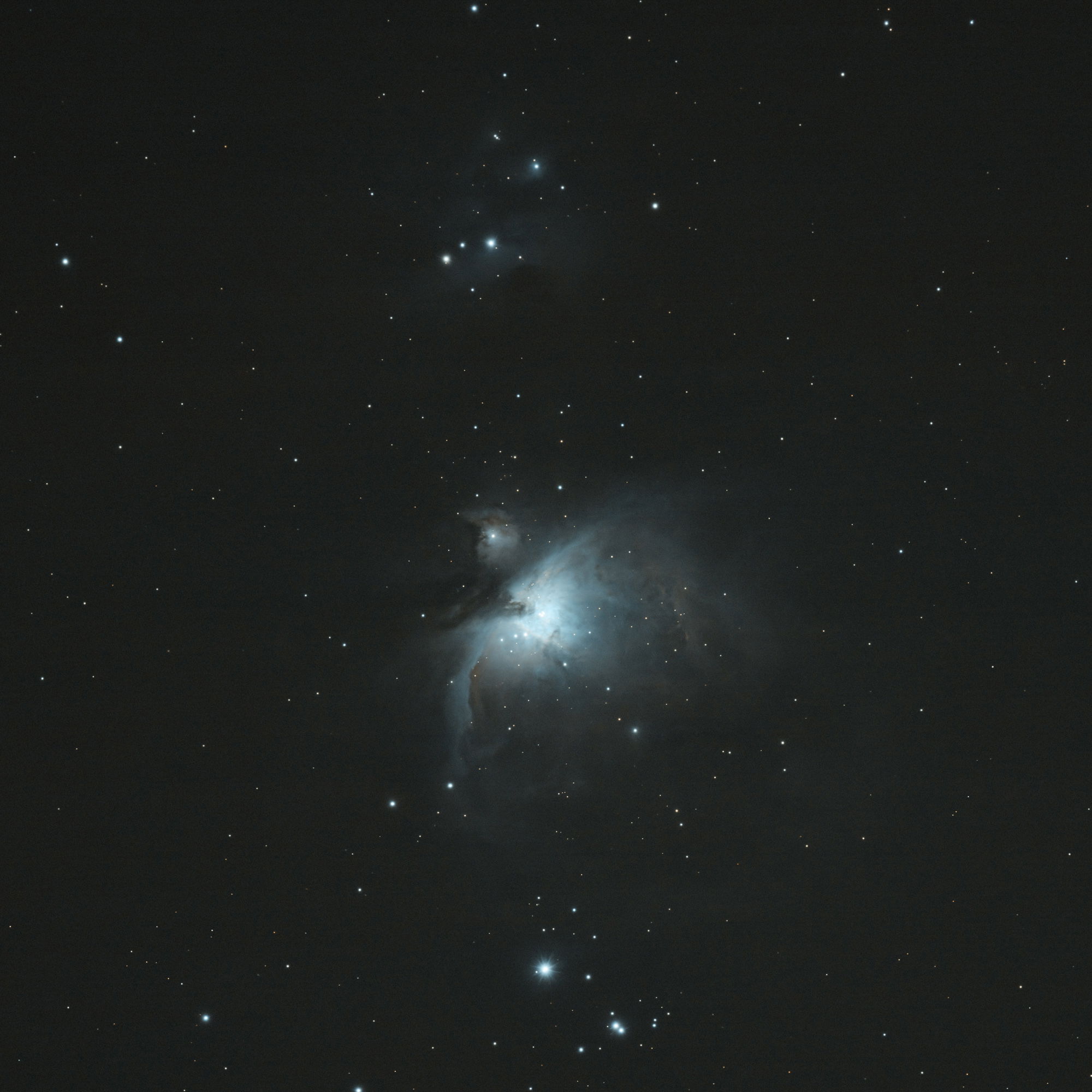
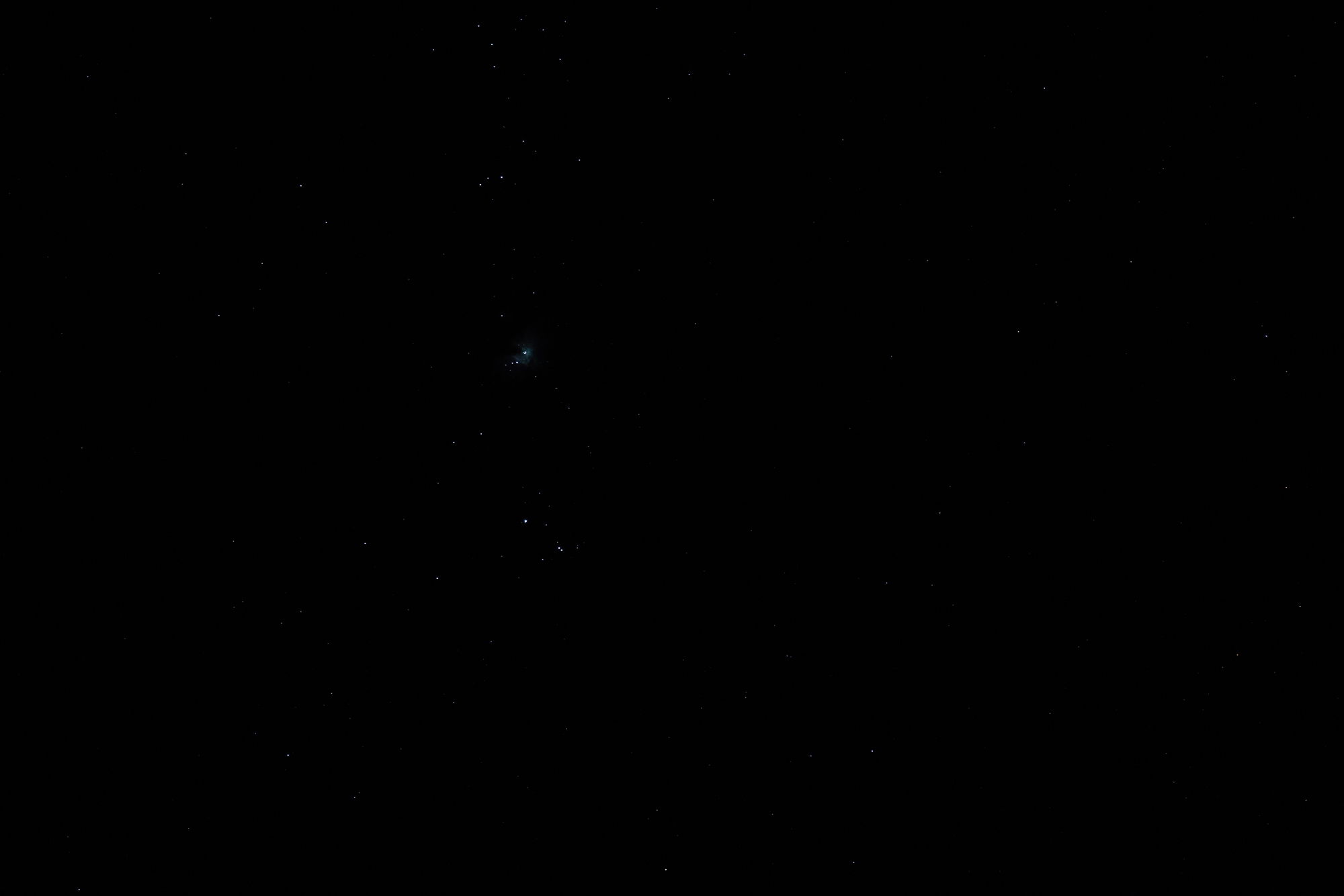
The above is one of the raw files. Honest!
And captured with my astro rig, special camera, telescope and tracker. Needs color work – too much cyan here.
Critique Style Requested: Standard
The photographer is looking for generalized feedback about the aesthetic and technical qualities of their image.
Description
I’ve been working out a way to shoot some astro images using my regular camera and lens, for wider-field subjects than I can shoot with the astro rig (special camera, telescope and tracker). I decided to see how far I could go. It will never compare to the real thing, but I was pleasantly surprised what I could do with the Canon R5 and 100-500 at 500 on a tripod, behind the garage. This is the Orion nebula, M42 – the middle “star” in the sword. Details below.
Specific Feedback
All comments welcome!
Technical Details
80 frames (as in the middle image above), wide open at f/6.7, 0.5 sec. Had to push the ISO to 3200 to get this much light. 40 dark frames and 80 bias frames, processed in PixInsight as described in the tutorial. Cropped to 20% of the full frame. Unfortunately my camera doesn’t have sensitivity far enough into the IR to capture more of the reds.
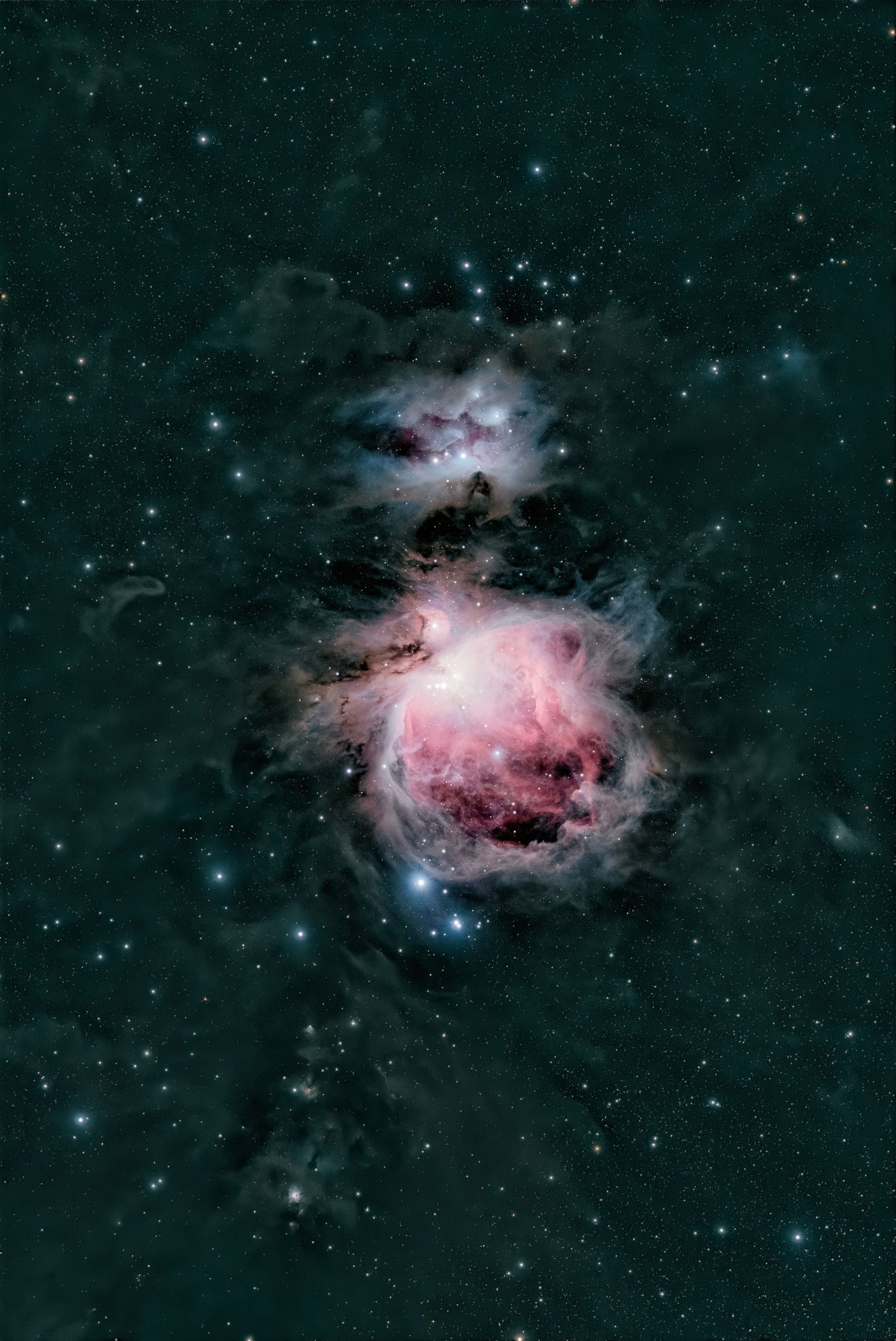
This falls far short of what @Youssef_Ismail posted a while ago, but he was tracking and shooting 60 second exposures. That is the way to go if you can.
EDIT: The tutorial has been revised (bug fixes and clarity) to v3.
Critique Template
Use of the template is optional, but it can help spark ideas.
Vision and Purpose:
Conceptual:
Emotional Impact and Mood:
Composition:
Balance and Visual Weight:
Depth and Dimension:
Color:
Lighting:
Processing:
Technical:
1 Like
Once again you’ve flawed me with these images Diane! Well and truly out of my wheelhouse.
I love the colours and often wonder are the colours really out there or is it what we perceive to be there.
Thanks, @Glenys_Passier! Colors can be manipulated in astro images but with my special astro camera, which has a sensor very much like the ones on our regular cameras, colors can be a pretty close rendering of the actual wavelengths and I try to stay true to that. In captures like this latest experiment with a regular camera, coatings on the lens and other factors can cause color issues, and a filter on the sensor removes much of the infrared light, which focuses at a different distance and degrades normal daylight work. My Canon R5 has very low infrared sensitivity.
This isn’t a great image but I was pleased that I could pull this much out of it. Wider angle shots can let in more light with longer shutter speeds, as can tracking. Just tilting at windmills here.
Well, if you’re “just tilting at windmills” here, I can’t wait to see what happens when you’ve practiced a bit!
GOOD LORD Diane. I dont understand the technical side of making this image. BUT. This is Amazing. I love Astronomy also ( I wanted to be a pilot or astronaunt)… You really have an amazing collection of images looking at the stars. Well Done.
Wow–Very nice indeed. The techniques are challenging and certainly you know how to get the best images with your equipment. The last image is awesome. I did attend the last NPN seminar on Milky Way photography and must say that I find this type of photography worth trying. Well done…Jim
@Glenys_Passier – Hah!! I’ll keep experimenting – that’s exactly what this is – in this case how important are good dark frames? Spoiler: very. But it didn’t go so well for Don Quixote…
Thanks @Gill_Vanderlip and @Jim_Zablotny! Regular cameras without trackers can never match even a modest astro rig (last image), but it’s fun to see how far one can go with the right techniques and software.
1 Like