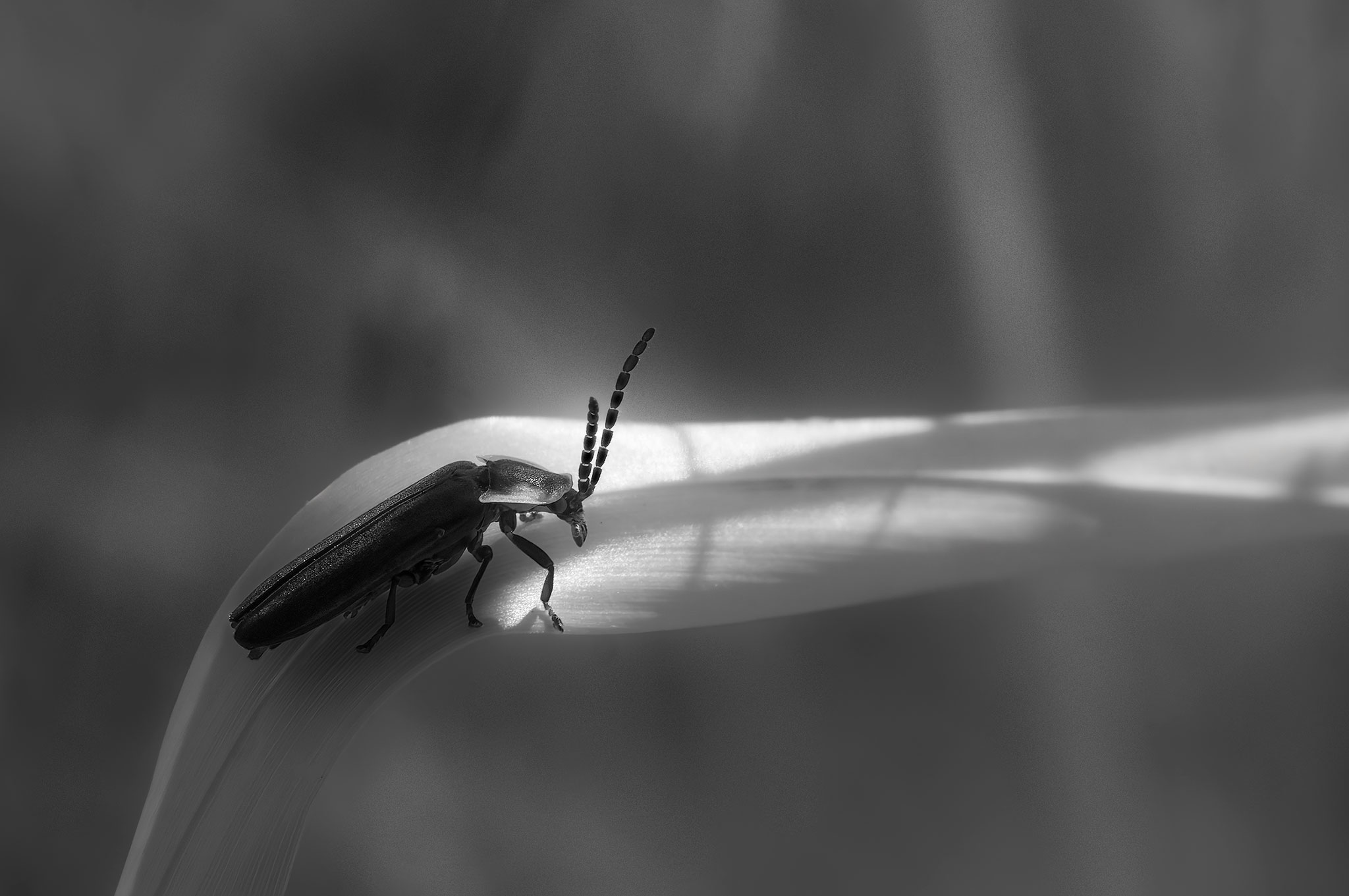
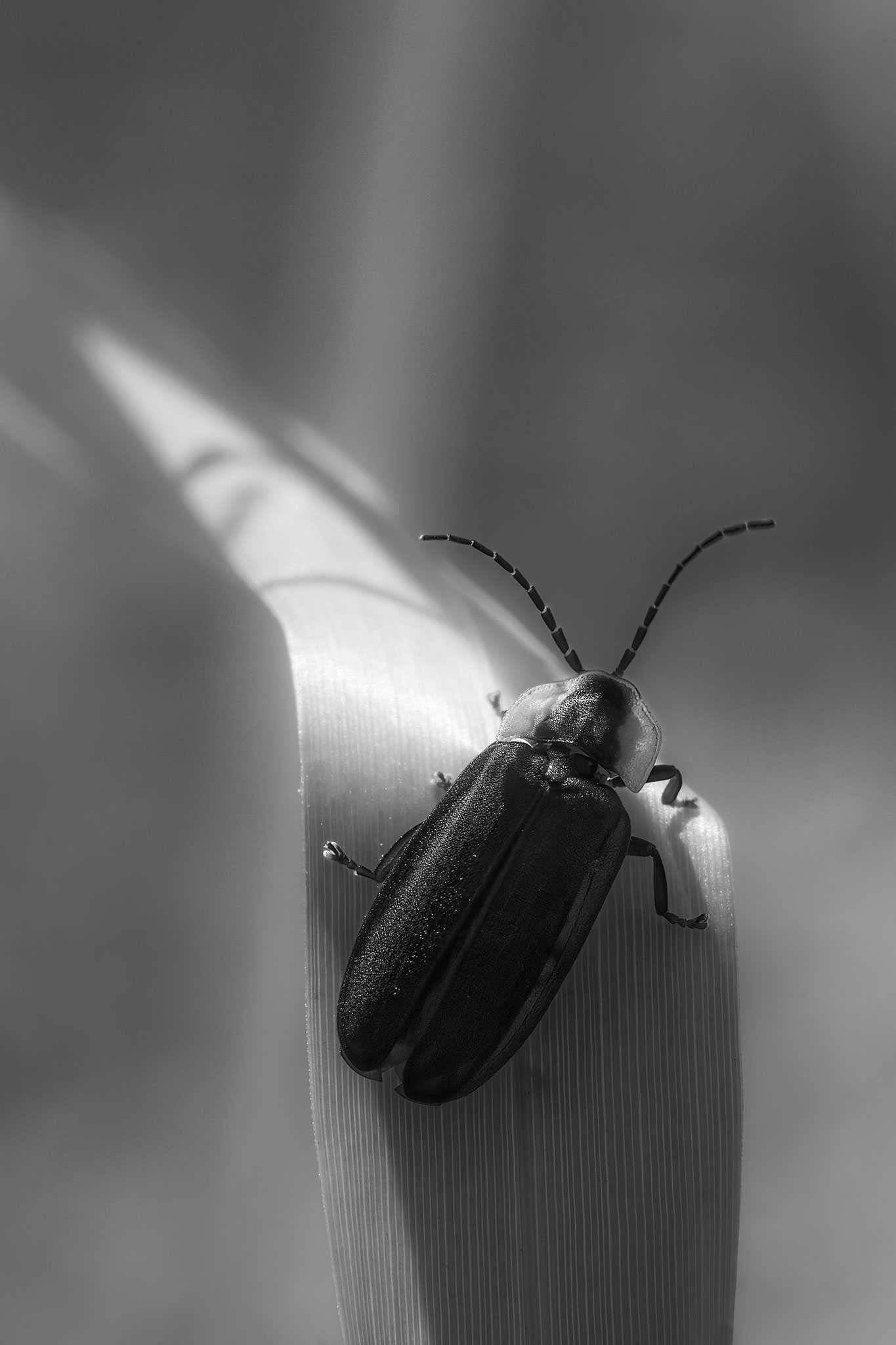
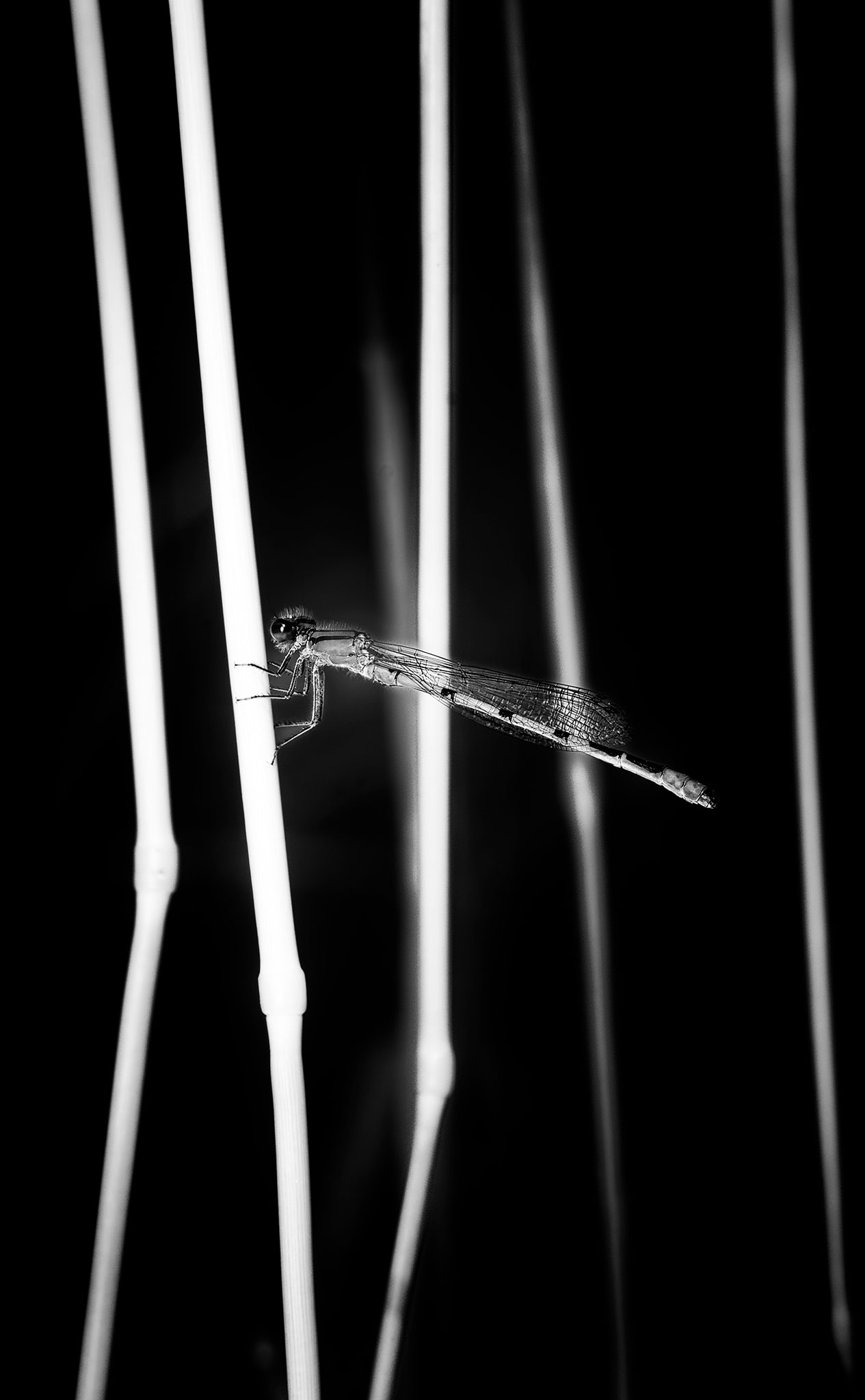
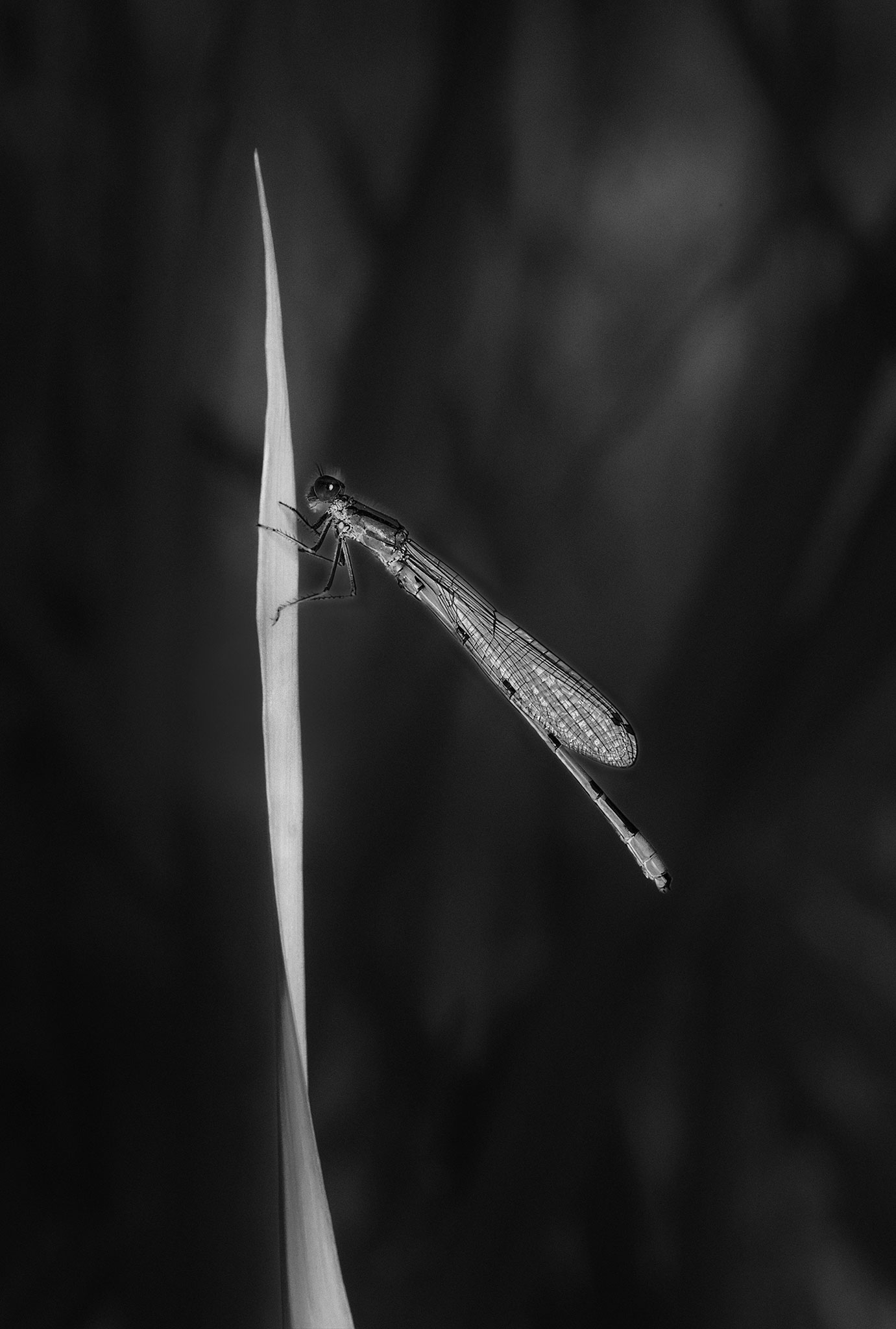
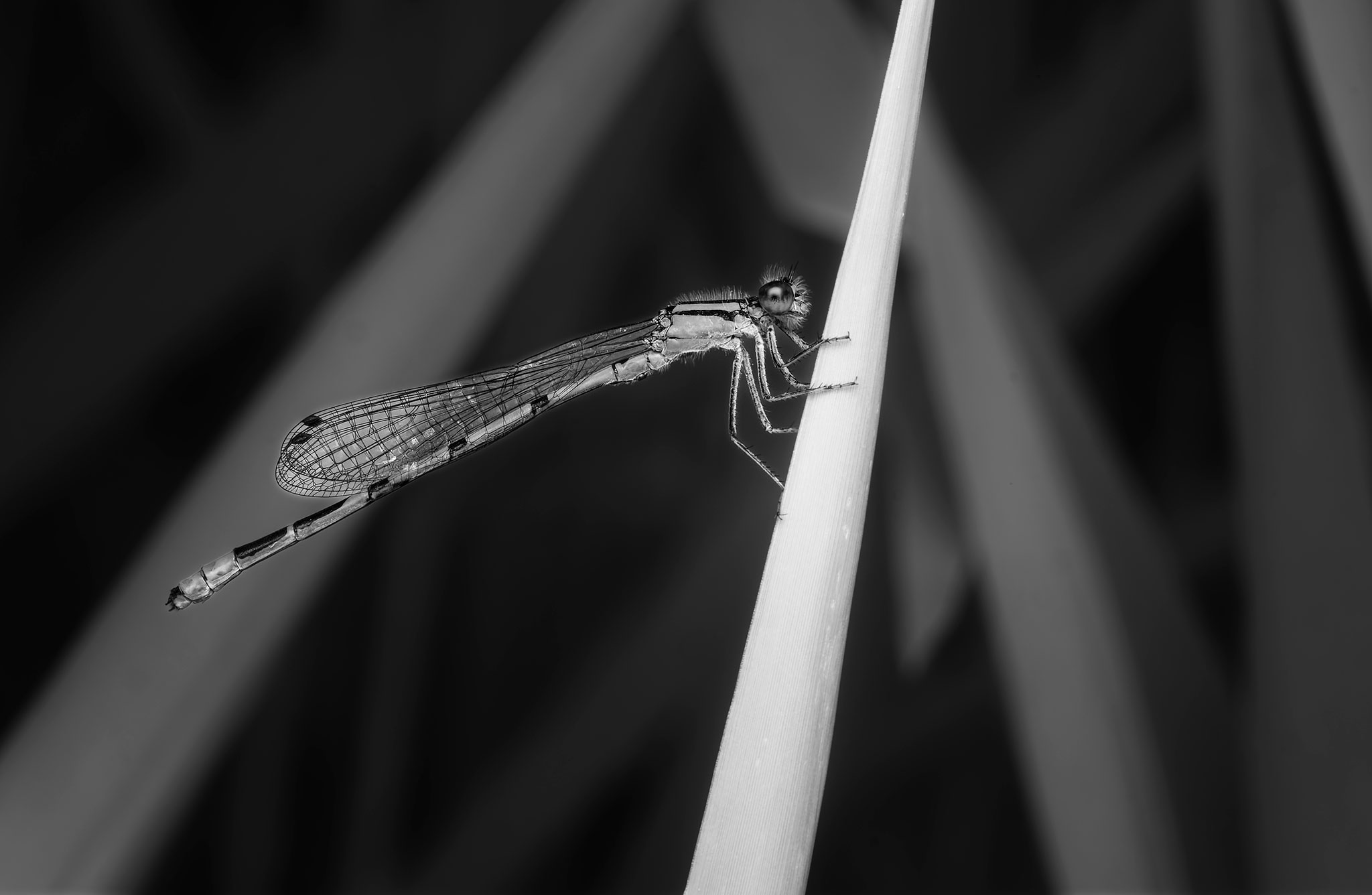
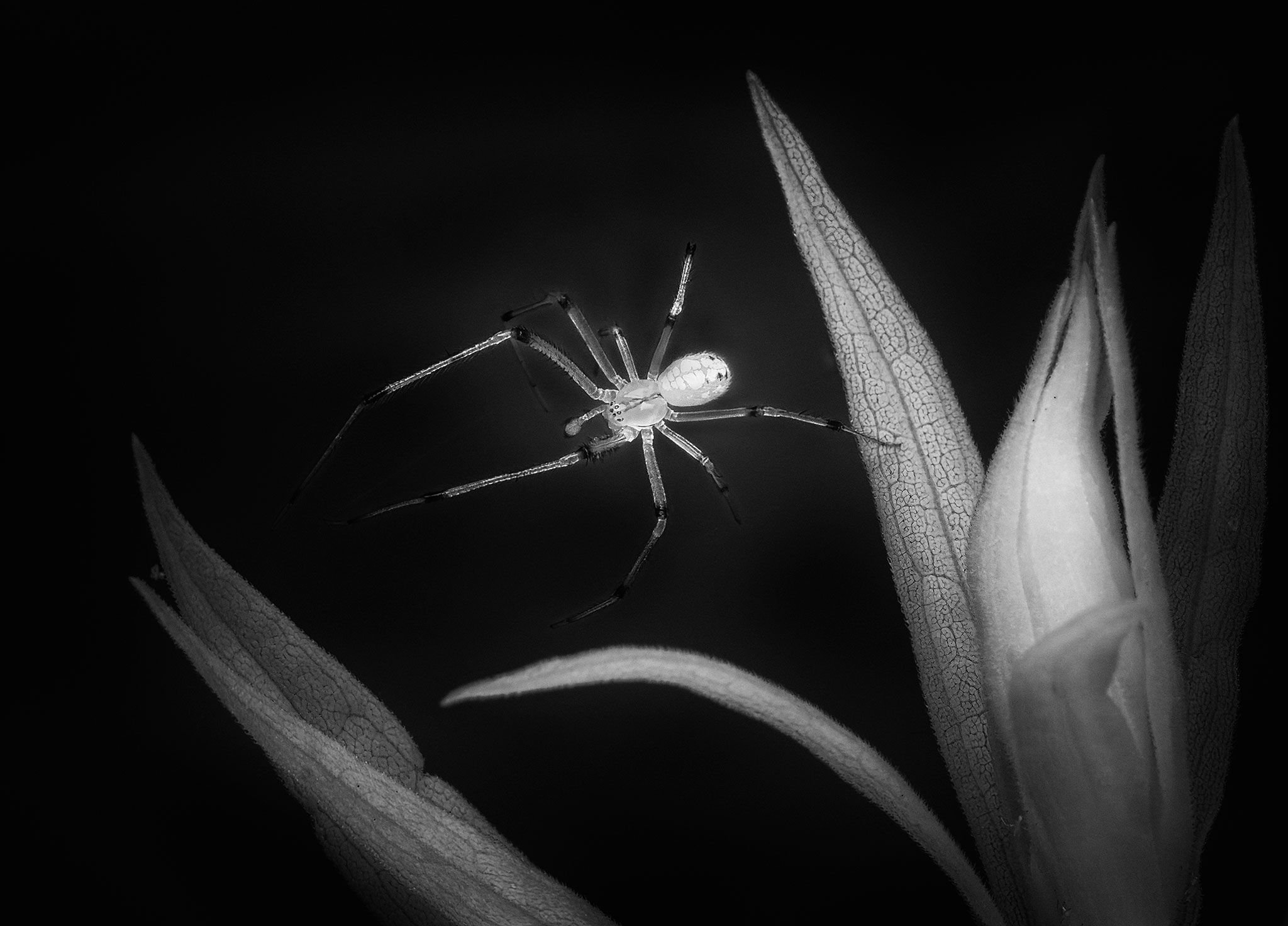
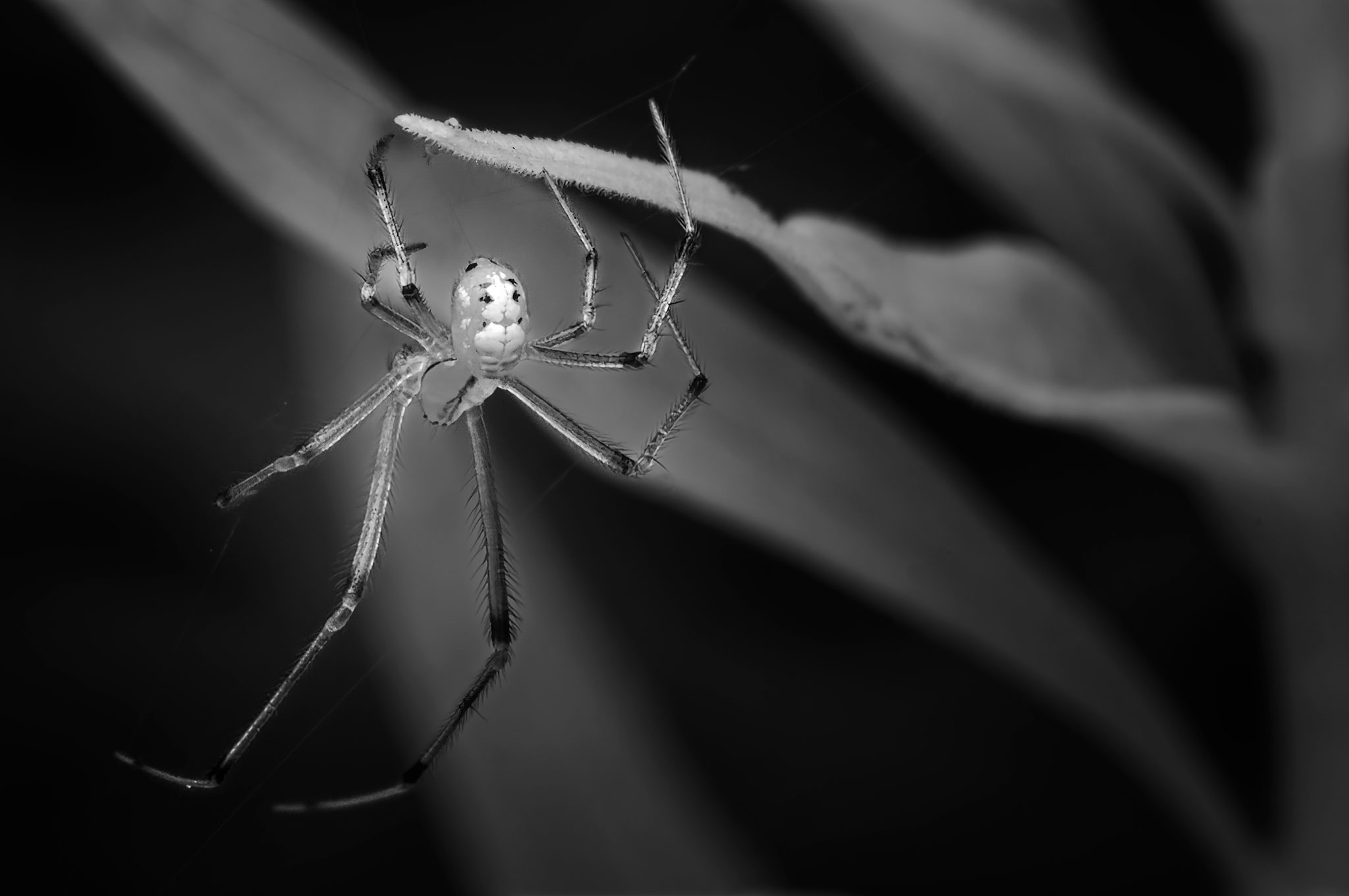
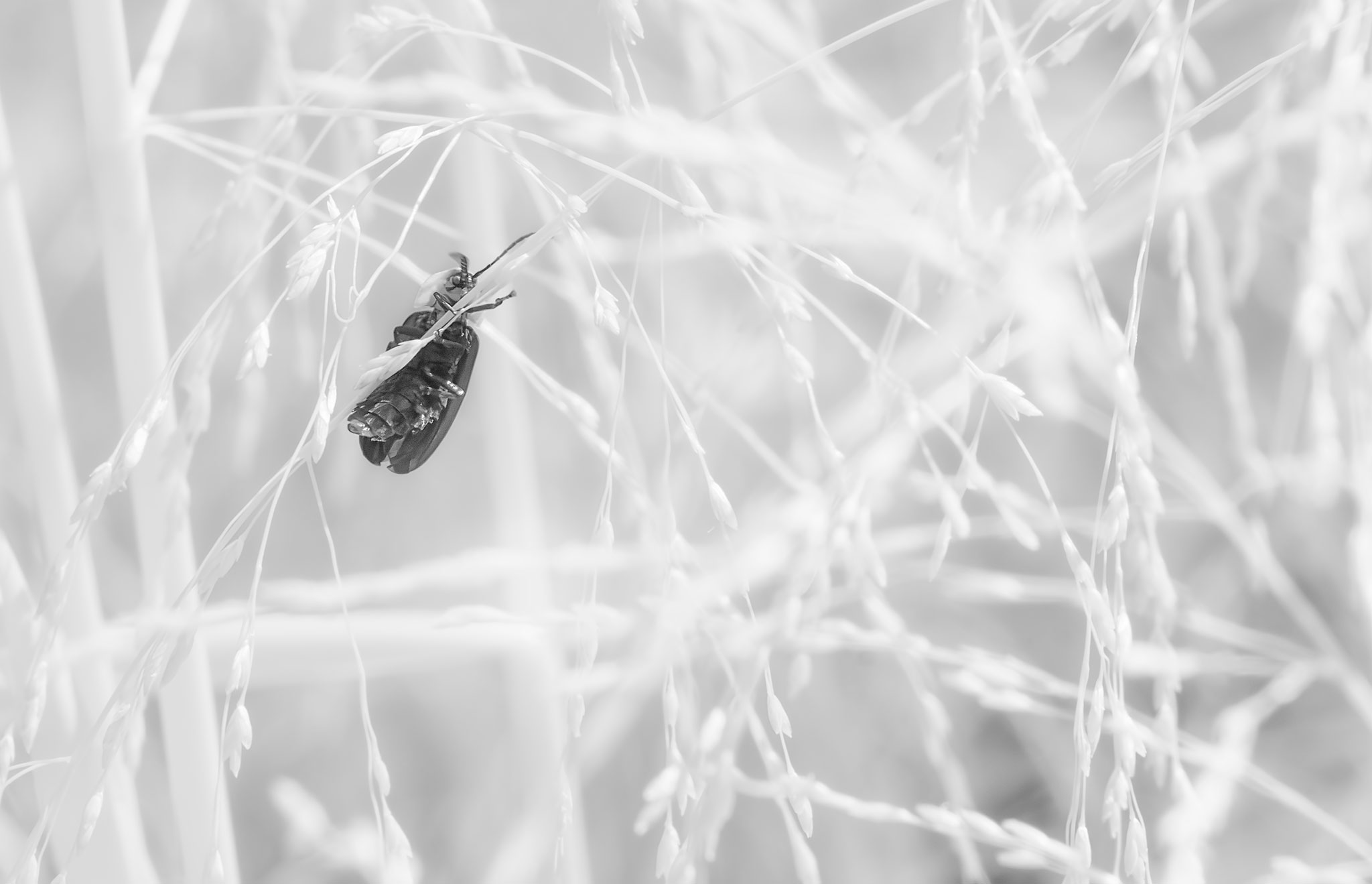
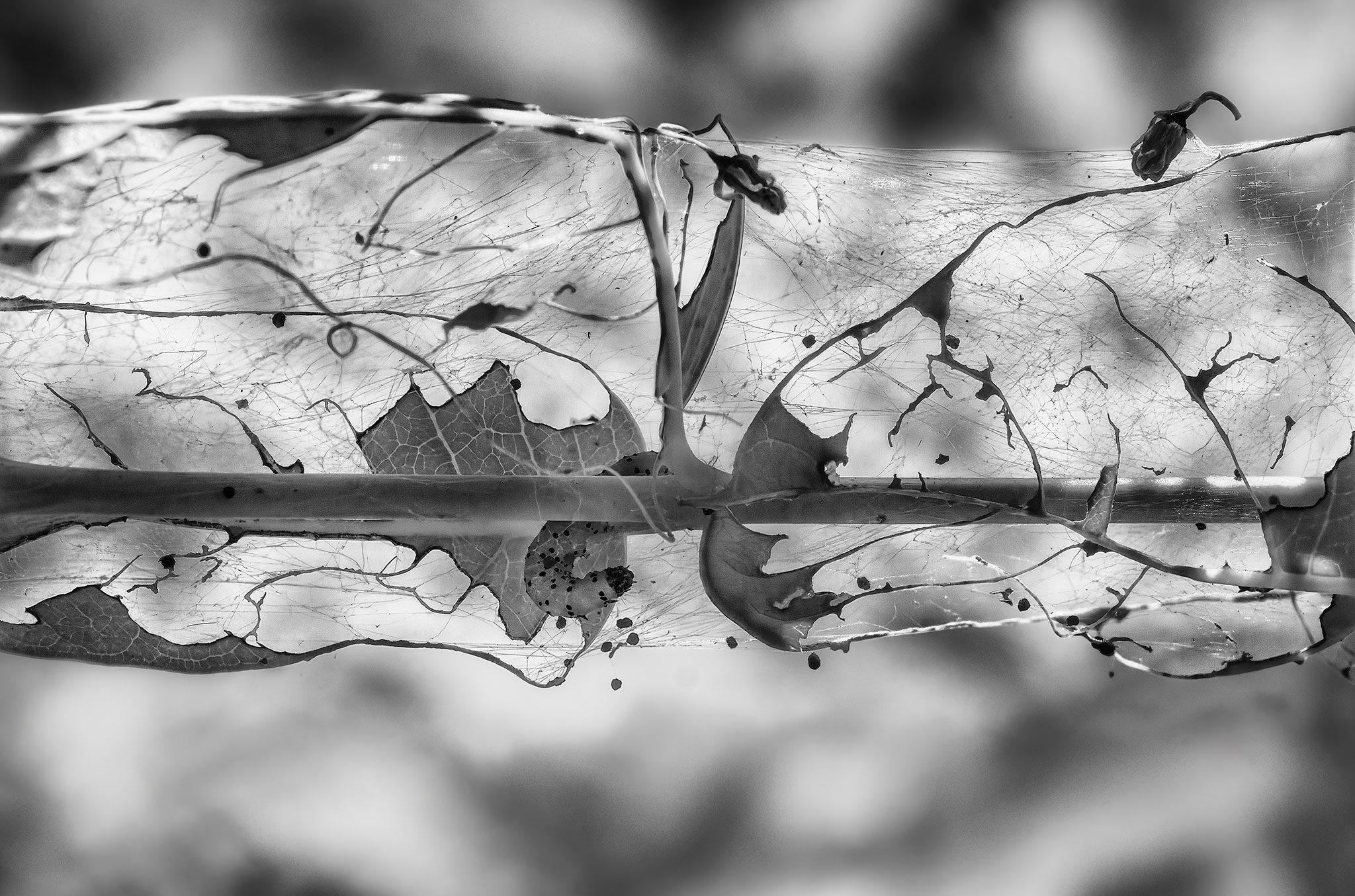
I wanted to see what would happen when I put a macro lens on an infrared-converted camera. Very interesting things, as it turned out…
Creative Direction
I love infrared photography because it forces me to pay attention to light and shadow and tonality. I love macro photography because it makes me pay attention to details, lines, shapes, and textures. In cases where color isn’t the story, their combination makes the strange macro world even stranger. In terms of creative direction, I think this combination allows more room for self-expression. I only started using this combination a few weeks ago, so I don’t have much experience yet, so I’m looking for feedback on whether this is worth pursuing or whether it’s just too weird.
Self-Critique
What I think is working: I like the drama of infrared and its surreal feeling. What could be improved? I’m not sure how effectively I’ve gotten rid of the hot spots, which are really bad at f/22. I’d appreciate any other comments on what could be improved!
Feedback Requested
I just started playing around with this combination a few weeks ago, so I’d appreciate any feedback.
Thank you very much It’s nice to know there’s someone else on the other side of the world who’s also crazy enough to like macro + infrared!
Gearwise, I use a Fuji X-T5 (full-spectrum conversion by Kolarivision) and Fuji 80mm macro lens.
I usually use the Continuous AF setting for moving insects (set to detect animals; tracking sensitivity = 0, speed tracking sensitivity = 2 (max), zone area switching = center). Those AF-C settings were suggested to me by a Fuji tech help guy. You need to figure out the optimum settings for your own camera. If they are not moving, I use manual focus and rock back & forth and use focus peaking & the focus enlarger button that shows the exact area in focus. And I take tons of pictures because I know half of them will still be out of focus despite all my efforts, and I don’t get discouraged when they are. Bill Fach on this platform recently suggested using the burst mode; that also works well.
For these pictures, I used a 720nm filter.
I use on-camera Godox V1 flash + Cygnustech diffuser. I use flash the large majority of the time, but I sometimes don’t use it if the light is good.
I hate carrying & fiddling with tripods outside, so it’s all handheld.
Settings are generally 1/250 sec, f/22, and ISO varying automatically between 125 and 400. All are subject to change depending on the light conditions, of course.
For post, I use DxO Photolab to process the RAW files. The Microcontrast and Sharpen features are good for sharpening. Then I export to Photoshop & first use Topaz AI sharpening. Then I use Nik Plug-ins for further processing. In Color Efex, Detail Extractor and Tonal Contrast work well for details. Then I also sometimes do a High-Pass filter in Photoshop, but with all the previous sharpening, that is not always necessary. I agonize a lot over whether I’m oversharpening, though, and I don’t know when I’ve found the sweet spot. I also used Silver Efex to turn these into bw, but didn’t use any of its sharpening features.
I think there is a lot more room for self-expression and creativity with these kinds of pictures than in regular macro (which I also love). I like contrast, and I like drama in some of my pictures (not in real life!). Feel free to experiment to see what works for you & your personality and artistic vision. Infrared seems to work especially well with both high- and low-key looks, both of which I like but often forget to do with a regular camera. Hope this was helpful. Good luck!!!
I use Topaz studio and or LR for denoise , PS and LR and PS -high pass for all general other work - and the silver Effex for mono conversions - so mostly the same tricks ( good to know)
As yet not tried flash as the Sony 5100 has no hot shoe but I can trigger a save with pop up flash
Canan, I don’t know how I missed this one! Nice collection of images in infrared. I especially like the lighting on the first image as it spotlights right on the face of the subject. Thank you for sharing what you use for equipment, settings, and your technique. That’s how we all can learn on here. All of the images are really nice.
 It’s nice to know there’s someone else on the other side of the world who’s also crazy enough to like macro + infrared!
 Have fun with your own experimentation!