Repost
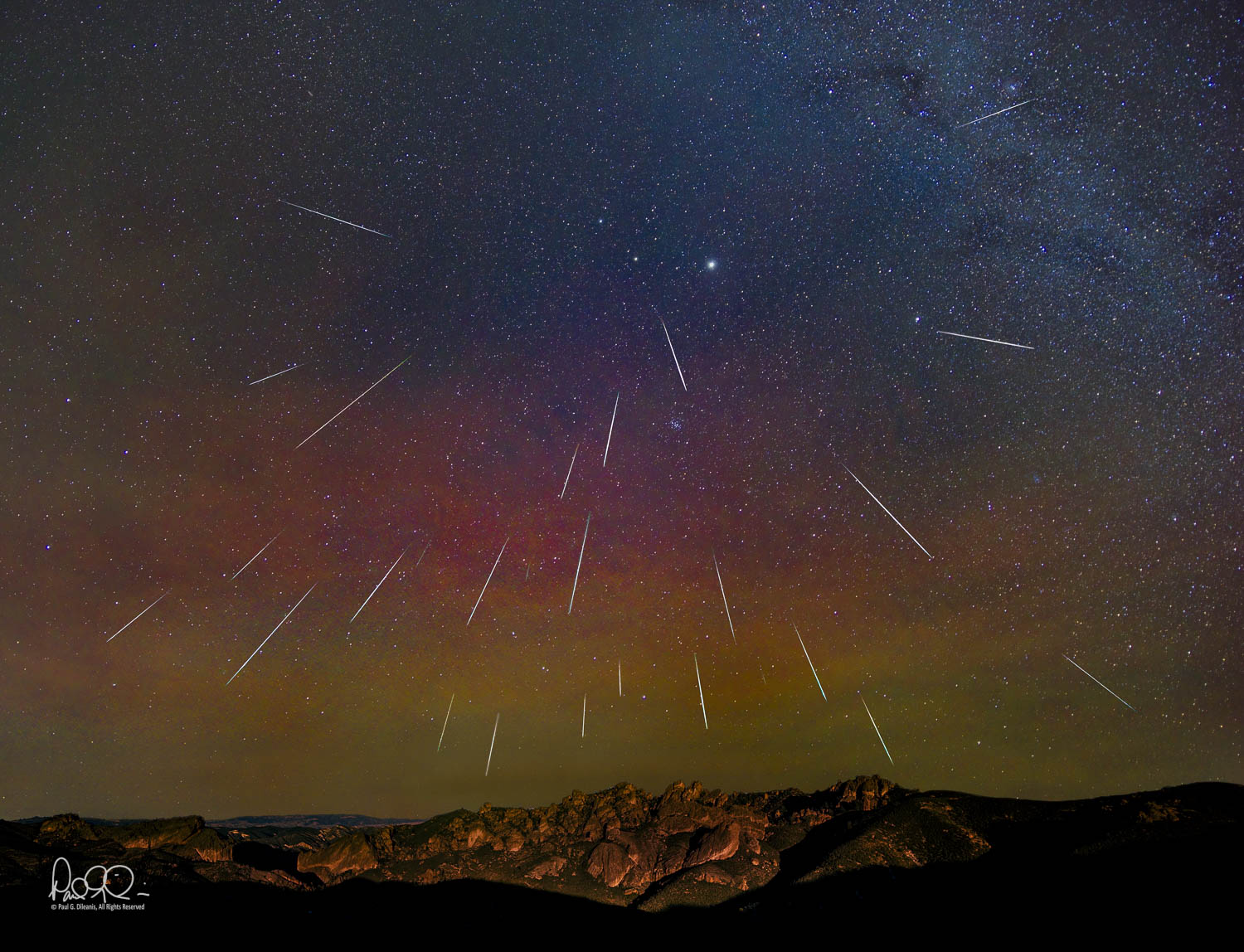
Okay, I couldn’t wait till after the holidays. I had never experienced red airglow with such intensity. I thought something was off in my color balance and or light pollution was causing my issues. I abandoned my first sky layer when I was unable to eliminate or mitigate the red and chose a set of frames from later in the night with Gemini higher overhead when the airglow was less intense and I was able to tame it a bit. After doing some research I made the decision since this was a natural phenomena, I would need to embrace it. Returning to my original sky stack I processed the sky as I would a milky way image. The reposted image is the result. I also found a few more meteors to add.
Original
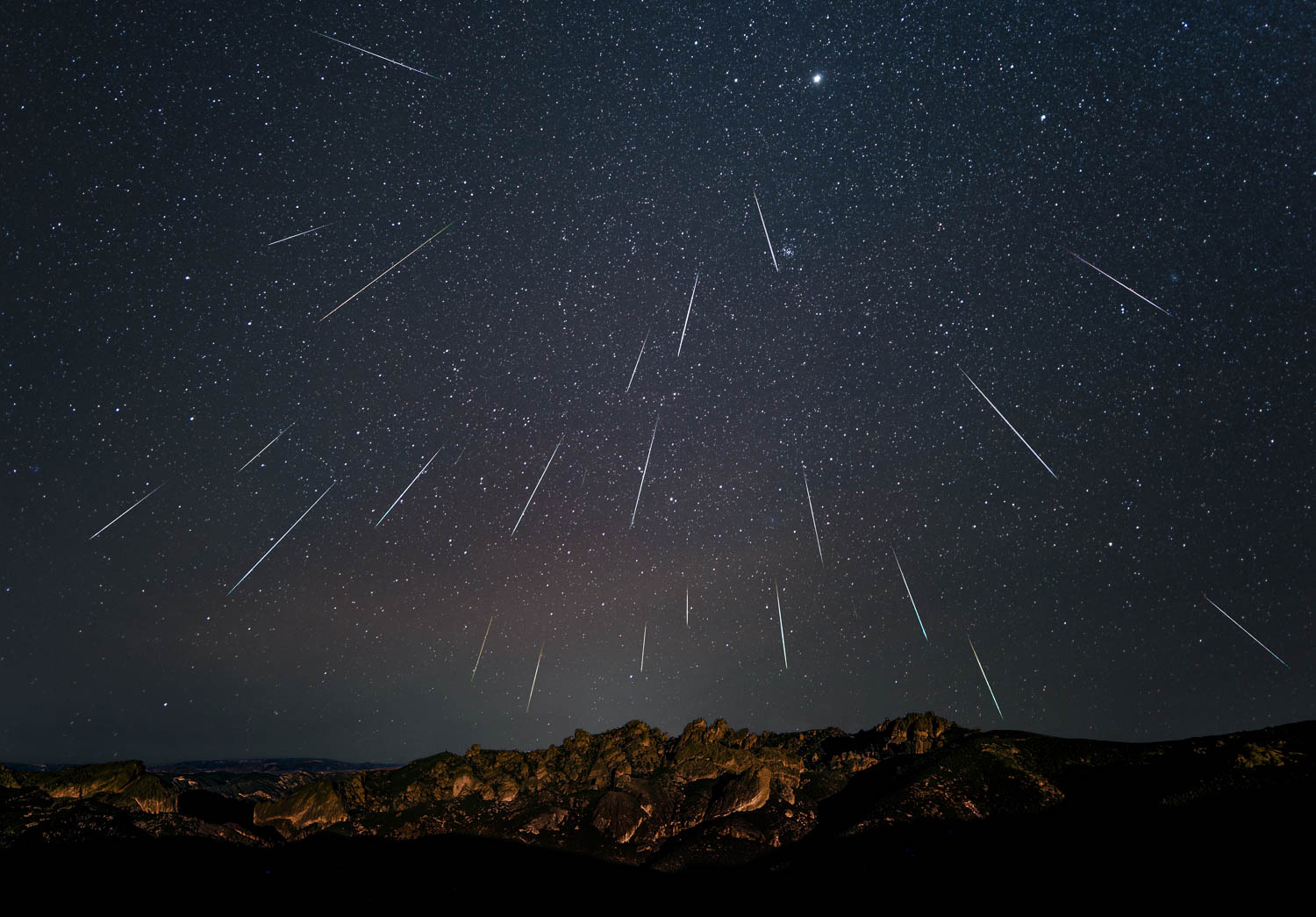
Critique Style Requested: Standard
The photographer is looking for generalized feedback about the aesthetic and technical qualities of their image.
Description
For the last 5 years I have been trying to capture a meteor shower. Up until this outing I had always returned empty handed, or with just a few pathetic meteors. Everything came together at Pinnacles NP this month and I finally had some material to work with. All total I had 135 frames with easily identifiable meteors. I took the best 23 and adjusted their paths to the radiant to create this image. Jupiter is the brightest ‘star’ in upper center. Just to the left of Jupiter the next 2 brightest stars are Castor and Pollux.
Specific Feedback
Is the repost too saturated? Too many meteors? Foreground too bright?
Since this is my first real attempt at creating a meteor shower image I am looking for any input regarding processing, color, foreground, composition etc.
Technical Details
Canon R6 w/ 15mm f2 Laowa lens
Sky Exposure 15 sec, f2, ISO 5000
FG 1/250 sec, f4, ISO 100 taken just before sunset
10 sky images were stacked in Deep Sky Stacker for the sky layer
23 Meteors were masked and blended into the sky and foreground added in Photoshop
Critique Template
Use of the template is optional, but it can help spark ideas.
Vision and Purpose:
Conceptual:
Emotional Impact and Mood:
Composition:
Balance and Visual Weight:
Depth and Dimension:
Color:
Lighting:
Processing:
Technical: