A Little Hummin' Goin' On

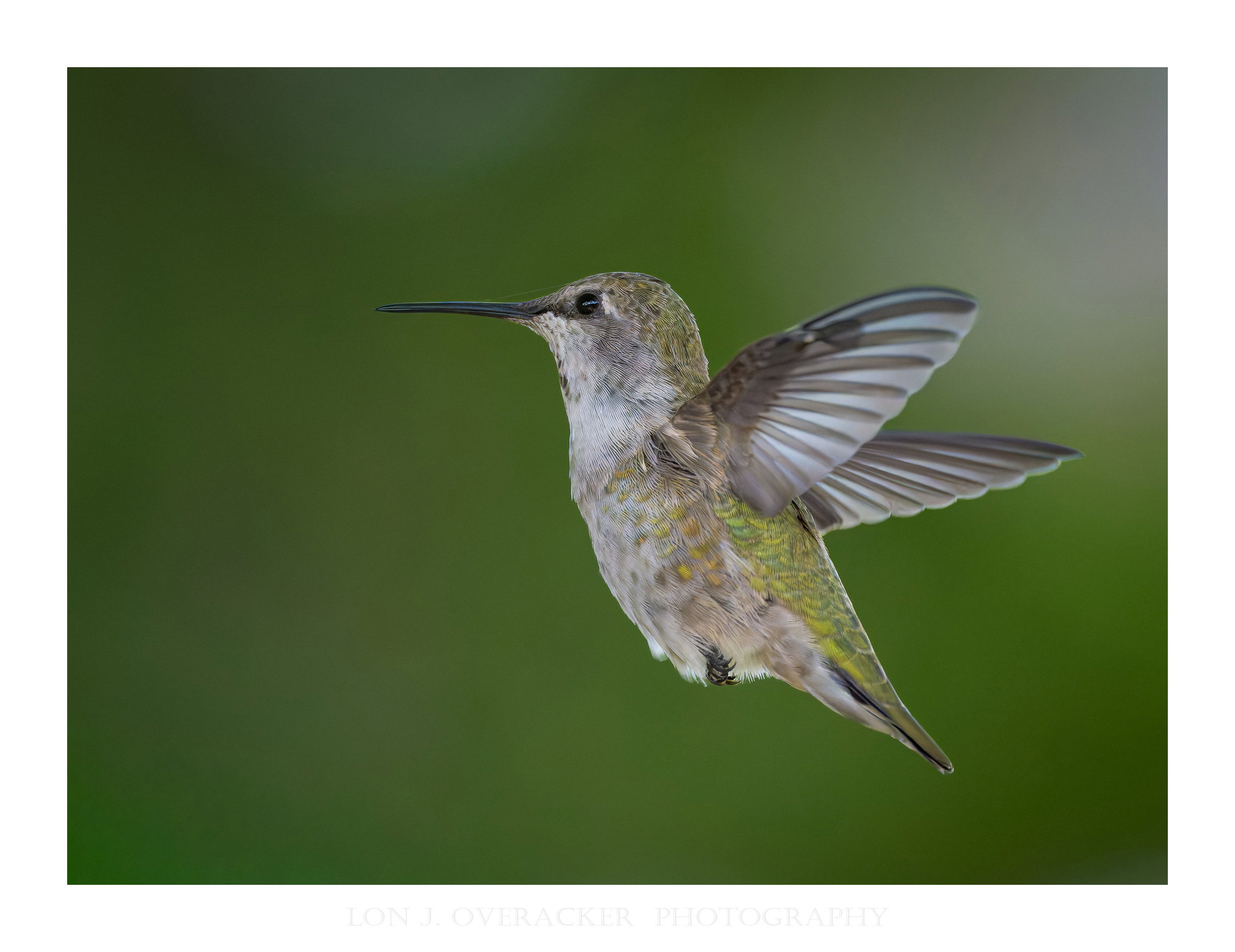
1/3200th

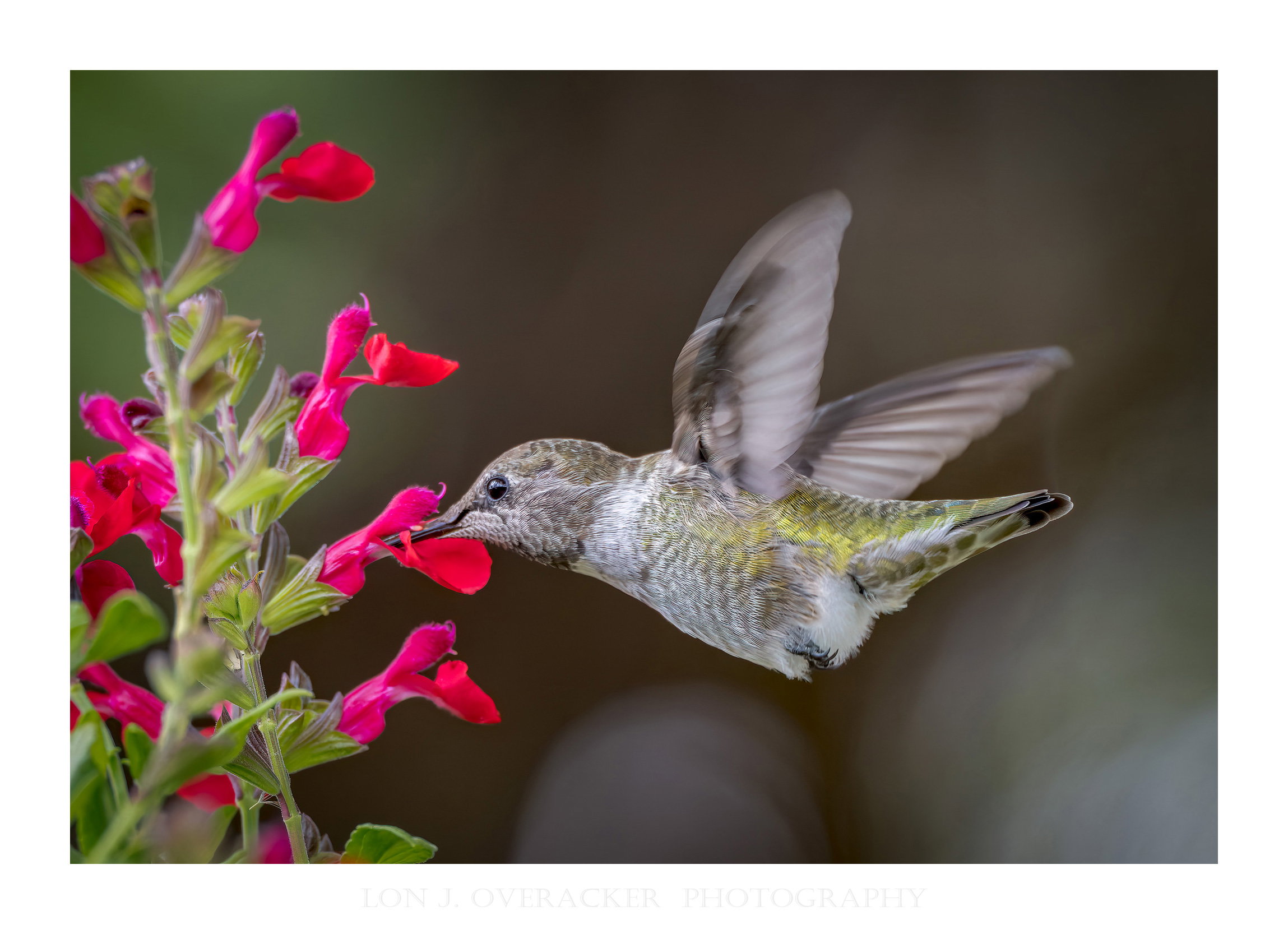
1/800th

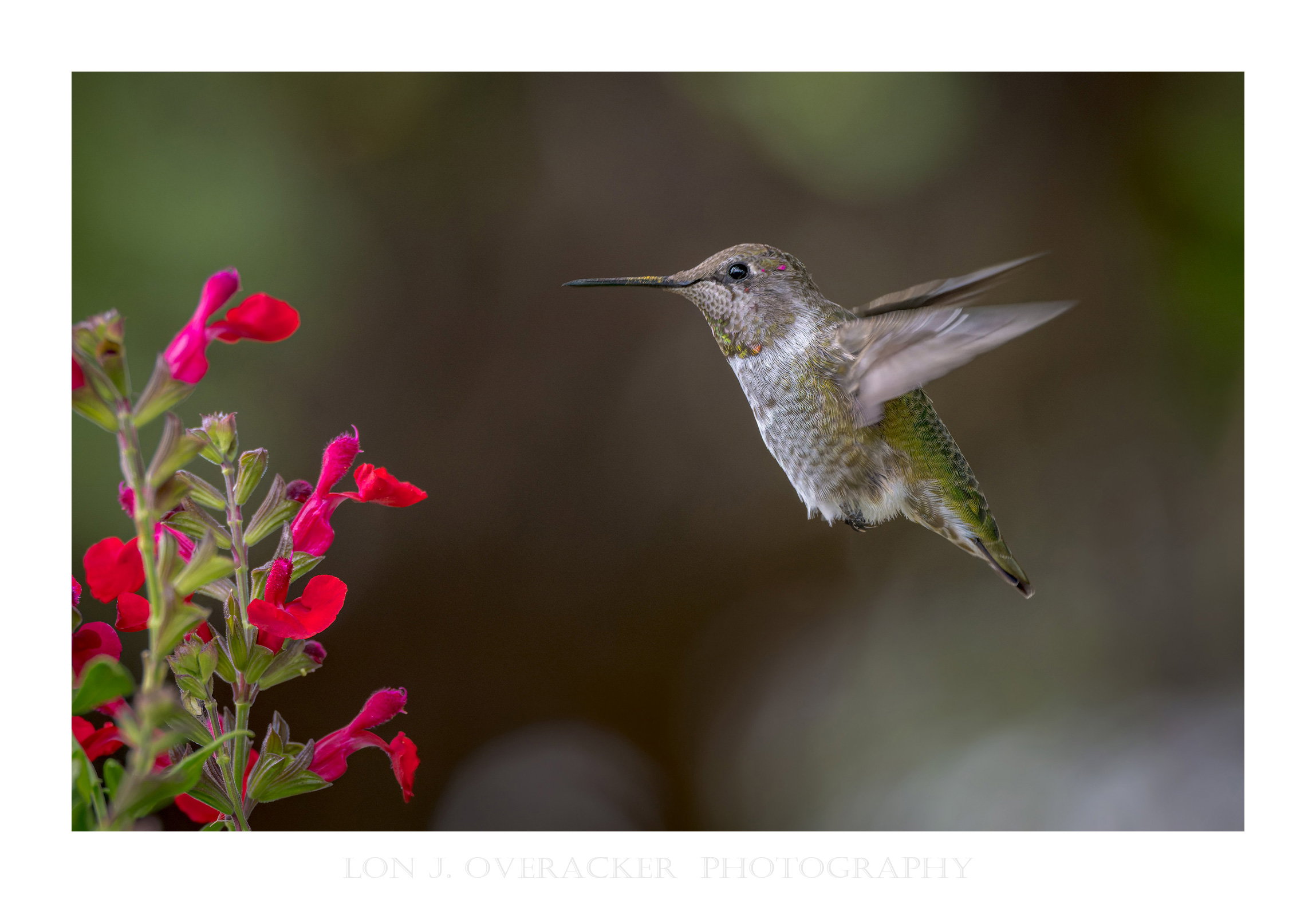
1/800th
Critique Style: Standard

The photographer is looking for thoughtful feedback on the image as a whole, especially around the areas noted below.

Feedback Focus: Artistic + Technical

About This Image

I’m addicted. Well, having fun anyway. Just enjoying watching - and observing the birds. The more one spends time, the more unexpected moments you get to witness. I’m learning a lot here too with all your tips and help.

Speaking of which, I went to the garden nursery a few days ago and picked up 4 hummingbird friendly perrenials, including 2 Salvia varieties. They’re already hitting the Autumn Sage Salvia - seen in the pics.

I also purchased the DXO PureRaw denoising SW and have been happy with it and inserting in to my processing workflow. If you haven’t seen it, I would love some feedback in the article I posted in Discussions.

EDIT: I forgort to mention. While both my wife and I were sitting on the patio in the evening, she happened to Google about humming birds. One of the little factoids she read off was that humming birds like to use spider web as one of the materials when building their nests. Now I don’t know if this is breeding or nest building time… but in the first image you can clearly see a line - a web string on the birds beak to head. It’s in many frames, so I know it’s not a background thing - it’s on the bird! Looks like a spider web string to me! What do you think?

Feedback Requested

As always, your comments and feedback are always welcome.

I noted in the image descriptions, but the important note here is that the first image was shot at 1/3200th sec. With the other two, I was shooting some BOS… and the SS wasn’t as fast - then I saw the hummer at the Salvia and didn’t have time or thought to increase the speed. Clearly the slower SS did not produce the sharpest image. Learning the lessons..

Processing, color/sat and of course sharpness, etc. - Your feedback appreciated.

Technical Details

1/3200th
Camera: NIKON Z 8
Lens: TAMRON 150-500mm F/5-6.7 Di III VC VXD A057Z
Focal length: 500mm
Shutter speed: 1/3200s
Aperture: f/6.7
ISO: 16000

1/800th
Camera: NIKON Z 8
Lens: TAMRON 150-500mm F/5-6.7 Di III VC VXD A057Z
Focal length: 500mm
Shutter speed: 1/800s
Aperture: f/8
ISO: 11400

1/800th
Camera: NIKON Z 8
Lens: TAMRON 150-500mm F/5-6.7 Di III VC VXD A057Z
Focal length: 500mm
Shutter speed: 1/800s
Aperture: f/8
ISO: 11400

Hi Lon, These are all amazing! Hummingbirds move so quickly ! The 1/3200 photo is my favorite. I love seeing all the details and the spider web string attached to the beak. Very cool! I also really like the photo with the beak in the flower and the wing blur. It is fun to see the bird in “action” at the flower.

lovely pics - I particularly like the third one compositionally

Regards

Huw

Nice captures Lon. The details on the bodies look good and each wing is in a good position. The motion blur of the wings in each image looks good to me. I prefer the pose of the third image as the first two seem to have the bird slightly angled away from us. I also like the flowers in the last two images. Nice series.

Wonderful images, Lon, I think you have a new hobby!!

Nesting season is in the spring so the spider web is probably just from a collision. These look like Anna’s females. They are the most common here and year-round, and you’ll see some Allen’s in March-June, with more rufous plumage. In spring the aptly-named (and very energetic) Rufous will migrate through for a week or two. They supposedly head through again in fall but I’ve never seen them then – I’ve read that they take a more inland route going south.

Heading to your post in Discussions – I hadn’t seen it.

All of these look great, Lon, but I vote for #3. It has the best pose and tells a nice story about the habits of hummers.

It’s interesting how they retract their landing gear so they will be as streamlined as possible. Fascinating birds.
-P

Hi Lon

Any time you can photograph a hummingbird is a plus. The slower shutter speed is ok as the body is in focus.

Nice work.

Peter

All are well done, Lon. I like the third for the activity going on. The head and body detail look good in all of them and nothing wrong with some wing blur to convey their motion. I have a dedicated button on the back that is set for high speed-mainly flight shots.

I think you are definately addicted.

I like all three images very much. But, I’m really liking the third image. Beautiful bird, lovely salvia and a great background. Colours and composition work a treat. For me, bird photography isn’t all about the techs.
If I had any nits about that third image it would be that the salvia feels a little cramped against the edge.

I looked at DXO just yesterday. They were offering a free trial. I couldn’t launch it.

Excellent series, Lon. Yes, I 'm sure that’s spider web in the first one, though it’s not breeding season any more (though we still have a male Anna’s that seems to think differently). The first shot at 1/800th looks plenty sharp to my eye. The second, it looks like the bird was starting to move instead of hover and when they do, they’re very fast.

I’m not sure about where you live, but up here, the male Anna’s will hang around in the winter if you keep a feeder up and can offer some amazing images in frost or snow.

They do the same here in the Sierra Foothills.

Another interesting behavior is a male Anna will fly straight up into the air, make a loud ‘chirp’ and then descend at high speed. I have seen it several times over the years. I recall reading that this is a mating behavior.

Birds are truly amazing creatures, and we are so fortunate to have them around for us to enjoy.
-P

Thank you so much @JayD , @Huw_Thomas , @Allen_Sparks , @Diane_Miller , @Preston_Birdwell , @Peter_Morrissey , @Allen_Brooks , @Glenys_Passier , and @Dennis_Plank ! Very much appreciate your comments, observations and information!

Thanks Glenys. Actually, I believe I have more flowers to the left. Always a challenge to find good crop lines without having the “fix” the edges. You make a good observation; I had hoped I included enough of the flowers

Thanks again everyone!

1 Like

I like all the images, third the best. Spider web is an integral part of the hummingbird nest. The nest starts off small with eggs and after they hatch and grow the nest actually enlarges to hold the enlarging bodies. This is evident on many bird Cams that follow the breeding cycle..Can’t believe that you really got it but, it surely is there.

Really enjoyed this group. The faster speed is what I prefer but the slower ones are still very good. My favorite is number 3. Thanks for sharing these images.