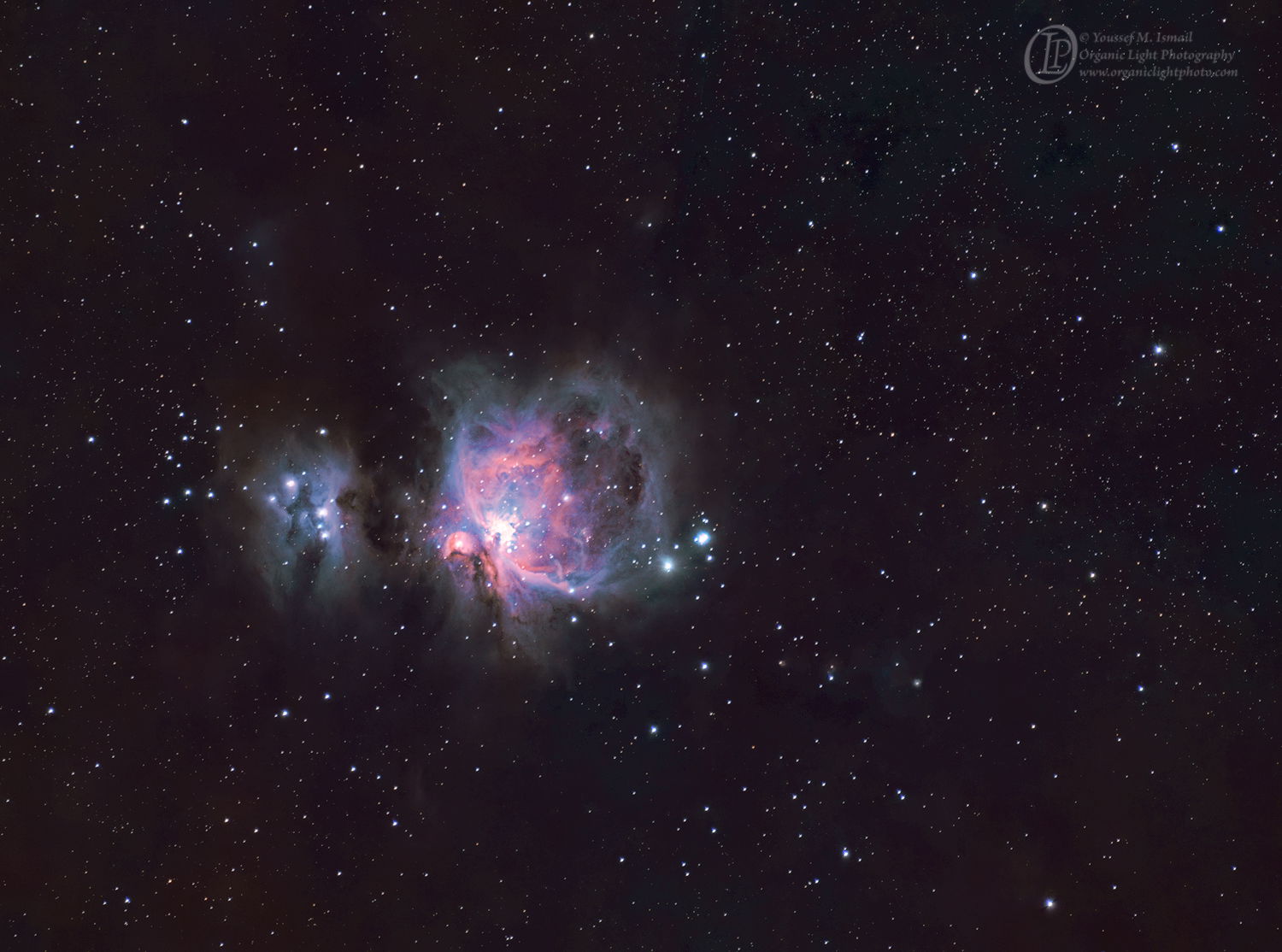
Critique Style Requested: Standard
The photographer is looking for generalized feedback about the aesthetic and technical qualities of their image.
Description
On November 23 I went out to photograph Orion again. At the end of the session I decided to zoom in on just the Orion Nebula. I took 7 frames at 1 minute each and 3 dark frames. I do not know how I managed to squeak out the detail that I did. I processed the files in Siril and Starnet++ and then in PS and then back in SIril to recombine the starless and stars images. I am going to try this image again, with more subframes and try to get more detail in the core, I think I am getting there.
Specific Feedback
Any feedback is appreciated.
In particular, do the colors work?
Technical Details
Nikon D850, Nikon 400mm f/5.6 MF lens, set at f5.6, 1 min, ISO 1600 - 7 frames, and 3 dark frames.
Processed in Siril then Stranet++ to separate the nebula from the star field. Stretched the nebula in Siril, and used a new script that performs some kind of HDR on and image. That took some time repeating that process over and over changing parameters until I got something that I thought was saving the core as best as I could. I also used another script called Graxpert-AI to denoise the image and it worked very well. Then I brought it into PS to get the colors looking somewhat right based on viewing many other images of the Orion Nebula. Colors in Astro images are so subjective sometimes.
Critique Template
Use of the template is optional, but it can help spark ideas.
Vision and Purpose:
Conceptual:
Emotional Impact and Mood:
Composition:
Balance and Visual Weight:
Depth and Dimension:
Color:
Lighting:
Processing:
Technical: