The photographer is looking for thoughtful feedback on the image as a whole, especially around the areas noted below.
Feedback Focus: Artistic / Expressive
About This Image
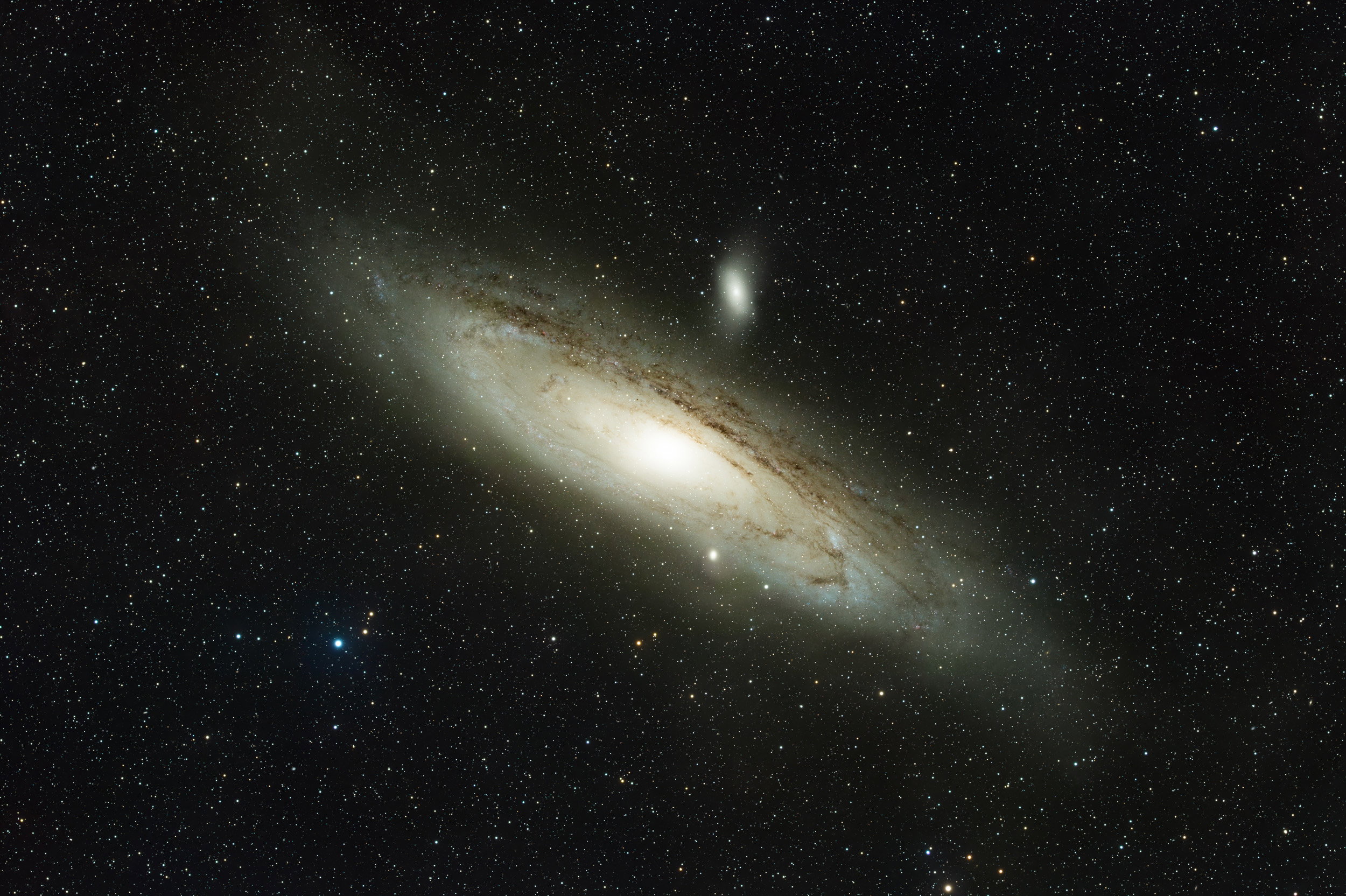
Another one from the recent string of clear nights, shot almost a month ago. I’ve shot it before but each time with better equipment and software. This was with a new tracker, better guiding, and some software improvements in PixInsight. So there is better detail than previously. This is with a field reducer so actual FOV is about equivalent to our 400mm lenses. I rotated the camera slightly to fit it in and the celestial north pole is about 20 degrees left of the vertical.
Feedback Requested
All comments welcome!
Technical Details
My astro rig, 6.75 hours of 3-minute exposures, processed in PixInsight. A clear night five nights before the new moon.
Beautifully done, Diane. Images of galaxies like this just leave me in awe over the immensity of the universe and the super dense star field adds a lot to that feeling.
P.S. It’s funny how we keep our fixation with north-south and horizons when we start talking about space where it’s so totally arbitrary.
This is outstanding, Diane! I love astrophotography, but unfortunately, I haven’t done much of it myself. I’m just not much of a night person, and I’m pretty useless (and grumpy! ) when I’m tired. So I’m really glad I can enjoy and marvel at the universe through your excellent photography!
Thanks, @Dennis_Plank , @Tom_Nevesely , @Huw_Thomas and @Preston_Birdwell ! Preston, that’s M110 above it and the fuzzy object that looks like a star just below the core is M32. Both are satellite galaxies of Andromeda – close enough for significant gravitational interactions.
Actually the is a sort-of up-down in space, from our viewpoint, and that’s the relation of objects to the celestial north pole, around which they appear to rotate. Trackers can have their cameras rotated and by default they will be with the CNP at the top of the frame, but cameras are often rotated for composition when an object is large relative to the field. We often see Andromeda shown at 180 degrees due to the tracker having done a meridian flip as the object crosses the meridian, to avoid the ends of the optical train crashing into the mount. If there were more frames shot after the flip, the software will just use that orientation.
I used to be more of a night person, but it got to be a bit much, even years ago when I first got into this, to be out in the cold and dark hassling with a laptop with limited battery life and the need to re-focus every few degrees of temp drop. In the dry season, even summer nights here are usually chilly – it can be 90-95 in the day and drop to 45 before sunrise. Now I set up the tracker in the daylight, polar align when it’s barely dark enough to even see Polaris (and on a subsequent night if the tracker hasn’t been moved, no need to repeat that), make sure the onboard computer is connected to the iPad and both are on the house network, and go back inside to set up the night’s program. If the object isn’t visible until after bedtime, I can program a delayed start time.
Ah, good old Andromeda! Splendid representation of it, I especially enjoy the contrast between the fluffy galaxies and the bright point-like stars. I never tried astronomy images, but am an avid viewer of them, from ground telescopes to orbiting instruments… Thanks for sharing such beauty!
 ) when I’m tired. So I’m really glad I can enjoy and marvel at the universe through your excellent photography!