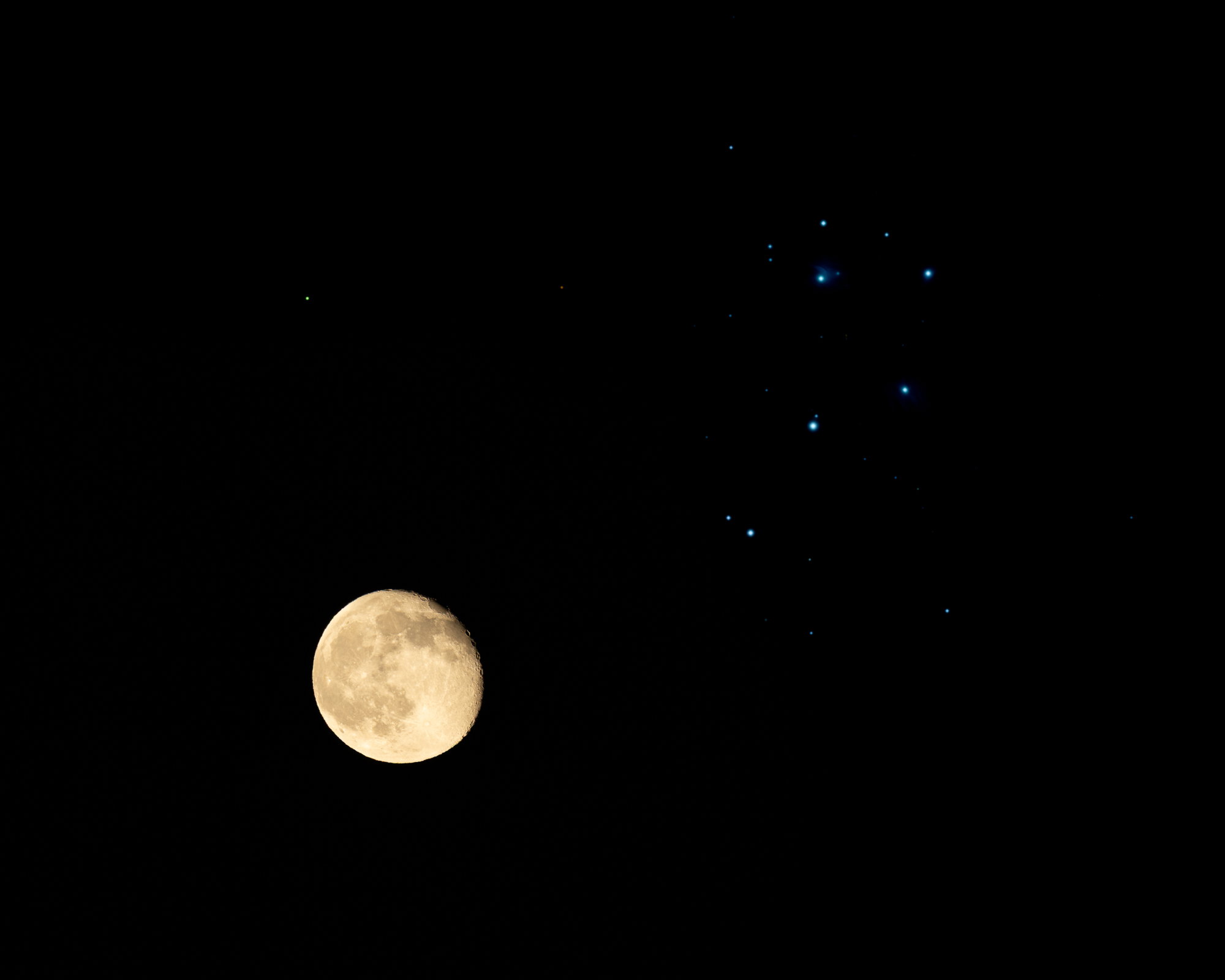
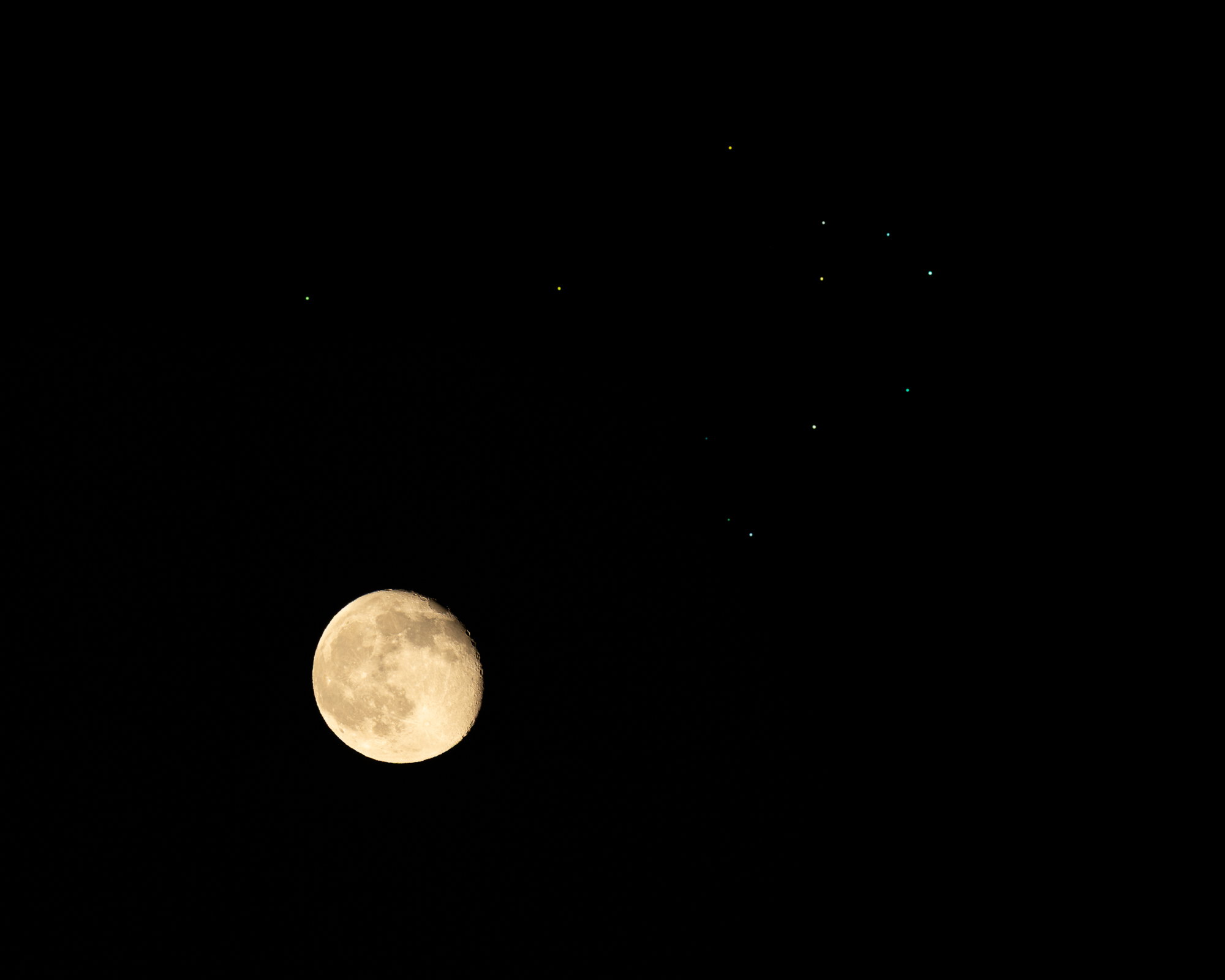
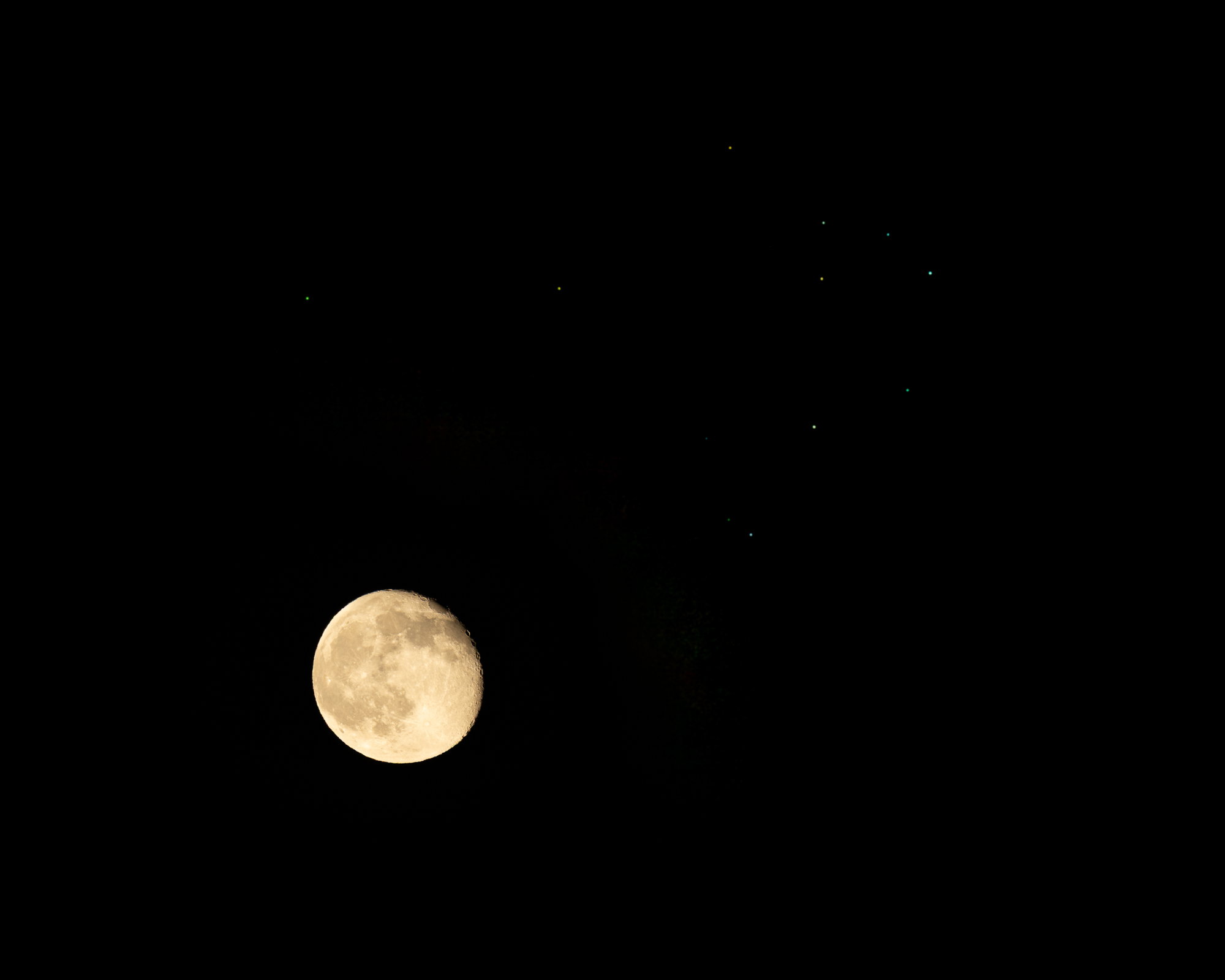
What changed: Punched the stars more and more masking of noise from the glow around the overexposed moon. I tried the traditional method of bloating the stars with the Maximum filter before blurring but with no better results. There are some stubborn greens here – deep sky objects don’t have greens but it creeps in with our Bayer sensors which pick up more green than red or blue. I’m amazed I got stars this well so close to the bright moon. Clearer than normal air and less light pollution to the NE.
Added after receiving feedback from the community.
The photographer is looking for thoughtful feedback on the image as a whole, especially around the areas noted below.
Feedback Focus: Artistic + Technical
About This Image
Last night the just-waning moon was very close to Pleiades, with the closest point about an hour before moonrise here on the west coast. We have some hills to the east so I settled for the view from the top of our driveway, when it came up over a hill just after 8 pm. The moon is so bright that I had to composite two exposures taken 6 seconds apart at different ISOs. I shot bursts of about 50 frames of each exposure but decided against trying any fancy astro stuff to optimize them. The moon is bright enough to shoot at low ISO with minimal tweaking, and camera lenses just don’t do a good job with pinpoint stars so I felt I wouldn’t gain anything with stacking and astro processing. May try that later and will report back. I was surprised that I got a little color from the stars, with just the simple processing detailed below.
In the meantime I will have some fun with this later. Stay tuned…
Feedback Requested
All comments welcome!
Technical Details
Camera: Canon EOS R5
Lens: RF100-500mm F4.5-7.1 L IS USM
Focal length: 451mm
Manual mode:
Shutter speed: 1/180s
Aperture: f/6.7
stars at ISO: 51200
moon at ISO 320 (because I was fumbling around in the dark)
The moon had a slight bump in Texture and Clarity in LR. The stars were denoised in LR and into PS for a Curves boost (including pulling in the black end to kill some remaining noise), and a touch of Gaussian blur which killed some very fine remaining noise. I layered the two in PS and masked out the hugely overexposed moon and a lot of glow around it. Probably good the moon wasn’t closer to the stars.
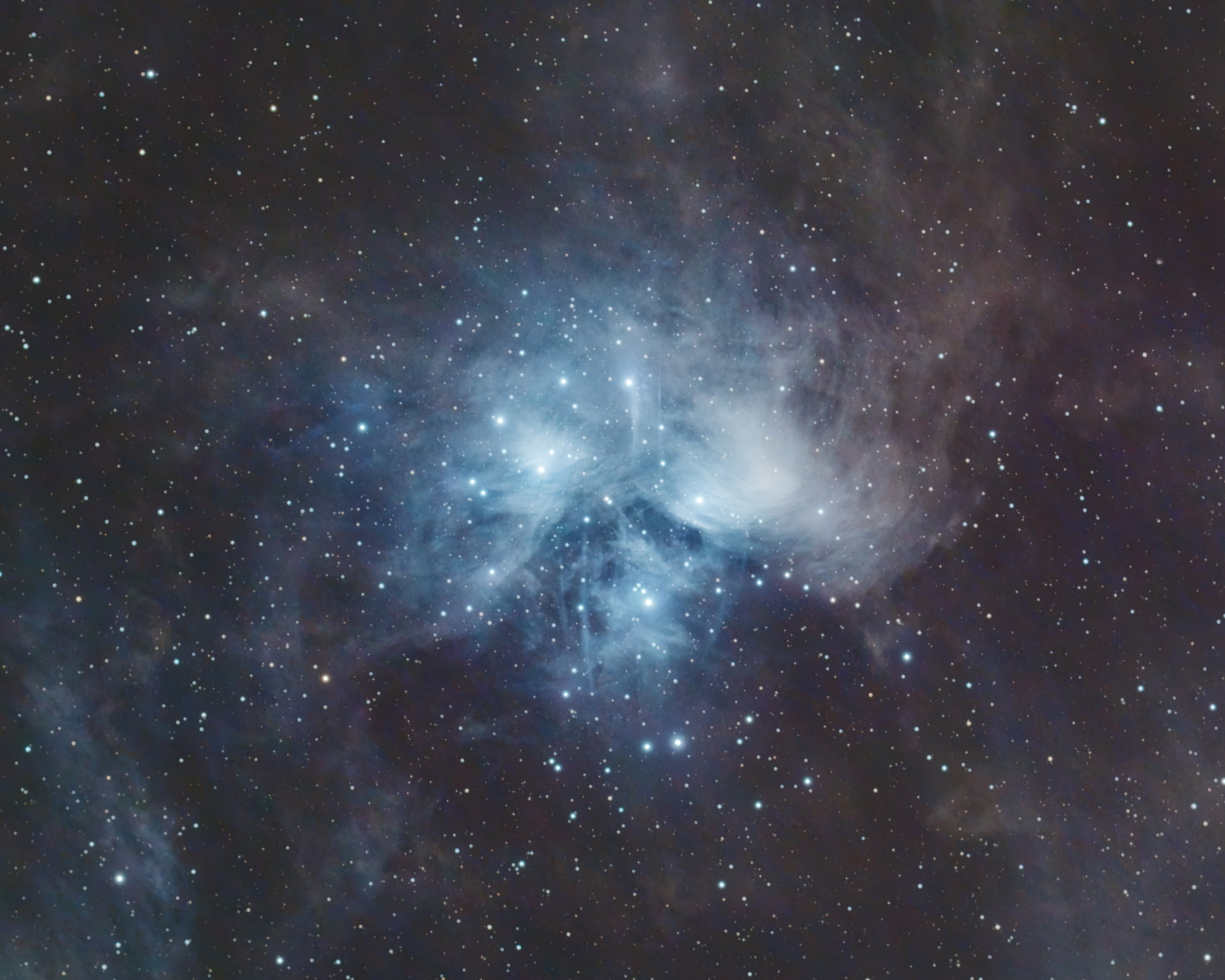
Thanks, @Karl_Zuzarte ! The story is the rare close conjunction. The moon was very bright, just past full, and much brighter than the stars, which I could not see with all the moonlight on the sky. It felt interesting in the last post to punch the stars beyond what even the camera could capture. Good catch about the rectangular carpet – I don’t see it on my monitor, as the “blacks” in both frames merge together. The Pleiades was shot much later in a night so it had appeared to rotate considerably, and the edges of that rotated frame are what you see. I’ve darkened the blacks it in the master file but won’t re-post. Thanks for the catch!!
Thanks, @Glenys_Passier ! I would have shot it with the tracker but even with the reducer added the FOV would have been too narrow. And the bright moon might have been too bright for the fastest SS of the ASIAIR onboard controller. It would still have taken two drastically different exposures composited and the moon part wouldn’t have had any advantage over the camera on a tripod, so even though the final composite might seem a stretch, it is actually quite realistic, and would be even more so if I hadn’t suppressed most of the nebulosity. But I can justify doing that with the skies bright with moonlight, which will make dim nebulosity much harder to pull out.
I love this image, Diane - especially the second revision that makes the stars a bigger (no pun intented) part of the image/story. Once again, very nicely done!
Thanks, @Tom_Nevesely – I had fun with this one! I wouldn’t have thought the constellation was that big next to the Moon, but this is completely to scale – the Moon and original stars were shot at the same focal length and aim – just a quick change in ISO. And I see I didn’t get the stars lined up and scaled quite right – I’ll fix that in the master file. And now I have replaced the astro rig file above with better-aligned stars.