Critique Style Requested: Standard
The photographer is looking for generalized feedback about the aesthetic and technical qualities of their image.
Description
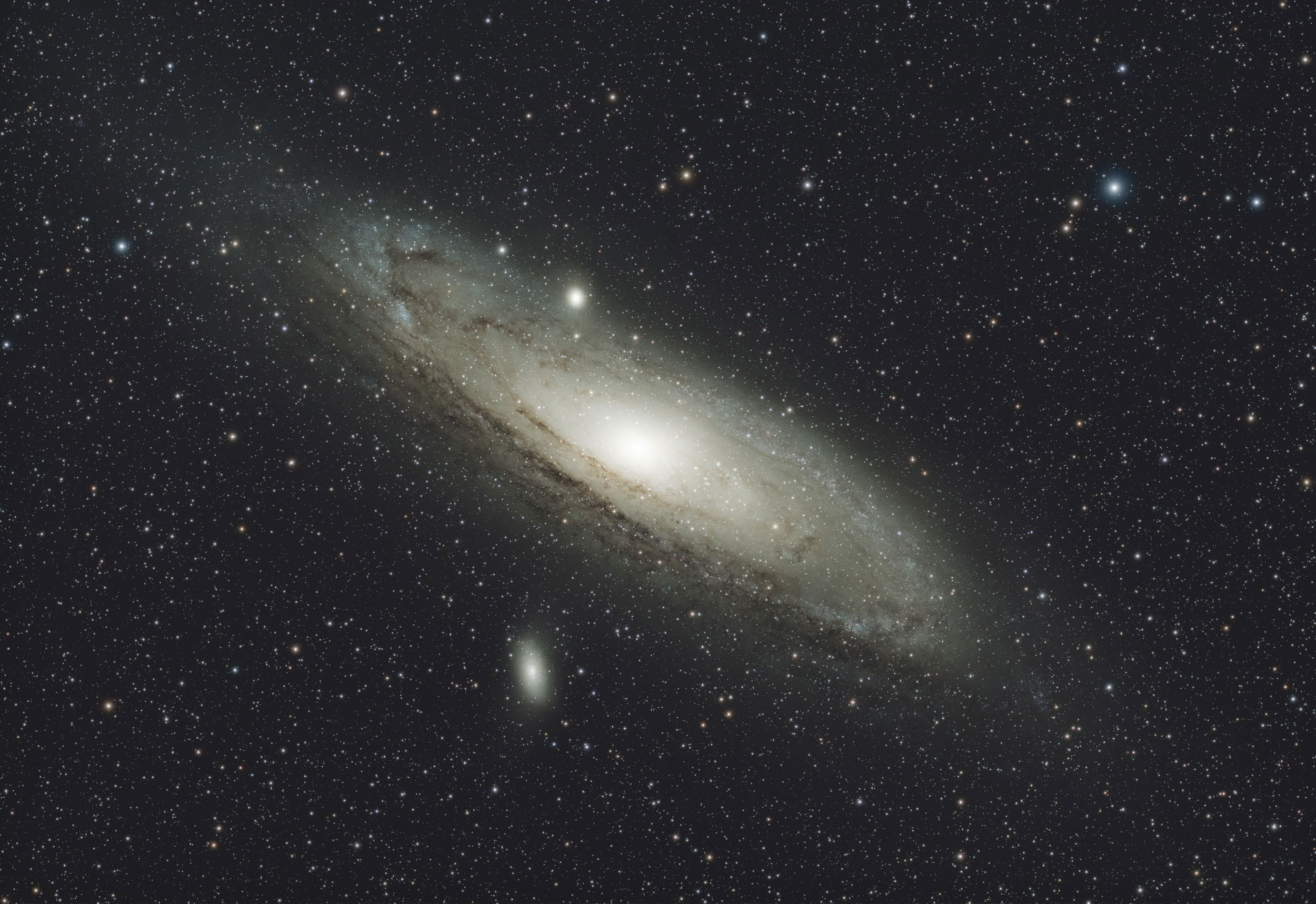
After a long dry spell with no clear dark nights, there was a tiny window the last few nights, with the waning moon rising about an hour later each night and clear skies from dark until fog formed with dropping temperatures and a lot of moisture in the air. I had about 1-2 hours each night and decided to re-shoot M31, which is high in the sky, minimizing the atmosphere. The moisture contributes to the severity of light pollution but is prevalent in the winter months when M31 is visible, so it was worth the try.
Specific Feedback
All comments welcome!
Technical Details
My astro camera, scope and tracker. This is from just one night, with 1.5 hours of 30-sec exposures. I had a glitch trying to combine data from all 5 nights and when I resolve that I’ll see if it will give more detail in the faint areas. Basic processing in PixInsight.
Critique Template
Use of the template is optional, but it can help spark ideas.
Vision and Purpose:
Conceptual:
Emotional Impact and Mood:
Composition:
Balance and Visual Weight:
Depth and Dimension:
Color:
Lighting:
Processing:
Technical:
1 Like
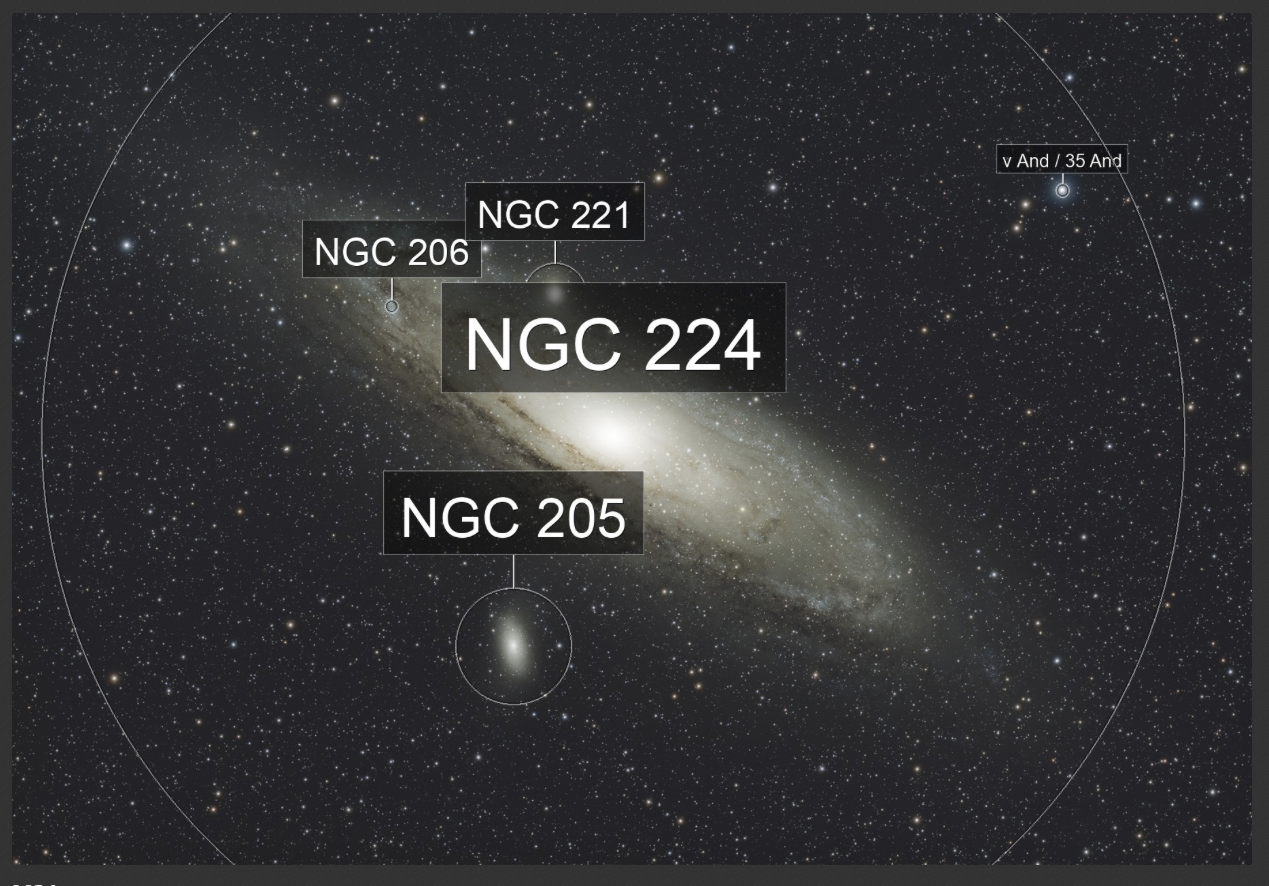
With the recent discussion going on about tags and categories, etc. I realize I need to explore more of what NPN has to offer and not focus mainly on Avian. And I’m glad I did. This is a great look at the Andromeda Galaxy. I know a lot of work goes into these deep space images, so kudos on your patience and skill. Is that another galaxy below Andromeda?
This is a wonderful image of our nearest galactic neighbor, Diane. Not only do I not have the gear, I lack the patience for such efforts. That said, astronomical images have always been a source of wonder for me, and I love looking at them. You did a nice job realizing the dust lanes in the spiral arms.
Just curious, but what is the name of the galaxy below Andromeda.
Nicely done!
-P
Thanks, @Allen_Brooks and @Preston_Birdwell! There is so much great information (and just plain eye candy!) in all the categories here, I’m all for encouragement for more exposure to different categories.
The power of modern “backyard” astrophotography lets me “plate-solve” the image and have adjacent structures tagged. The two obvious fuzzy objects are indeed other galaxies and there is another structure hidden behind the main one (NGC designations are used here). In addition a star is identified. NGC 205 and 221 are small and considered satellite galaxies to Andromeda, and NGC 206 is a star-forming region embedded in Andromeda. The nomenclature is confusing because many galaxies are included in various catalogs of deep space objects. In the Messier catalog, Andromeda is M31 and in the New General catalog it is NGC 224. There is also a Caldwell catalog (IC designations) and several others, but those 3 are the most commonly encountered.