Tunnel View Abstract

Critique Style: Standard

The photographer is looking for thoughtful feedback on the image as a whole, especially around the areas noted below.

Feedback Focus: Artistic + Technical

About This Image

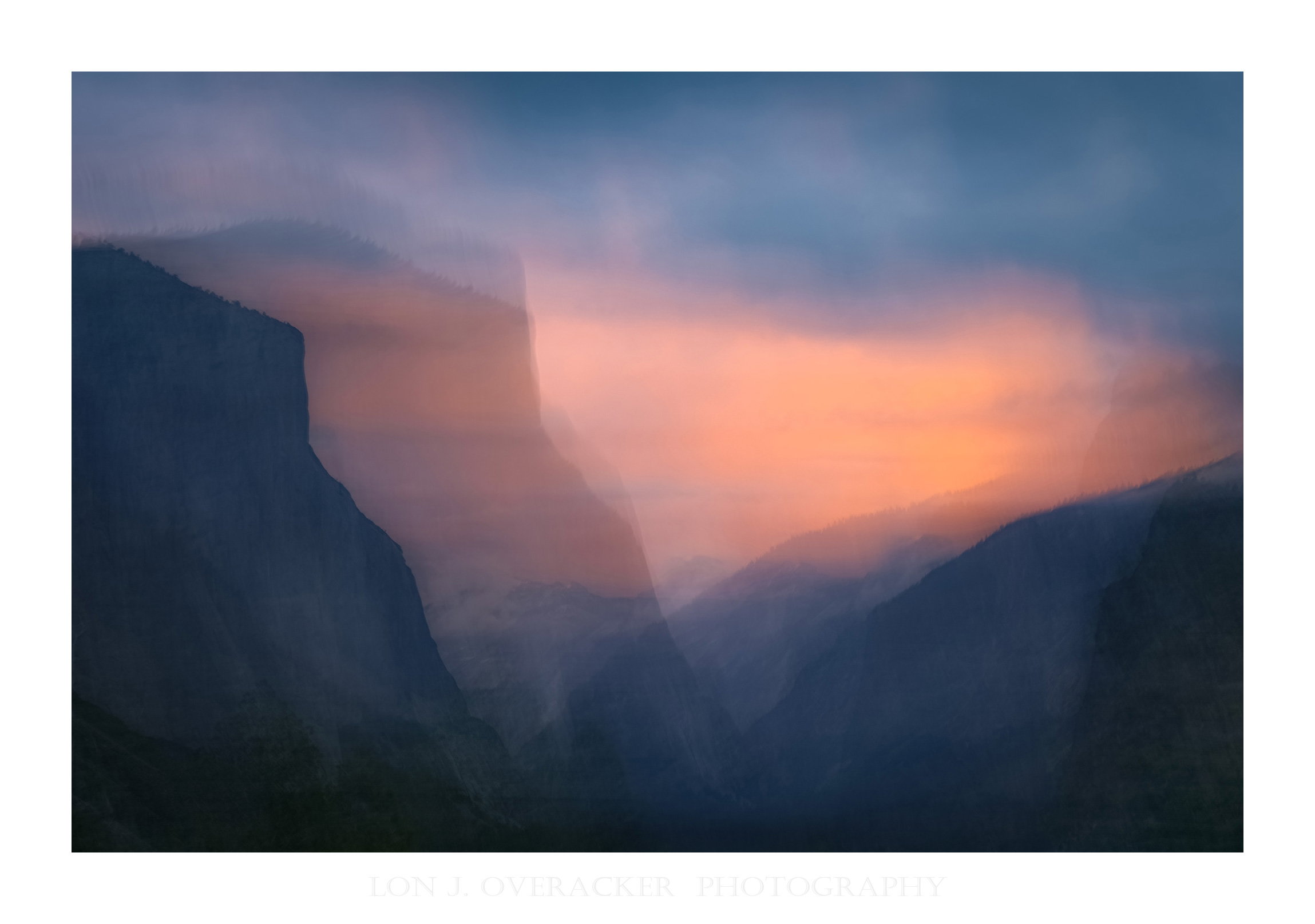
I’ve been sitting on these and actually hesitant to post. The reason I’m hesitant is because somehow it doesn’t seem right to alter or make abstract such a popular and well know scene/location. On the other hand, I’ve stood at this spot seemingly countless times and I just wanted to try something different.

This was taken during that first sunset when the colors hit quickly and for just a few minutes.

Feedback Requested

As always, your comments and suggestions are most welcome.

Of course I’m interested in any processing nits or suggestions you may see. But also, in general what response do you have to creating an abstract from something so familiar?

I recall one of @Don_Peters comments on one of his own images about “echos.” Meaning features that are repeated due to the movement or position change of the camera during exposure. The echo in these is quite apparent. Is that a distraction or a feature in this type of image?

And finally, do you have a preference between the two? and why.

Thanks for taking a look and leaving a comment.

Technical Details

Single ICM frames

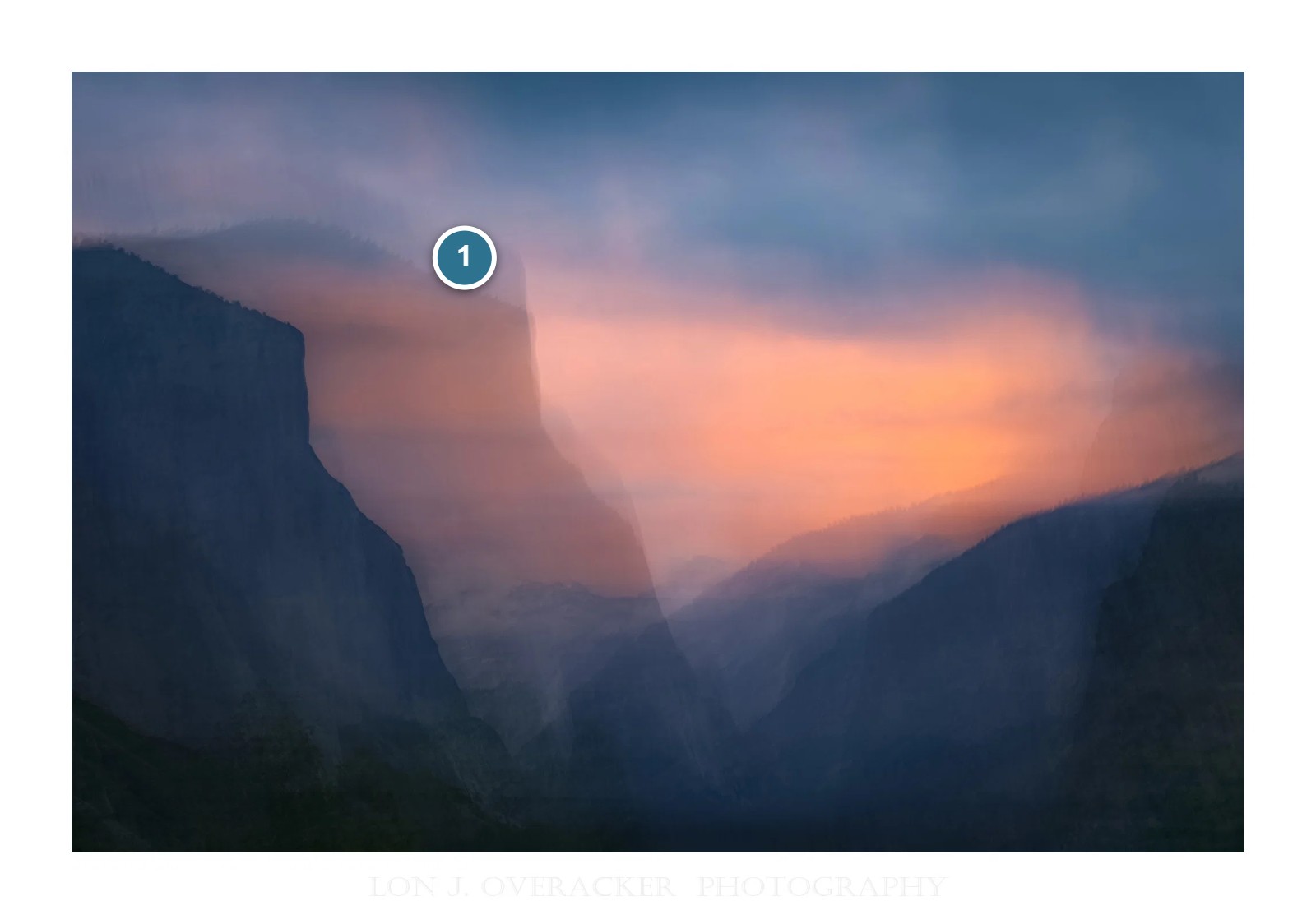
Image 1
Camera: NIKON Z 7_2
Lens: NIKKOR Z 24-200mm f/4-6.3 VR
Focal length: 43mm
Shutter speed: 1/2s
Aperture: f/7.1
ISO: 31

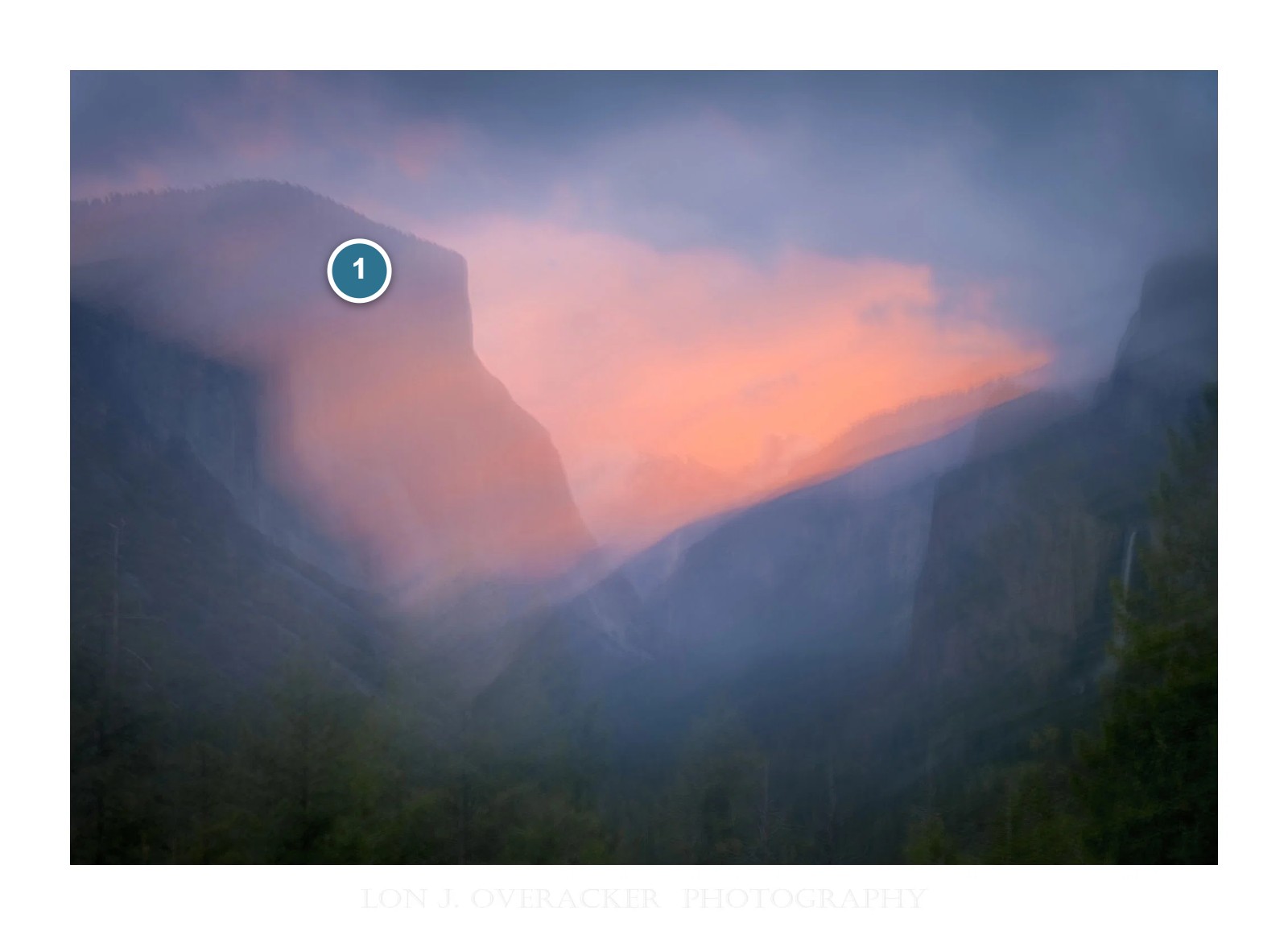
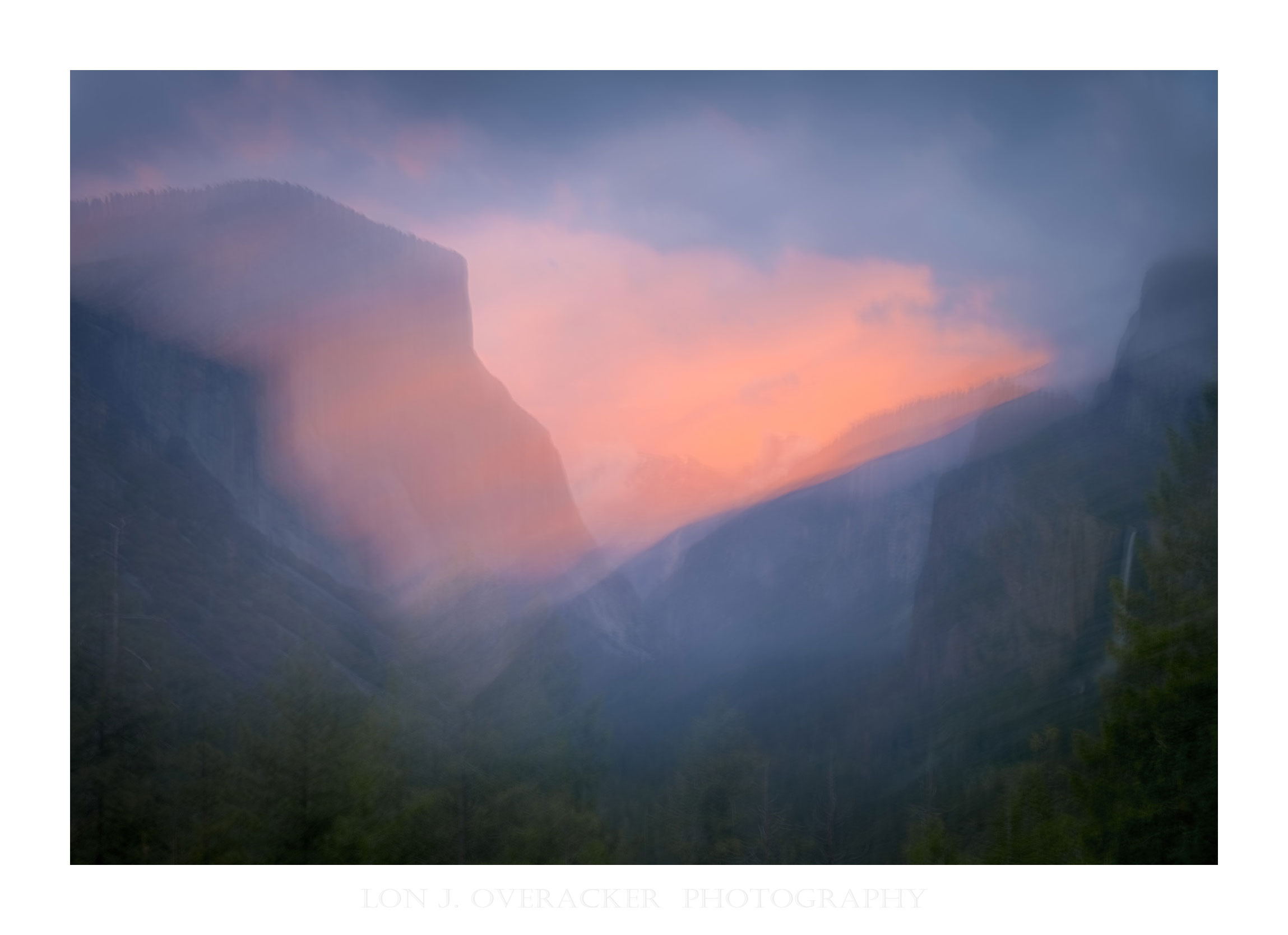
Image 2
Camera: NIKON Z 7_2
Focal length: 52mm
Shutter speed: 1/2s
Aperture: f/7.1
ISO: 31
Lon,

I would feel no qualms about making abstract images at well-known locations.

I like both of these . All in all, I probably prefer the second one. But there are areas in both images that bother me.

Visual Notes for Image 1

[1] This echo is distracting.

Visual Notes for Image 2

[2] This muddled edge is unattractive.

I was having trouble navigating the software so I posted a partial response. I think both those areas can be fixed in PS. It might take some effort but these are very good and they deserve the effort.

Lon,

That echo idea is a cool one. I think if you took the “echo” from the second image (Echo 1) and apply it to the first image it seems to “echo” better, if that makes any sense. But I don’t know how you would go about doing that.

Visual Notes

[1] Echo 1

Lon, the “echo” effect is intriguing, I particularly like #1 because the echo of the far ridge is clear. Interestingly, there’s very little apparent echo of the first ridge on the left, while on the right, it seems like you echoed both vertically and horizontally. I also like the darkness at the bottom. In #2, there’s more echo effect, but it seems more blurred, which makes it more visually confusing, especially with the far ridge on the left not showing any echo…

Echo!! A wonderful analogy, @Don_Peters ! I’ve just added that to my photography vocabulary!

I love both these images and think it could be possible to combine the best of both. If they are different focal lengths that can be fixed. I have no issue at all with doing creative work with iconic landscapes – I think it’s an excellent idea!

I really like these, Lon. To me, certain scenes that are well known are more interesting when there is a unique technique used to make the image. Of course, interesting fog, etc. are good too. But why not do both?

I like the echo effect, and I like that it says something about time, about the number of images taken at a location. I wonder if it is possible to get the right half of the second one and the first have of the first one into one image. In general, I like the first image better (cleaner echo lines) but I also like seeing the falls in the second image.

Nicely done, and bravo for getting funky with an icon.
ML

Thank you @Don_Peters , @Youssef_Ismail , @Mark_Seaver , @Diane_Miller and @Marylynne_Diggs for your comments, feedback and suggestions. This was received better than I anticipated!

I always take feedback to heart and will always consider the suggested changes. Now, I actually agree that elements in one image might work well combined/replaced in the other image. But here’s where I depart and likely not spend time compositing these abstracts. Hopefully I will make some sense here.

First I acknowledge ICM’s are the result of randomness and luck. Sure, there are elements of choice of what and when to use the technique and so I also think there is creative license, but for ME, my primary goal is to create these abstracts in the field, with the camera. Yes, I crop them, take liberties during processing, but it’s always about the single frame. I’m not so interested in combing dozens of abstracts and combining them to create a new abstract. Now, on the flip side, if I had that intention in the field and I shot multiples of something knowing I would combine them later, then that’s fine. But in these cases, that was not my intent.

Don’t get me wrong, I’m “composited” many images after the fact. Prime example are images of moving water. I often intentionally capture many frames, different shutter speeds, knowing that I may have a great image of flow and texture, but there’s a big washed out wave… I may take a second frame and “fix” the water. Technically, it’s not different than what is being suggested here by taking a good “echo” element and combining with a different frame for perhaps a more pleasing result… The difference for me, is intent. I never intended and honestly I don’t want to create new work from multiple frames.

Am I a hypocrite? maybe… but that’s my story and I’m sticking to it.

ps. Just so you know, I did try and combine the two images… I struggled trying to make it work. I know it could be done, but at some point I just want to pursue the result. Hope that makes sense!

1 Like

Totally makes sense Lon. That’s why I’m sometimes hesitant with that kind of feedback. It’s like “If I could have Palm Springs winter and Oregon summer in one location, that would be great.” In your case, it’s easier to marry the two, but that’s a PIA any way you look at it.

That said, I like the second image best for the waterfall.
ML

1 Like

Makes total sense. The intent behind a photograph is made at the time the shutter is pressed. But I would like to clarify my comment about the echo from one frame to the other frame. I just thought the echo that I pointed out would have looked better on the other frame and then wondered how you would even do that. I was not sure if the echo image was composited by you or it was done in camera the way your other ICMs are made.

Thanks Marylynne!

And please, don’t let me disuade you from ever leaving feedback! It’s all good. And if I thought I was creative enough, or gifted enough in PS, I might have a better go at creating something. I actually have several other renditions that could be used!

No worries Youssef, I get it. In fact, I too am wondering how I could even do that! To your other question, honestly I can hardly ever remember the exact movments I made, but I have learned to recognize a few techniques. Briefly, I hope, ICM’s involve motion of the camera, duh, right? But it matters greatly WHEN you start the motion and WHEN you click the shutter. In the above case, the only way really to have a recognizable image - like El Cap in this case, without a blur, is to simultaneously click the shutter and start the motion. This allows the “real” image an instant or reality, while the remainder of the exposure, the camera is in motion. Alternatively, say in my Elemental ICM’s, the camera is already well in motion before the shutter is clicked. the only reason the tree is recognizable is because it’s a vertical subject and the motion is vertical (all be it still blurry).

Anyway, I hope that helps the conceptual part of it. So, NO, these weren’t composited - either in camera or post. Simple, single frame with some combo of motion.

Thanks folks!