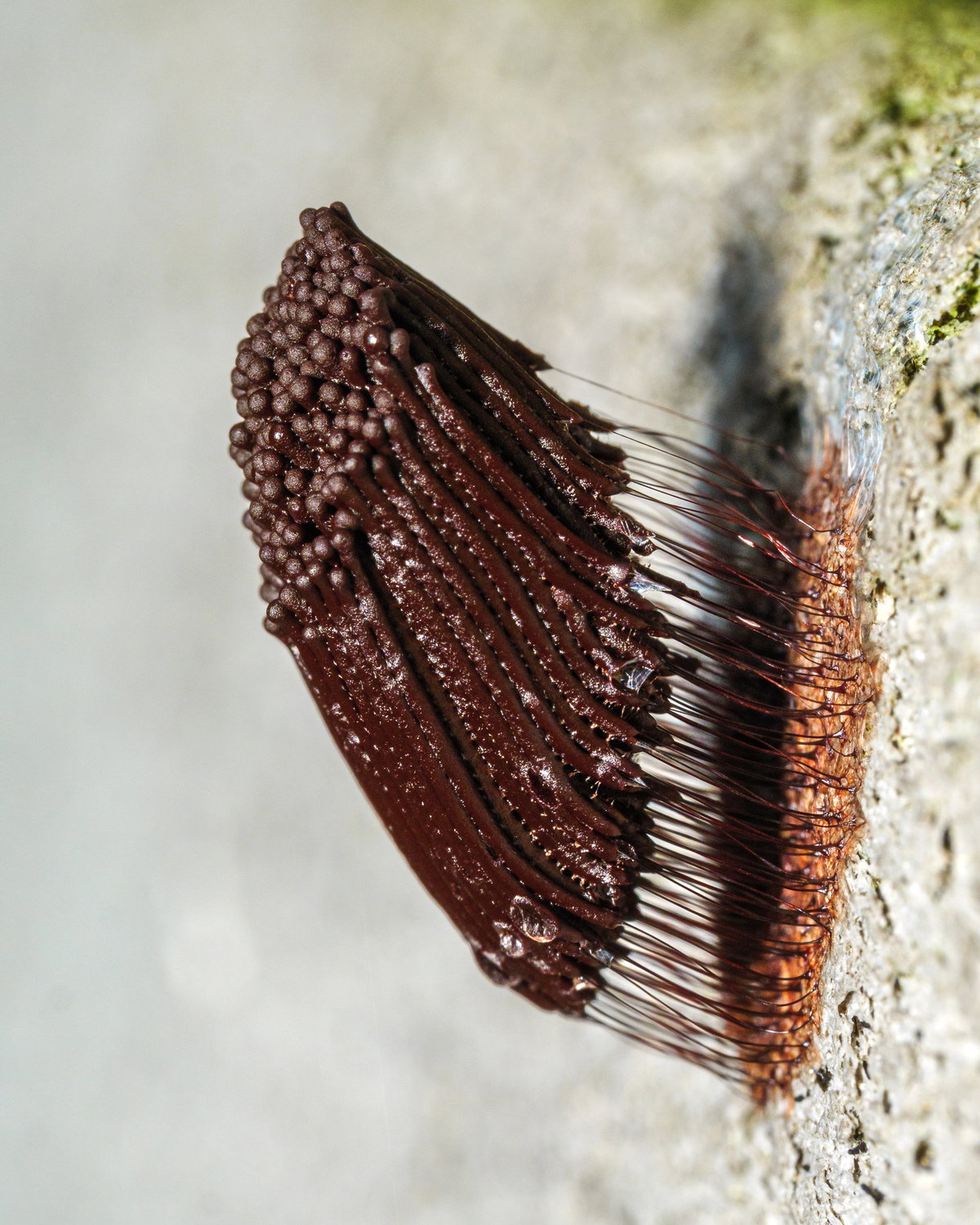
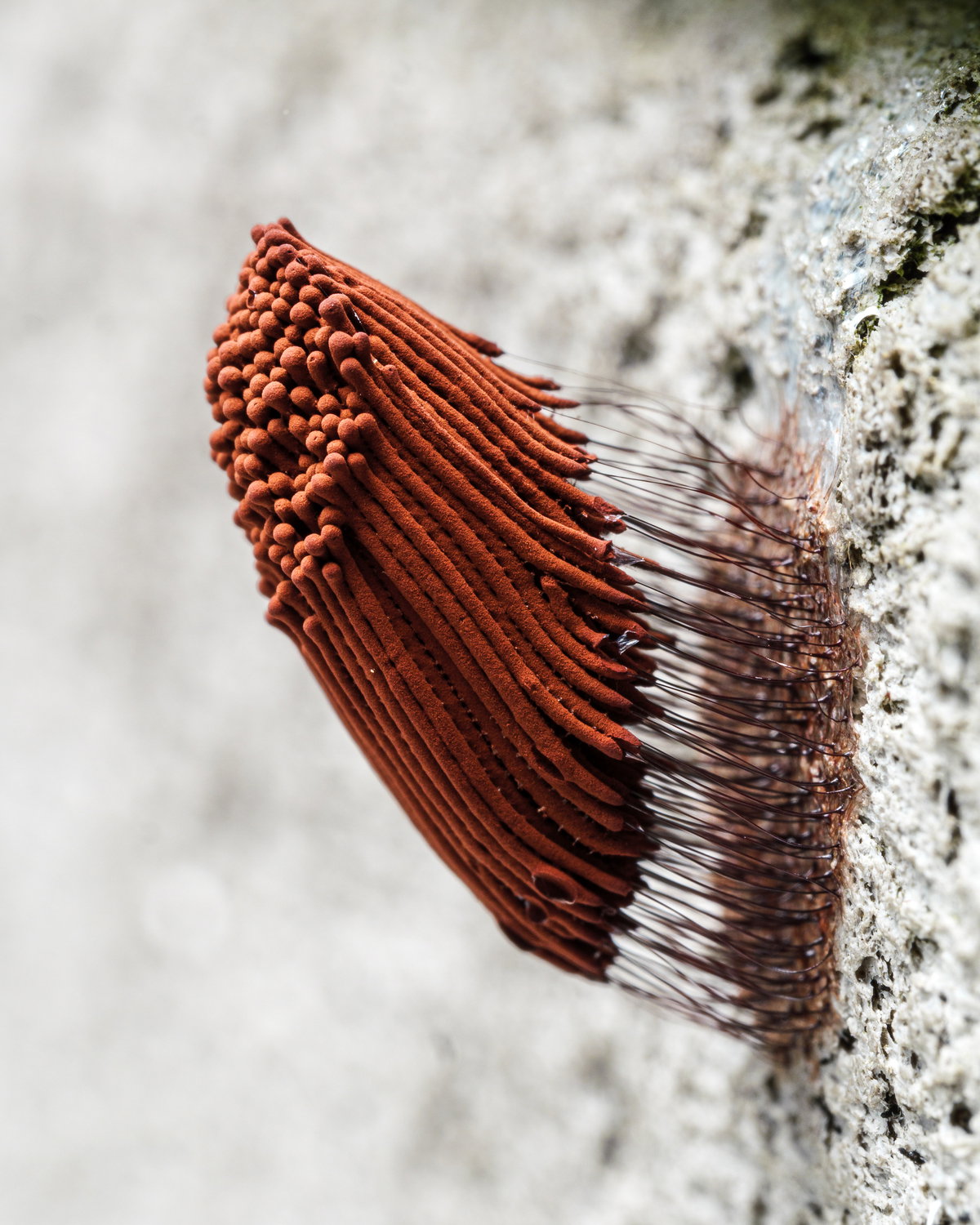
Stemonitis spp (with updated condition and 2x magnification)

A few days later and it looks like this (2-image blend) -
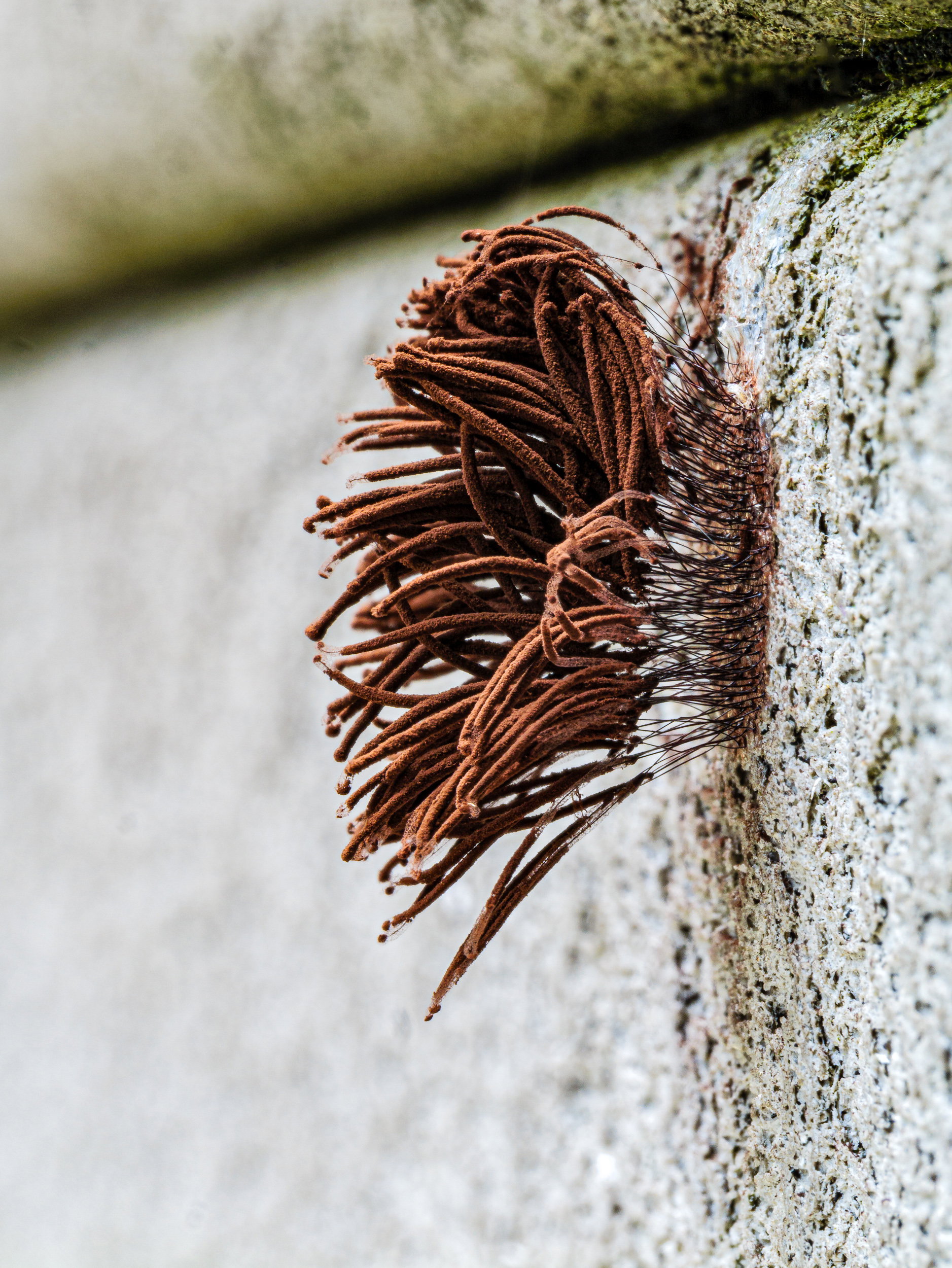
Here is the best little bit showing the spore-release mechanism at the tip of one of those little tubes. They start out globular and completely opaque and become this -

As close as I could get with the 2X magnification and manual focus. Just the slight pressure of my fingers on the focus ring became a problem when I let go and the focus shifted. I used an 8-second delay and walked away from the tripod because just my standing next to it on the deck sent vibrations. But isn’t this spore-releasing do-dad the coolest thing?

Critique Style: Standard

The photographer is looking for thoughtful feedback on the image as a whole, especially around the areas noted below.

Feedback Focus: Artistic + Technical

About This Image

aka Chocolate tube slime - oh what a fun thing to have on the railing of the deck. These single celled animals mostly live solitary lives, but will come together in the millions to form reproductive structures to relase spores. They are not fungi. Fascinating little worlds are slime molds. This is my first time seeing this type and these two shots were taken just hours apart.

The first, darker one, was done handheld with a flash and the second with a tripod and natural light. The little structures (called sporangia) are drying out (even is this awful humidity). I’ll be keeping an eye on it as it goes through whatever it is it goes through. In the second shot you can see what I think is a sort of trail the little guys made on their way to the party.

I won’t bore you to death with more info, but if you are dying to know more (I see you in the back Egon), check out this Wisconsin DNR page -

Feedback Requested

So it won’t last long, but any thoughts as to what to do better is welcome. However stacking is basically out. I’ve tried it and there is too much business with the little stalks. Crazy mess no matter how many slices, slabs or methods I used.

Technical Details

Camera: Panasonic DC-G9M2
Lens: OM 90mm F3.5
Focal length: 90mm
Shutter speed: 1/250s
Aperture: f/16
ISO: 160
Flash: Fired

Processing software: both in Lightroom
Major adjustments: some cropping and wb adjusting, the usual massages to tonality with some texture etc.
Blending/stacking: ugh. that so did not work.
Other notes: second shot info below
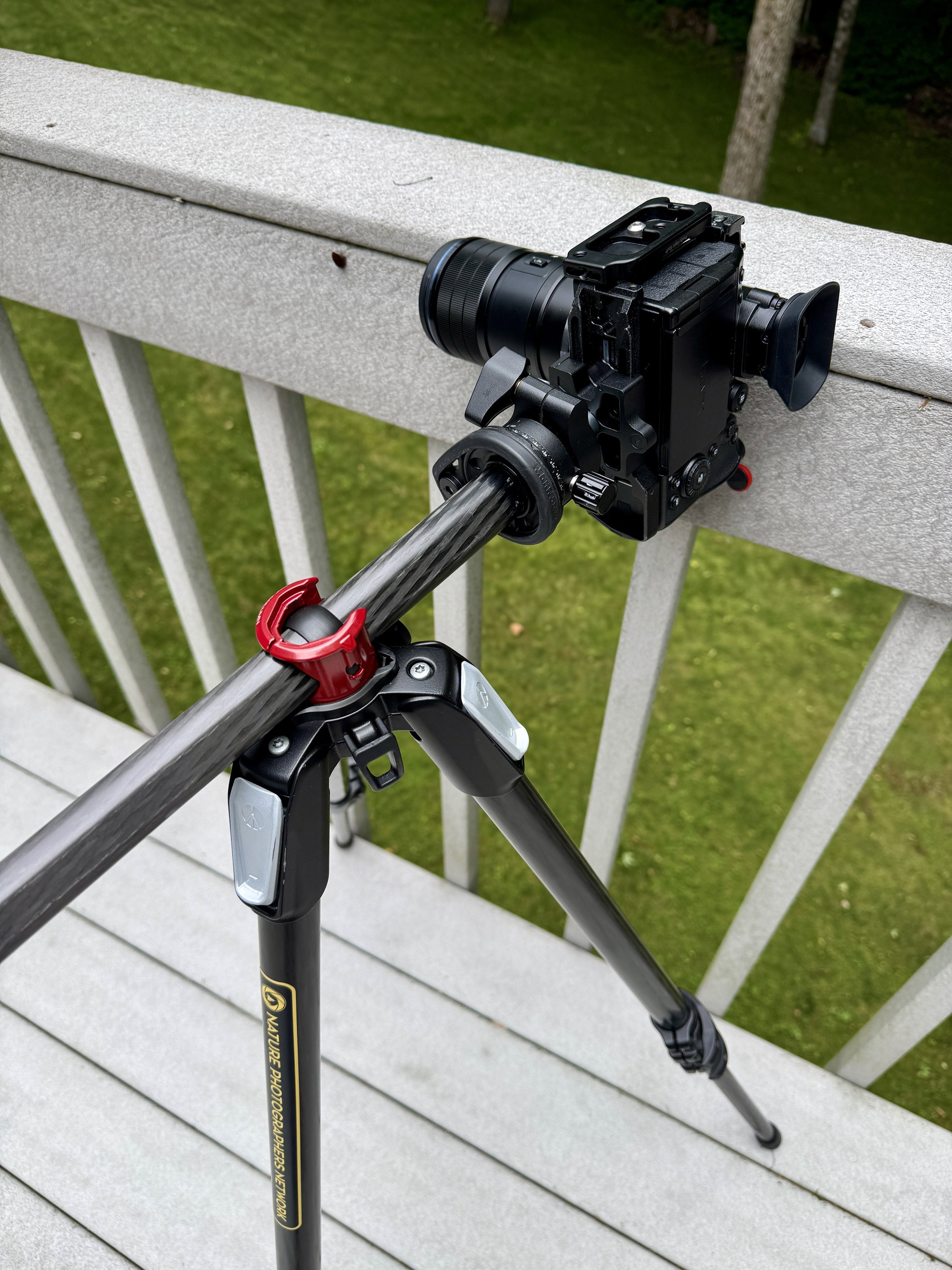
Didn’t occur to me to use a tripod at first because I couldn’t visualize how to make it work. Then I remembered I have this model with the horizontal center column option. You can also get an idea of how big this is IRL.

1 Like

Whoa, that is cool!! I have no suggestions for technique, as you are way more experienced than I. I don’t think it needs any focus stacking. Thanks for posting the set-up pic; I was wondering about its size.

Kris: What a neat find and your shot of your set-up gives a great perspective. My “What is this meter?” got a nice spike. The natural history lesson is a big plus as well. Kudos for the effort and the results. >=))>

Thanks @Bonnie_Lampley & @Bill_Fach - it is a strange little thing isn’t it? Still out there and looking about the same. If there is any change that I can see, I’ll add a photo.

This is very cool Kris! I’m sure if I came across a mass like this, I would have scraped it off without a thought. I would never have paid any more attention to it. Thanks for including the photo of the tripod setup as it gave scale to these little critters. I also enjoyed the story and information you included. The linked document was also interesting.

These are a couple wonderful shots of this strange life form, Kris. A very strange life cycle. I don’t think you need a stack-both of these shots convey the structure very well and look quite good to my eye. I had a tripod like that which I hadn’t used in a long time and finally sold-dumb move, though the guy who bought it does a lot of table-top stuff and loves it.

Wow, Kris, I don’t even know how you saw this well enough to consider it something to photograph! The tiny universe of the macro world just amazes me. I have never seen anything like it. You did a wonderful job. That is a neat tripod setup, thank you for sharing a photo of it.

Incredible! So interesting. Isn’t nature amazing? Don’t know why you’d bother with stacking. This looks great.

Thanks @Steve_Kennedy , @Dennis_Plank , @Shirley_Freeman , @Bonnie_Lampley & @Chris_Baird - it is an odd little thing for sure, but I knew it had to be something interesting when I spied it. Didn’t expect slime mold, so that’s extra cool. It’s still out there and is more frowsy and windblown…like a bad hair day. Took a couple of handheld shots, but they’re garbage so I’ll try again and then post. Glad you all feel that a single shot tells the tale.

Totally forgot about that tripod as it was in the garage from a trip putting it into a river. It really made this possible with that horizontal center column.

Pretty cool shot! I like the natural light shot the best because it shows the texture better than the flashed version. This would be a perfect subject for cross polarization photography. You mount a piece of polarizing film on the flash and a polarizer on the lens. Adjust the lens polarizer to be rotated 90 degrees from the axis of polarization of the flash mounted polarizing film. All the specular highlights will be eliminated. I used this technique for tiny pleurothallid orchid photographyto eliminate distraction bright highlights. But, the natural light version is awesome almost making cross polarization obsolete. Awesome…Jim

Thanks @Jim_Zablotny - I’ve never heard of that flash technique, but it sounds like it would have worked for the first image when (I think) the structures were wetter. I really need to get out with the tripod to try again with its frazzled state.

What a strange thing! It looks like an alien invasion. The details are wonderful. The main thing I’d suggest would be to rotate the images clockwise 90 degrees; but if that’s how they were oriented in real life, then I’d leave them as they are.

Thanks @canan - nature is so surprising sometimes and I love all the wonderfully weird things I sometimes find. Yes, it was growing (?? was built??) in this orientation. I debated turning it horizontal, but decided this upward lift looked more natural since it was. If you look on the set up photo you can kind of see exactly how it was placed.

Oh and I put a 3rd shot of how it looks right now. If you zoom all the way in you can see the spore-releasing mechanisms at the end of some of the tubes. I’m going to go back out and see if I can get the 2x function to work to isolate a couple of those.

How very bizarre. Thanks for sharing these pictures and for educating us about this strange creature.

Thanks again @canan - they are fascinating things for sure. Here’s another type I shot in the yard a few years ago. I’ve seen it again from time to time, but don’t think I can get shots this good so I just look and pass by.

Very cool!

Very thorough analysis with a fantastic image!

Thanks @tom.marin - it was an unexpected treat for sure. Nature photography leads me to a lot of cool info.