Revised Version
Revision 3 (latest)
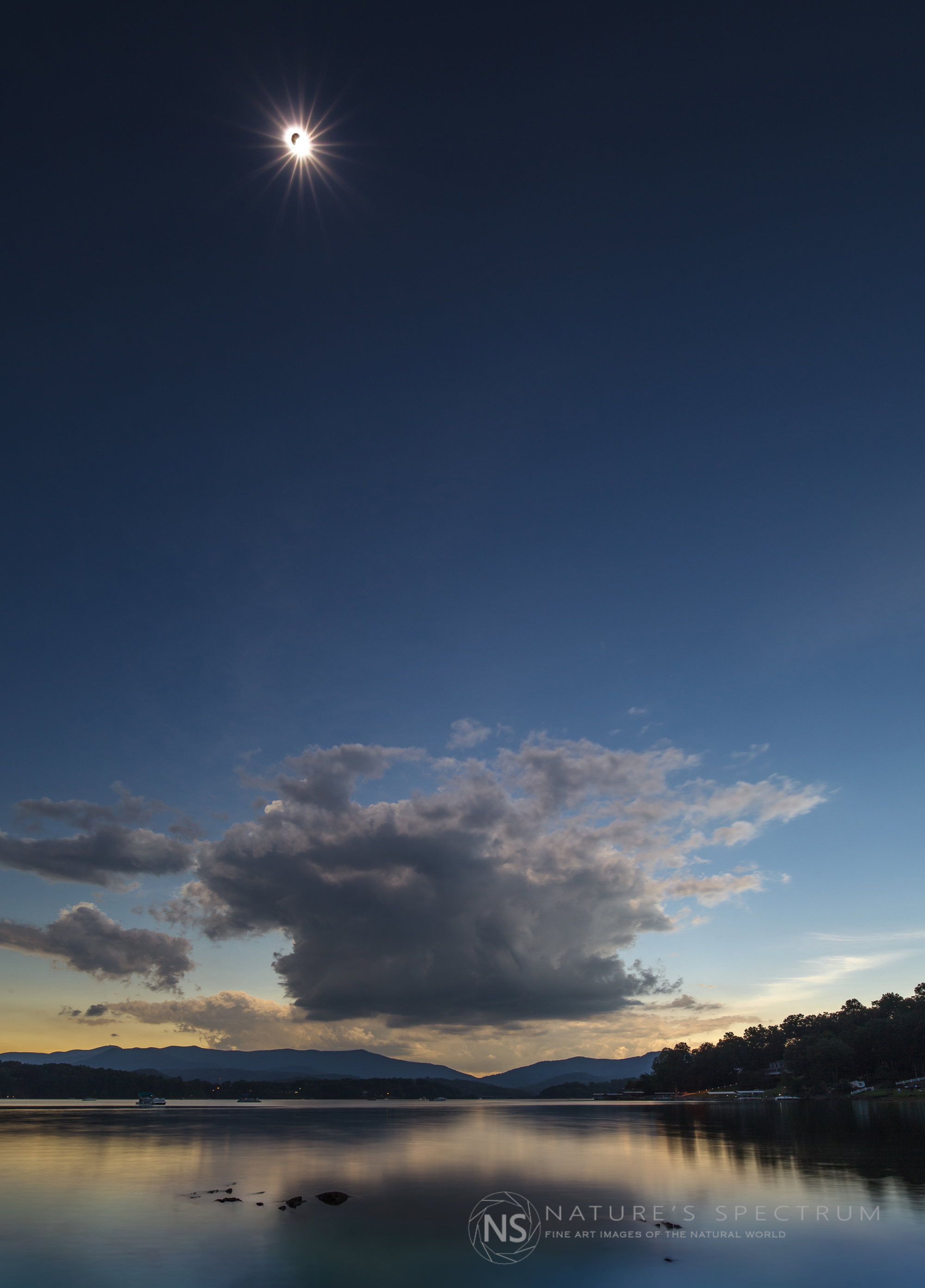
What changed: I still wasn’t quite happy with the bottom. Made the grad a harder transition and moved the transition closer to the bottom of the image. I darkened the gradient a bit more, and erased it from the cloud reflection. I think it looks more like a reverse of the sky now.
Revision 2
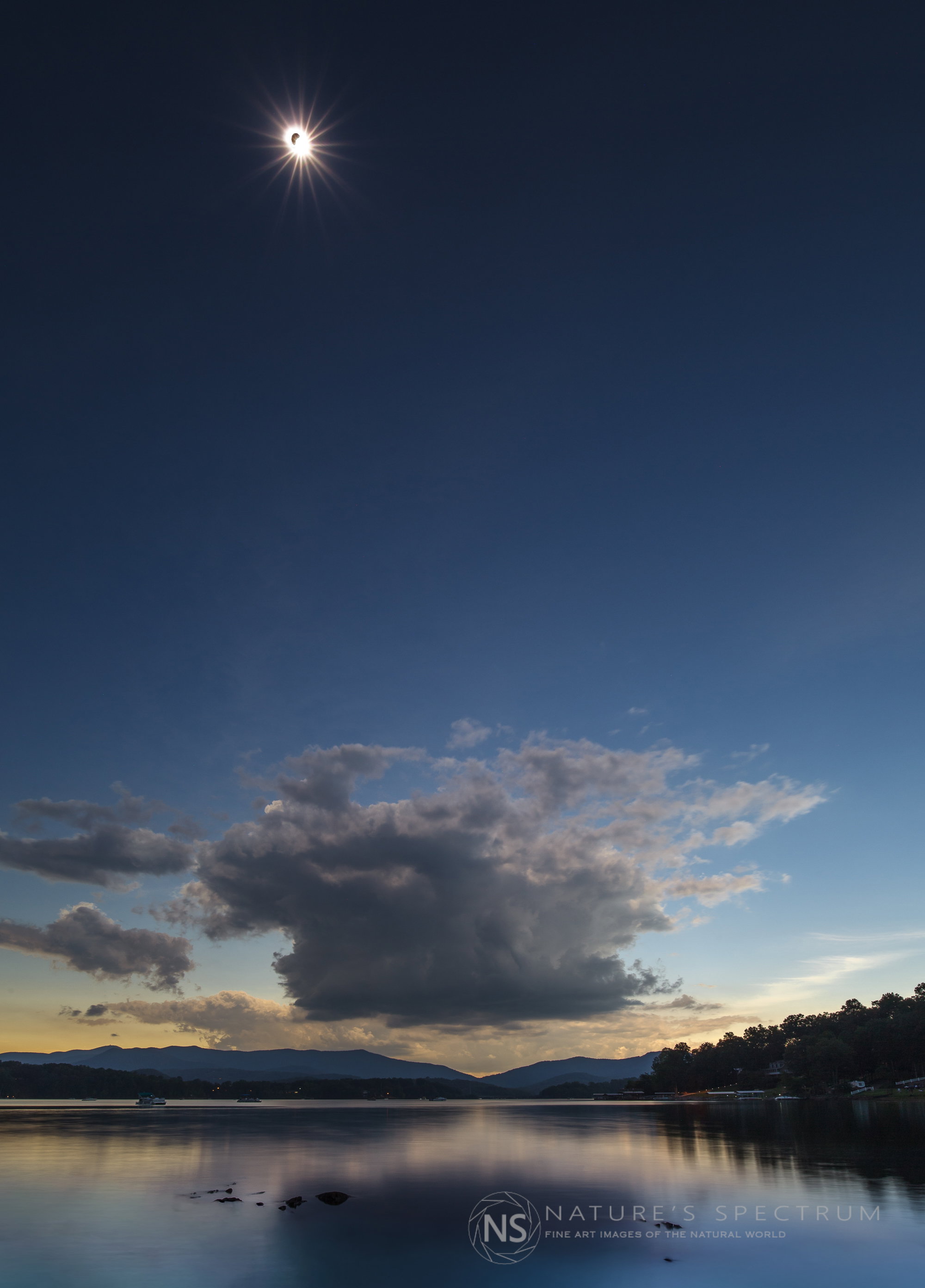
What changed: I also cooled the temperature in the foreground gradient to more closely replicate the sky.
Revision 1
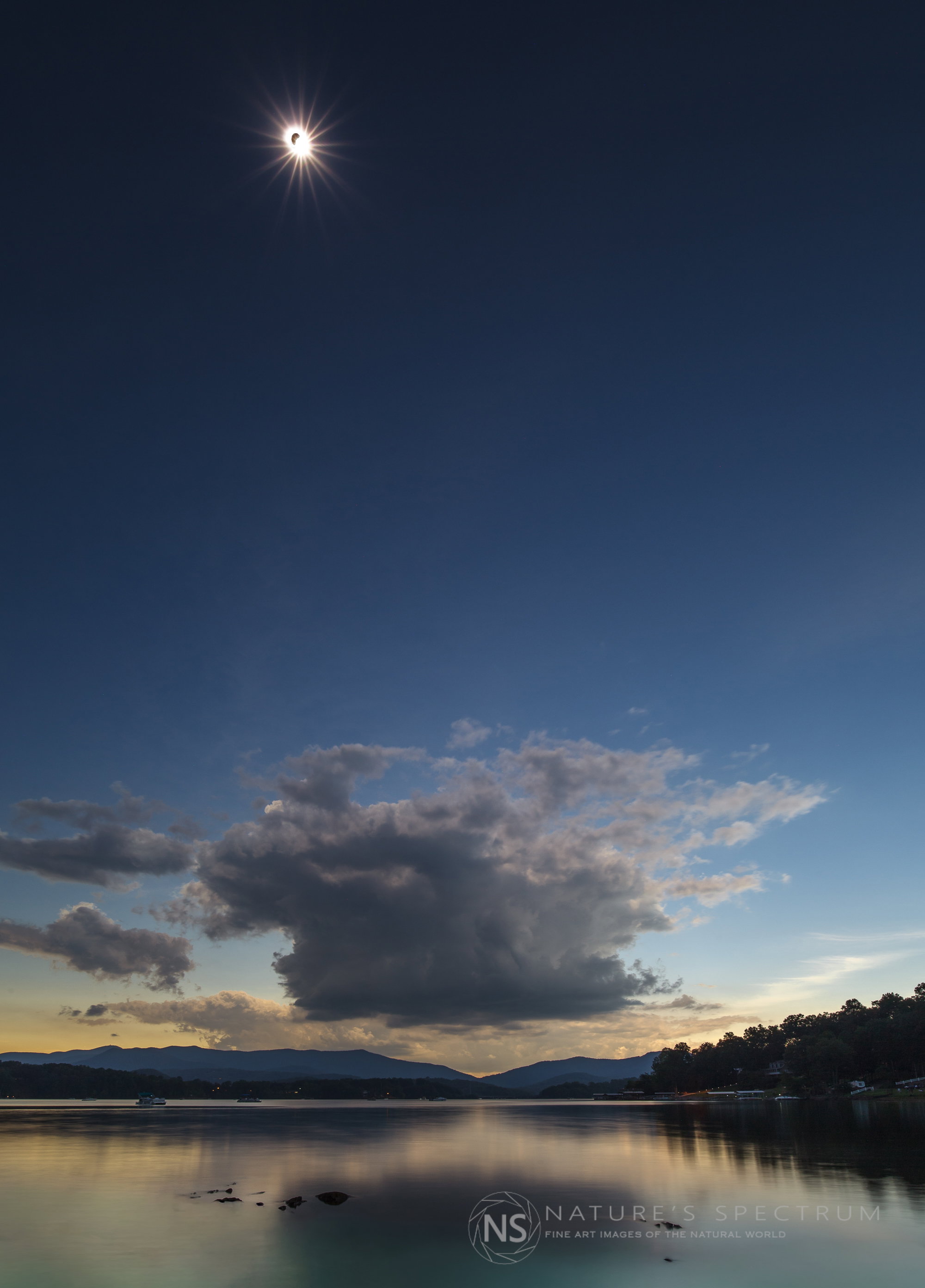
What changed: Cropped some of the foreground, corrected perspective a tad more. Removed what was left of the foreground (did use AI remove in Lightroom).
Added after receiving feedback from the community.
Original Version
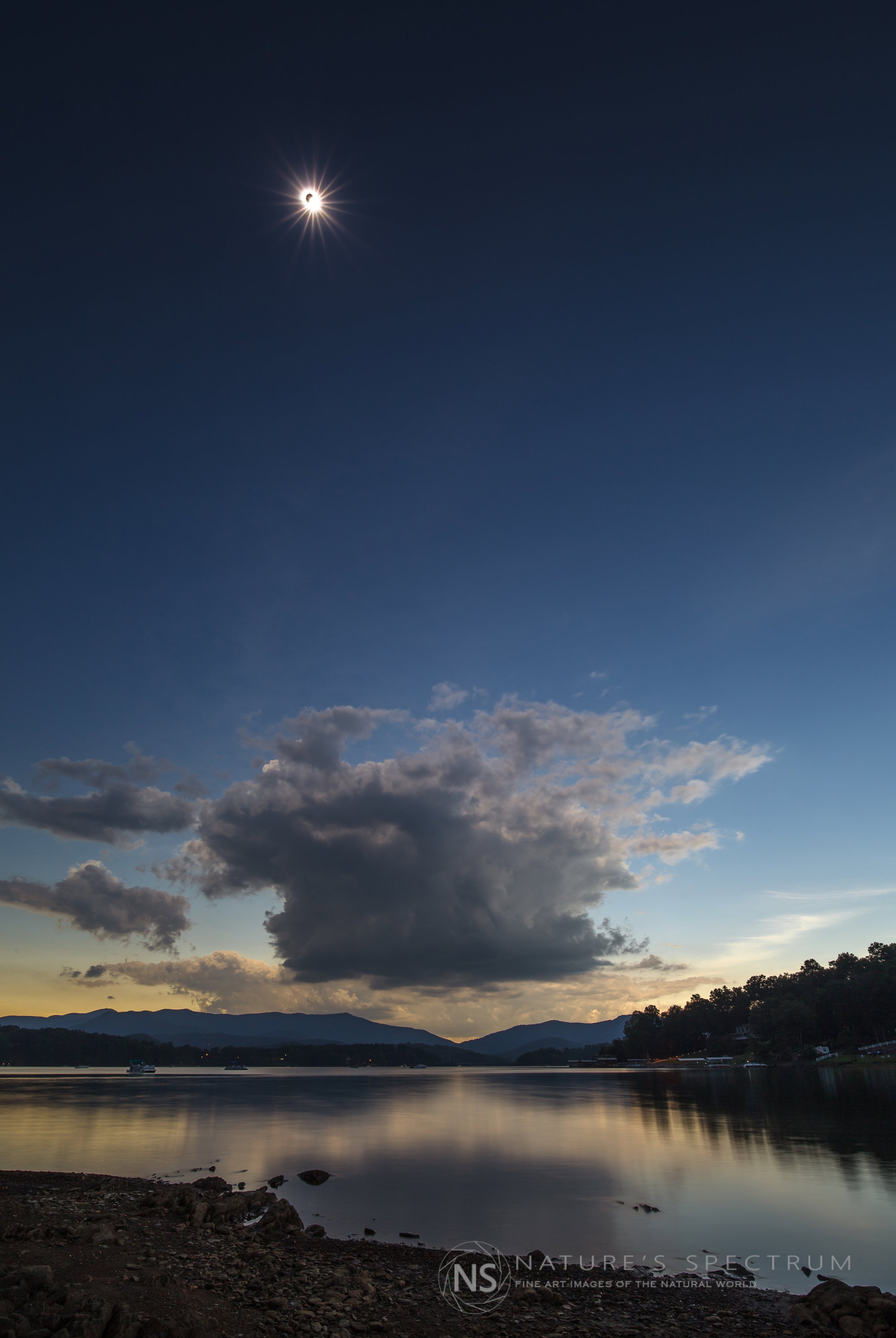
The photographer is looking for thoughtful feedback on the image as a whole, especially around the areas noted below.
About This Image
I remember discovering in the first part of 2017 that we would have a total solar eclipse in my area. To say I was excited is an understatement. I knew I wanted to photograph it, but having never done photography like that before some research was in order. I did some research, made myself a ND filter suitable for shooting the sun and tested it out with the largest zoom I had at the time (400mm).
As the time drew nearer, I had an inspiration to capture an actual landscape image, during the moments of totality. I had enough equipment to do both (close-up and wide) having both the Canon 5DIV and 5DII at the time. What I had no idea of was where I could actually accomplish a shot like this. I did some more research and learned the bearing and angle above the horizon to expect when totality occurred. Fortunately, I had the Zeiss 15mm already, which is what it would take to possibly get the scene. Then I got out the maps and started searching for possible locations in northern Georgia.
After formulating a list of potential spots, I started scouting about a month beforehand. Almost all of the spots had some issue or another. Trees in the way, inaccessible property, etc. I finally discovered a place on the shore of Lake Chatuge that would work. It seems to be an improvised campsite of sorts, and while it showed signs of traffic it didn’t appear to get much use.
The day of the event I made sure to be in position early, over four hours early in fact. I spent the next few hours deciding exactly where and how I would set up for the shot. I had to position the camera very low to get any foreground at all, and still had to angle it up pretty substantially to make sure I would get the sun in a reasonable area of the frame. I had the setup for the landscape shot completed at about 12pm and draped a cloth over the setup to keep it as much out of the sun as possible.
I set up an intervalometer to capture an image every 30 seconds so I could spend my hands-on time with the telephoto equipment.
As the eclipse started approaching totality, I checked exposure and started the meter and began capturing images. In the meantime, I’m snapping away at 400mm with the other system. I really wasn’t sure what to expect with the images. I had never seen an image captured like it, although I’m sure they are out there.
As it turned out, I got some very interesting images, and was particularly surprised when an impromptu sunset occurred during totality. This image was my favorite of the series primarily due to the fact that you can actually see the dark spot in the sunburst.
Feedback Requested
I’ve never been 100% sure how I feel about this image. Certainly it is unique, but it doesn’t strike awe in me. Perhaps that’s because I’ve looked at it thousands of times. Any comments are welcome.
Technical Details
Camera: Canon EOS 5D Mark II
Lens: Zeiss Distagon T* 2.8/15 ZE
Focal length: 15mm
Shutter speed: 6s
Aperture: f/13
ISO: 100
Processing software: Lightroom
Major adjustments: Graduated filters in the upper sky, and the lower part of the image.
Blending/stacking: none, single exposure
Other notes: I used as much perspective correction as possible while still maintaining some foreground. Correcting further either loses the foreground, or the image itself becomes far too narrow for my taste. I cloned out one star in the sky, I wish I had a field of stars and I would have left them. I used a little more vibrance that I normally do, trying to replicate what I remember seeing at the time.

 With this image in particular, I couldn’t see past what I already had, even after coming back to it several times over the years. While I’m still not awestruck by it, I am far happier with it now than I was originally. I couldn’t have achieved that without the feedback here.