The photographer is looking for thoughtful feedback on the image as a whole, especially around the areas noted below.
Feedback Focus: Artistic / Expressive
About This Image
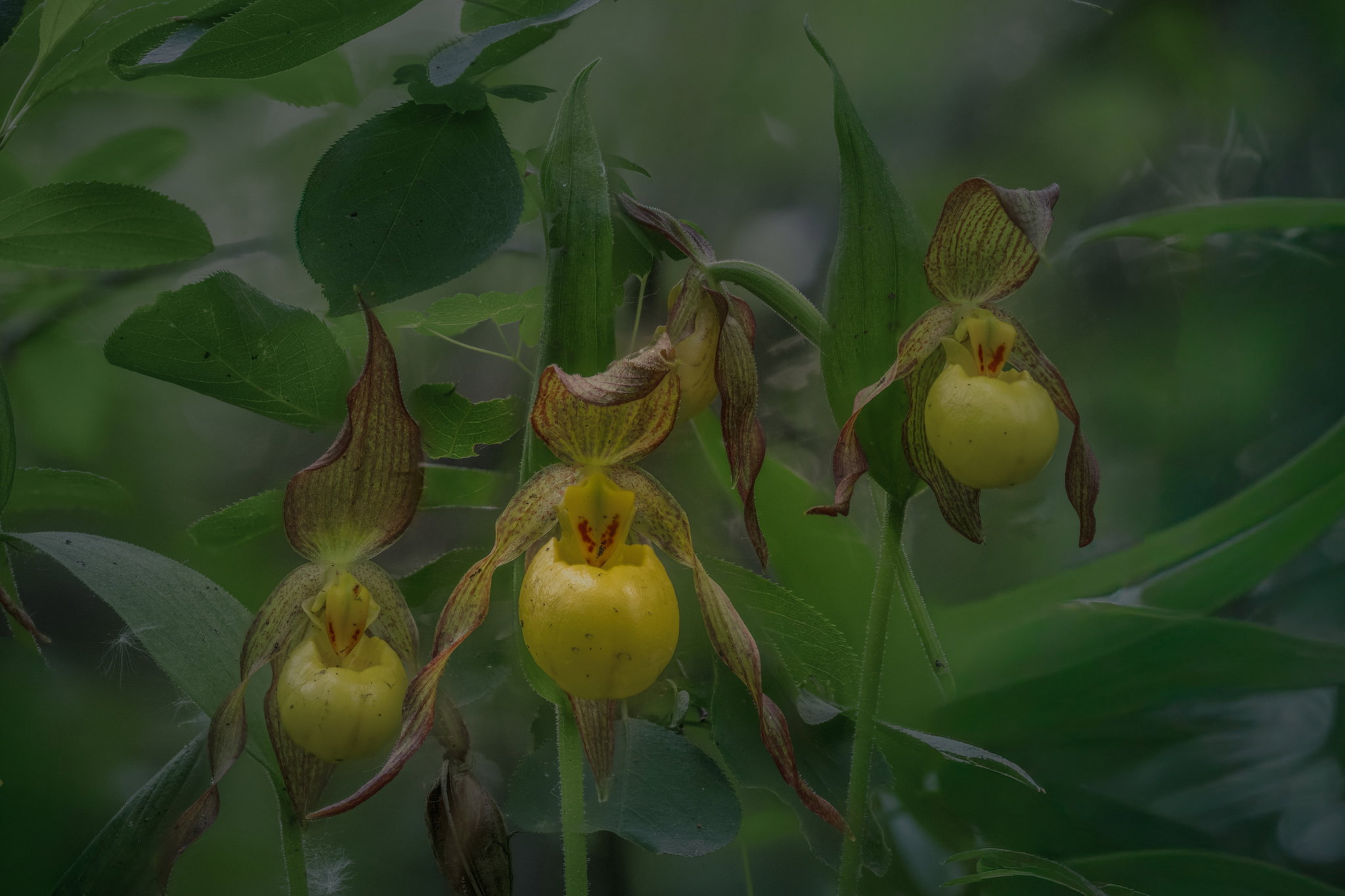
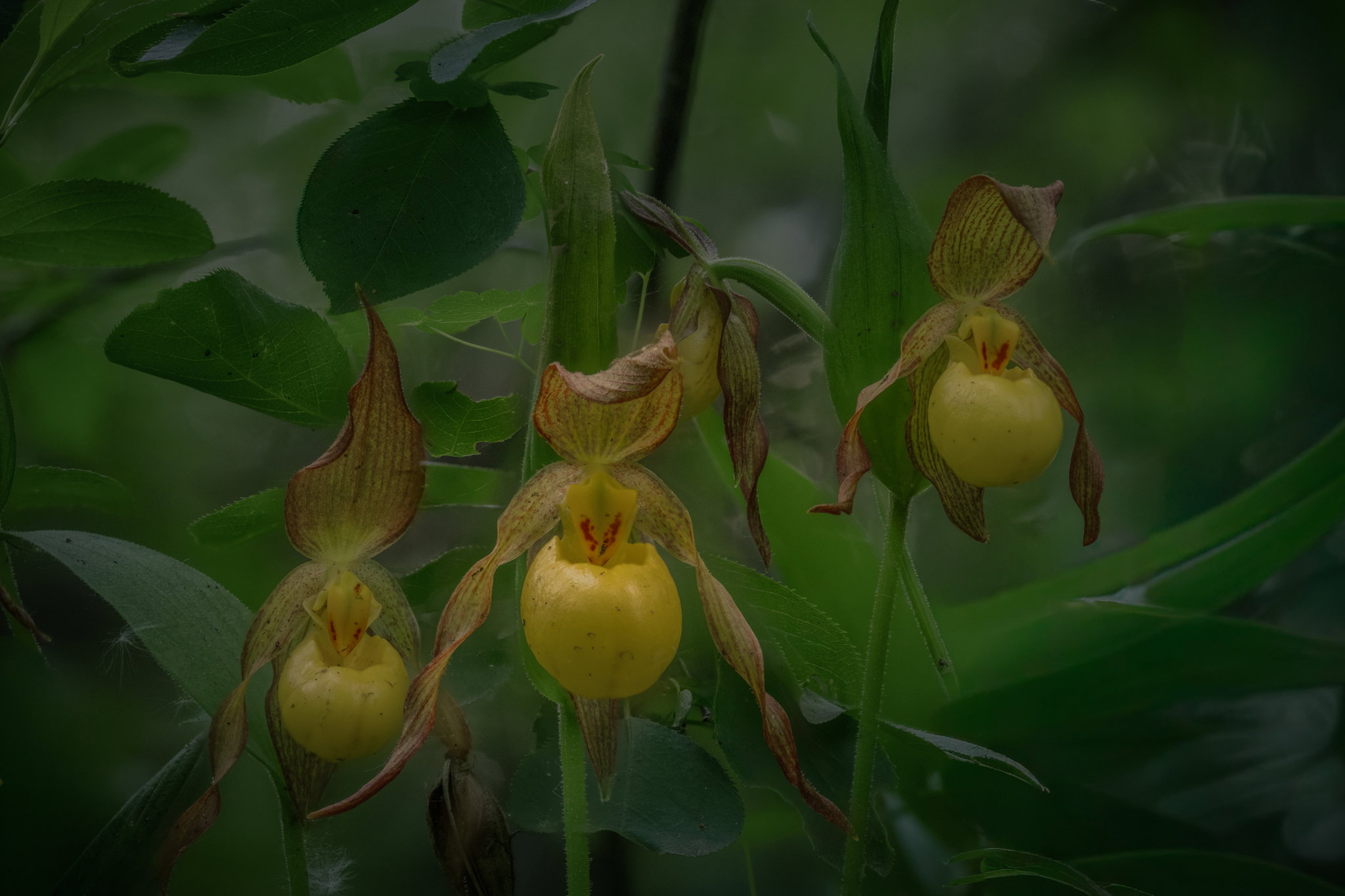
I visit this trail every Spring. There are two spots along this trail near Bozeman, Montana where these Small Yellow Lady Slipper Orchids bloom. There may be more back in this deciduous forest, but between the wetlands and the dense growth, there is no wandering off trail here! We’ve had a strange Winter and Spring this year. Very little precipitation over the Winter, but a wet and cold Spring have made it so these flowers have bloomed after the grasses and other plants have filled in the scene. This assignment actually came to mind as I was out shooting this morning. I tend to move in and make portraits of these beauties, but for this one I slid back a bit and used 91 of the 100 images I had taken. I use Helicon Focus to stack and method B and C both were close but had a few glitches. I wondered if it would work to stack the two versions as another stack, and it seemed like it did a good job!
Feedback Requested
I think, given the assignment theme, that the background helps set the scene, but it’s also a bit busy. It is too busy? Stacking and the morning darkness really saturate the colors, so I spent some time tweaking things to enhance the “under the canopy” appearance. Does it look overdone?
What a great group of these beauties. They’re so fresh and I love the lush greens, too. The stack looks good, too. I wonder if it isn’t a tad too dark. I understand that it was actually dark and you want to convey that, but to me it looks a bit underexposed and the framing is a bit tight on the bottom left where the hanging ‘tendril’ nearly touches the edge. The saturation looks good to my eye having actually seen this type of orchid blooming - they really do pop at this stage.
It’s funny about the stack of stacks - I do a lot of slabbing when I have this many images, and I usually end up with a combination of DMap and PMax out of Zerene. Even with fewer shots I often combine them because DMap has better colors and more subtle contrast, but often PMax has more precise rendering with overlapping bits. Whatever works in the end!
Paul: What @Kris_Smith said. I’ve never seen these IRL so this is a treat for me. I do think a small boost in exposure would help without diminishing the sense of being in a dim forest. I’m certainly nowhere near as skilled as you with stacking but I can say that this looks pretty darn good to me. Fine subjects, fine effort, fine result. >=))>
This one grabbed me, Paul. The flowers are beautiful and I like the colors.
I also think it could be a little brighter. I played with it in PS and discovered that a global adjustment made the central flower too bright. You might consider masking that one out and raising the brightness of the rest a little.
Paul, I really like your composition here. You’ve done a fine job of showing off the flowers and their habitat. I also think it’s too dark. I downloaded it and added a curve adjustment (input: 128 output: 184), which seemed to do the trick nicely. Are you aware that in Helicon you can choose an alternative image for blending. I occasionally do that because the B method creates a badly mottled background if the lighting is changing or there’s wind motion while the C method gives a cleaner background under those conditions but often has halo problems with bright subjects.
@Kris_Smith@Bill_Fach@Don_Peters@Mark_Seaver Thanks for the comments! I lightened it up a little bit and put it at the top. Looks like I can no longer edit the title of an image? I think part of my struggle here is that I finally went mirrorless (Z8). It seems to have a little less dynamic range at mid ISO’s. I need to start exposing things brighter in-camera and darken them later I think. I definitely underexposed this and struggled to bring up the exposure without giving a weird hazy cast to the colors. I use a lot of masks in most of my images and had to go back and tweak each one! I definitely missed the composition as it relates to that flower on the left! Another reason to shoot a brighter exposure! I just couldn’t see the lower part given the real time viewing on mirrorless!
One thing that is handy with mirrorless rigs is what Lumix calls constant preview which is a live exposure approximation displayed on the screen(s). That and the histogram are really helpful. Nikon might call it something else, but I bet it’s there somewhere.
Your comment about “you can chose an alternative image for blending” in Helicon caught my attention. I assume what you mean by this is that you can replace pixels in the stacked image with pixels from one of the images in the stack using the “Retouching” tab.
On a related note, I’m familiar with both Helicon and Zerene and mixing different rendering algorithms using the “slabbing” technique. Ironically, I’ve been recently experimenting - mostly in Helicon - studying how changing the depth-of-field (e.g. f/stop) of each individual image in the stack impact halos. I’m finding that stoping down the aperture (wider depth of field) and using a smaller number of images in the stack often produces smaller halo artifacts - as compared to using a wider aperture (smaller depth of field) and more images in the stack.
I’ve also been experimenting with low-light level images where I denoise individual images before stacking versus denoising after stacking the images.
Makes me think I should write my results up and share it with the rest of the NPN community…
I missed it too! Glad I found it as this is a lovely subject well-rendered. Stacking has its issues but is often a wonderful tool, worth the trouble. The orchids are lovely and the BG painterly. I think this one is fine as it but also the sort of image that can yield very interesting versions with some playing – subduing the BG a bit strikes me as a possibility. (The one darker leaf with a brighter surrounding draws my attention away from the flowers a bit.) I do second (or fourth?) the feeling of wanting a little more exposure.
@franz@Mark_Seaver Using a smaller aperture definitely helps with the halo, but sometimes renders the background too “crunchy” for my liking. I am finding that method C and smoothing at 10 helps minimize the halo. Whatever is left where elements intersect, is fixable with “retouching” and then any halo over an area with bokeh is easily removed with the remove tool in Lightroom. I rarely use Method A or B any more.
Franz, when you go to the “retouching” page, about halfway down on the right (under the list of stacked images) there’s a button that says “use another output as source”, that will let you use an earlier stacked result for the retouching. When the light is changing or there’s wind, the B method leaves backgrounds that can be very mottled. The C method gives better backgrounds, so occasionally, I stack with both methods and then retouch the B method stack with the C method background.