The photographer is looking for generalized feedback about the aesthetic and technical qualities of their image.
Description
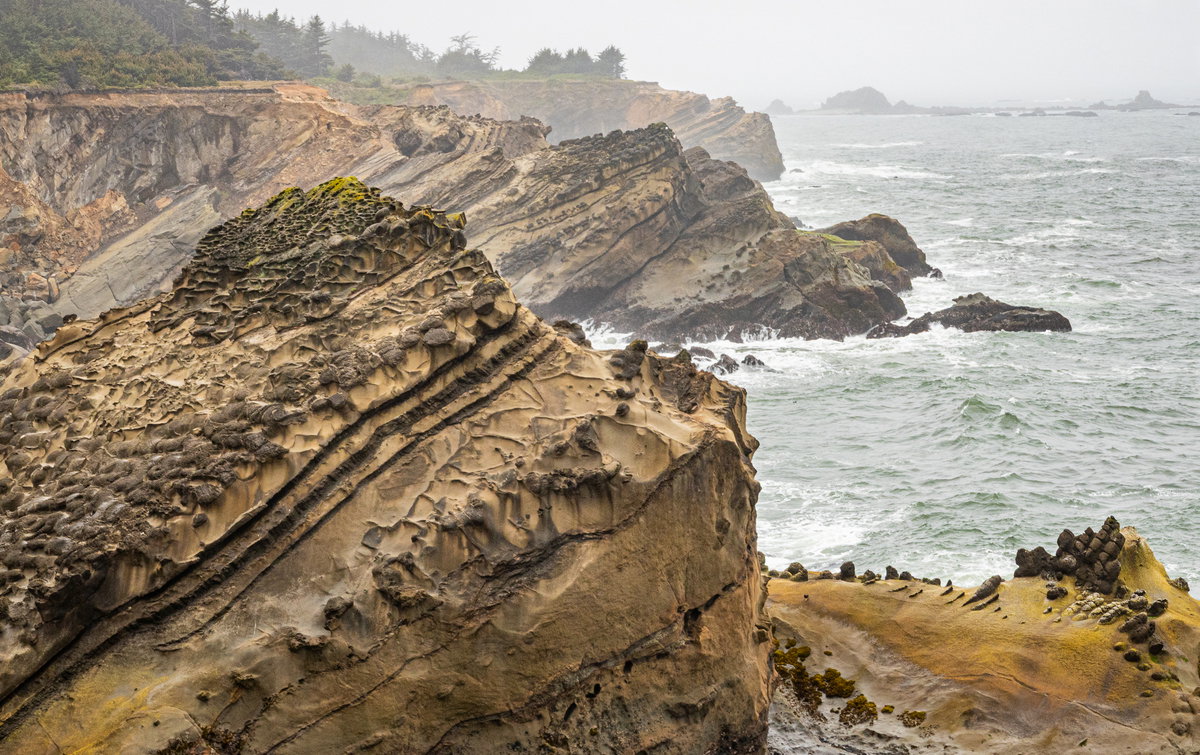
This shot was taken at Shore Acres State Park on the Oregon Coast where there is an array of unique rock formations. The angled layers of the cliffs were created by the colliding of two tectonic plates. Millennia of waves have carved rugged cliffs and left fingers of rock jutting out into the sea. Standing there looking at the receding cliffs gave me a feeling of looking back in time.
These rock formations are extraordinary. I’ve never seen so much variation in one rock (all of them!).
If you’re there again, consider slowing down your shutter to smooth out the water. The rough texture is competing a little too much with the rocks. Also, I’d love to see this in black & white (but I’m biased since that’s my primary genre) — perhaps higher contrast with a slight vignette, especially in the upper right hand area.
The photographer is looking for generalized feedback about the aesthetic and technical qualities of their image.
Description
This shot was taken at Shore Acres State Park on the Oregon Coast where there is an array of unique rock formations. The angled layers of the cliffs were created by the colliding of two tectonic plates. Millennia of waves have carved rugged cliffs and left fingers of rock jutting out into the sea. Standing there looking at the receding cliffs gave me a feeling of looking back in time.
Chris, this is a very striking view. The eroded cliffs are amazing with their tilt adding extra interest to all of the erosional details. I also like how they recede into the misty distance. The bit of land in the lower right corner is a fine extra eye catcher. I think the textures in the water fit nicely with the textures in the rocks. BTW, I’ve read a fair amount about the geological history of “Cascadia” with this showing off the results beautifully.
I love the receding repetition of the formation in this image, Chris, and the formation itself is extremely interesting. I just looked at the map and with three parks on that little spur it’s definitely on my list for the next Oregon Coast trip. Is there a trail that lets you get up close and personal with one of those formations?
Thanks. Yes, there are trails and viewpoints. Look up Shore Acres State Park and you may find info. On the point just to the north of where I’m standing are some really cool formations.
Chris: One of my favorite places on the coast and even the planet. Of course the big draw are the spectacular surf shows during the winter King Tides which I’ve been lucky enough to see twice. But I think some of the rock formations visible at calmer times are very compelling in their own right. I’ll probably be posting a more intimate look at a spot close to where you got this.
As for this capture, I could see using a slow SS but I like how you rendered the scene. Thanks for jogging my memory.>=))>
Dennis: Almost all of the shots you see from Shore acres are taken from the main observation area. The classic big surf shots are looking north from that spot. On my last trip I timed it to coincide with one of the King Tides (October 2024 - November or December would probably be better). I took the trail north looking back toward the observation area and liked the available comps better from that vantage point. Here’s a couple of my favorites from that trip. >=))>
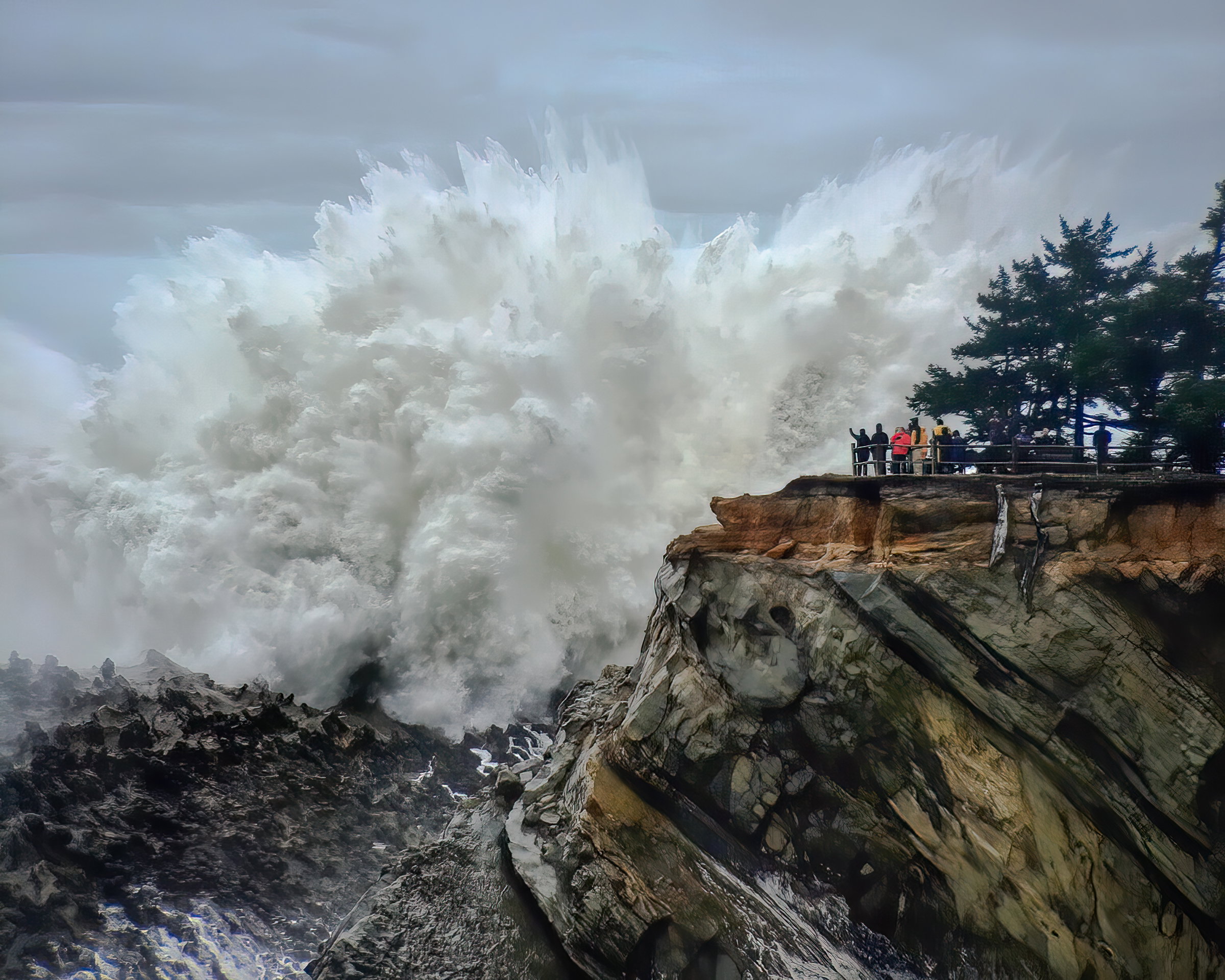
It’s not necessarily king tides that are the best time. It’s the storms that create the big waves. Best times are just ahead of a storm as it pushes the waves in. Although during and just at the tail end of a storm can be good. Winter is the best time to get these conditions. This photo isn’t even a particularly big wave compared to some.
I really need to go back here and focus more on the rocks instead of the waves. There’s huge potential in the way the geology has eroded, as your photo nicely shows.
For the waves, I’ve had the best luck when the swell and wind waves combine for a surf of about 20’ or more. Mid-tide is usually best, too low and the waves break before the rocks, and too high they flow over instead of hitting.
 |
|