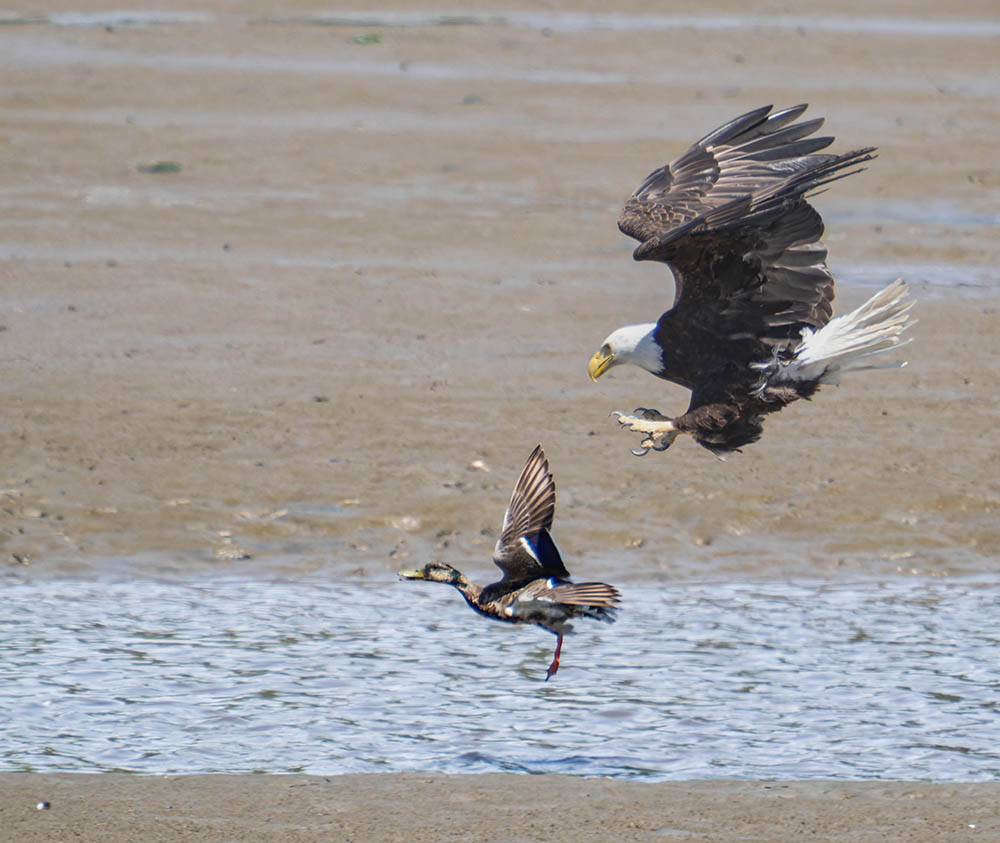
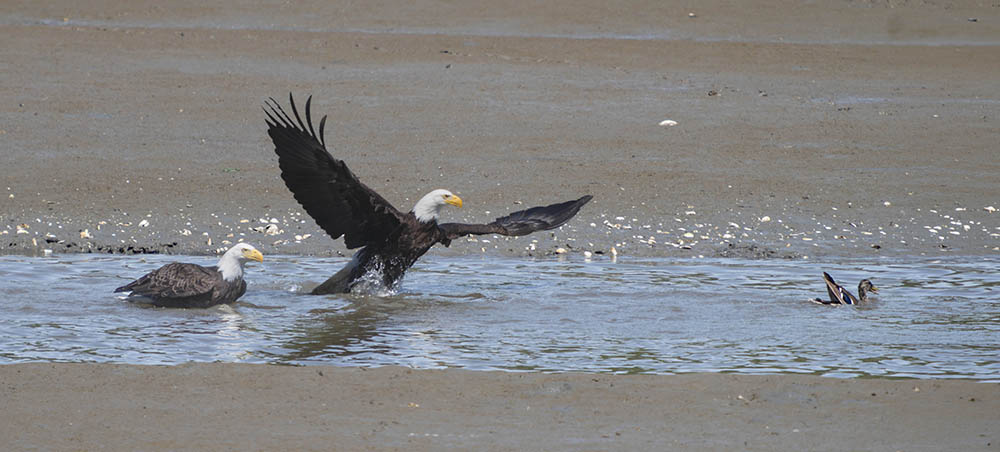
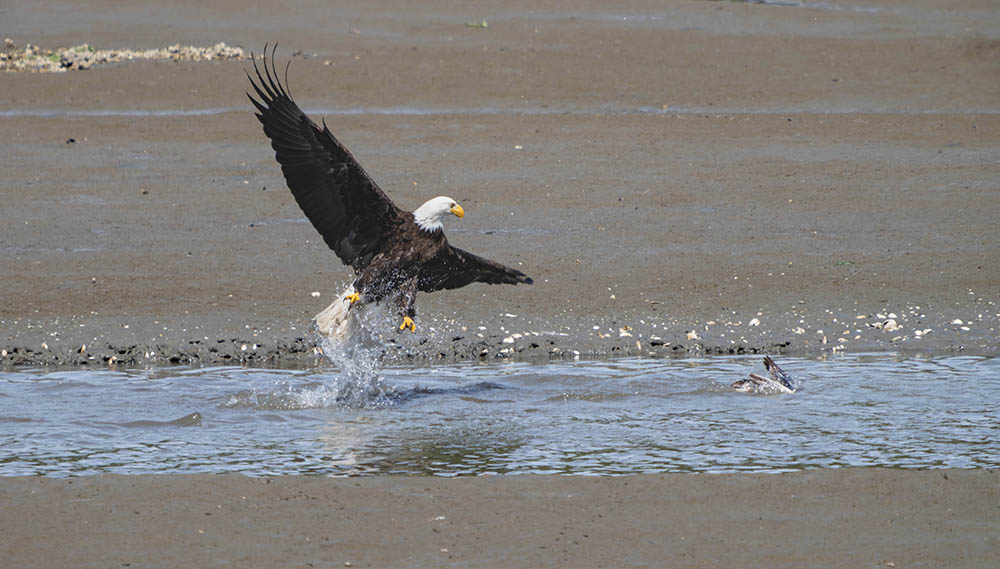
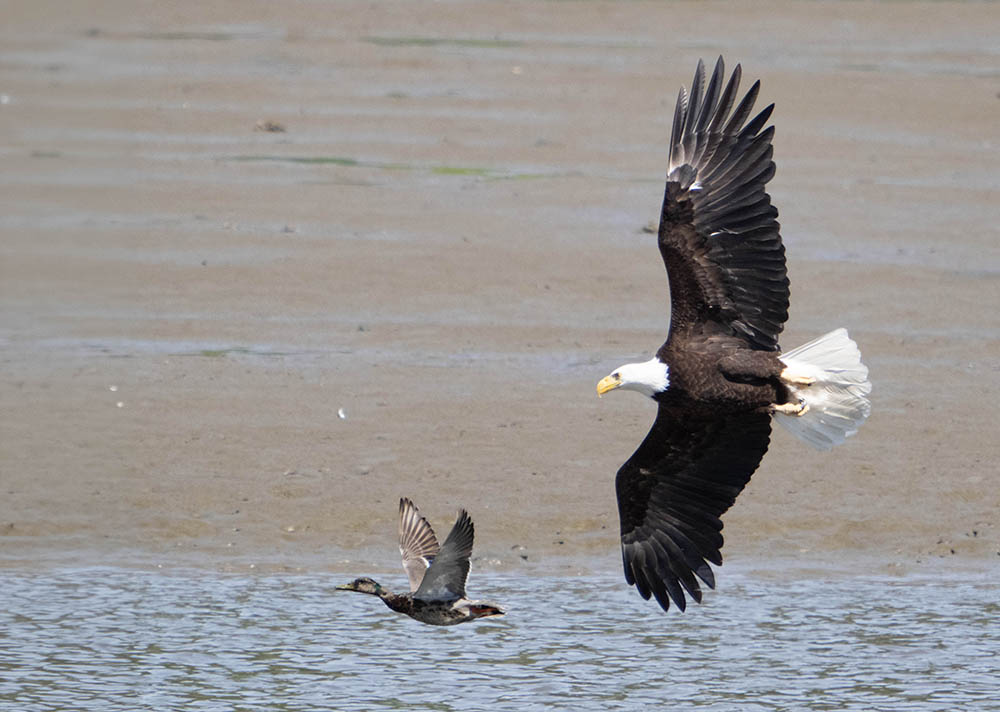
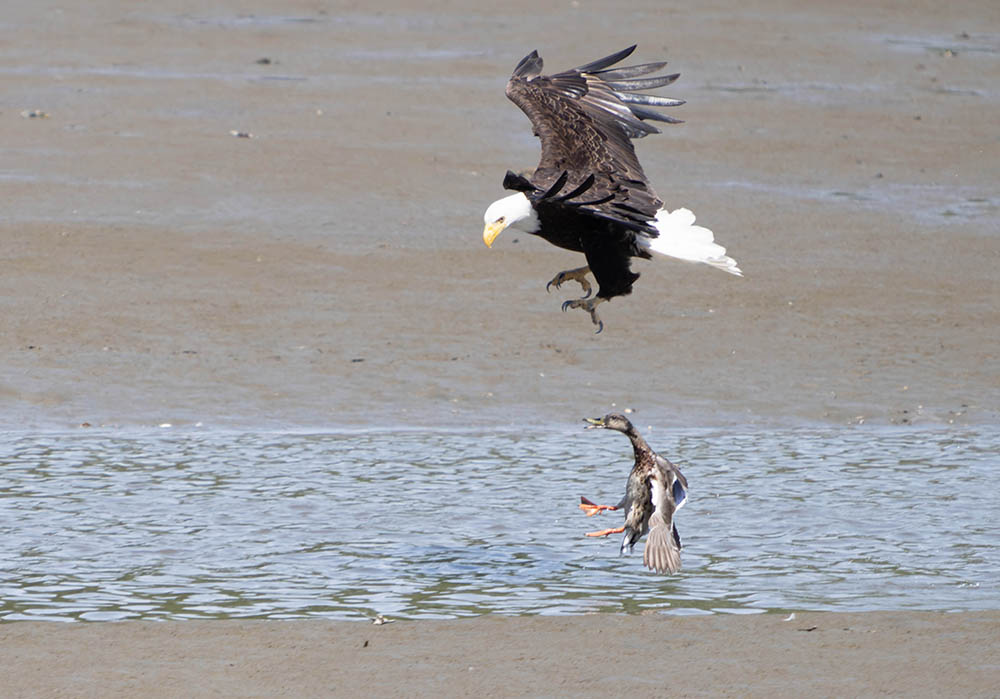
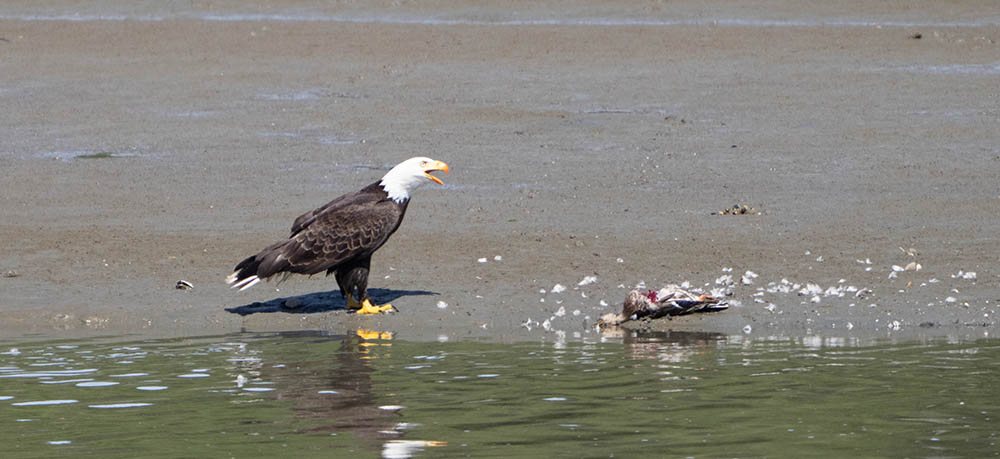
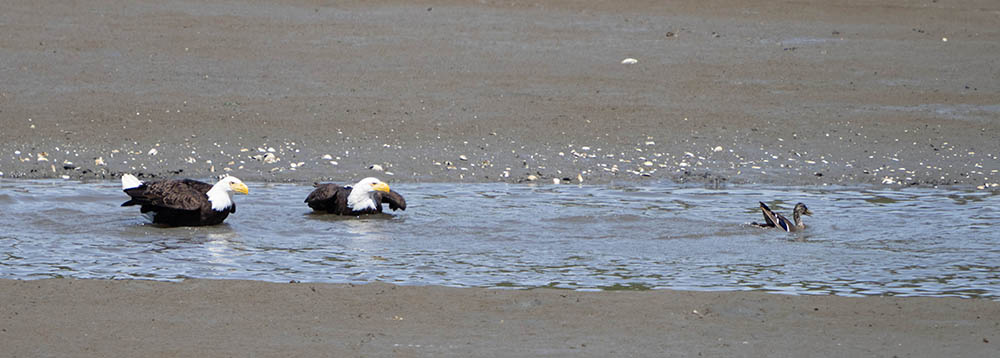
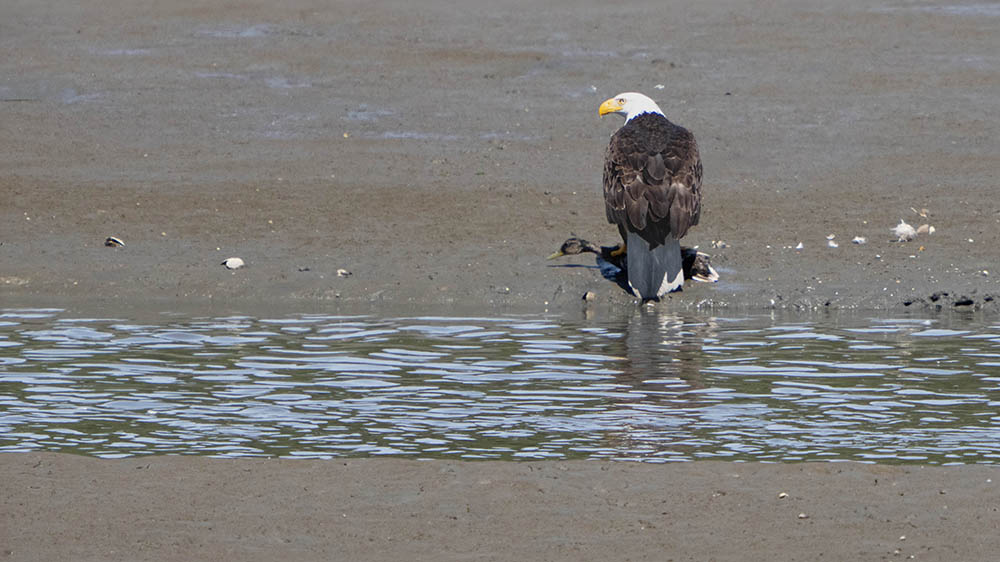
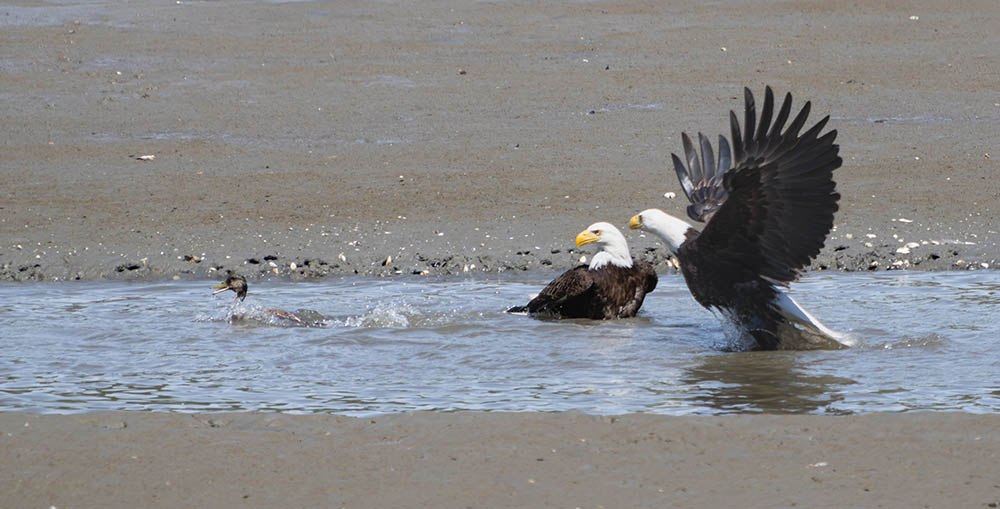
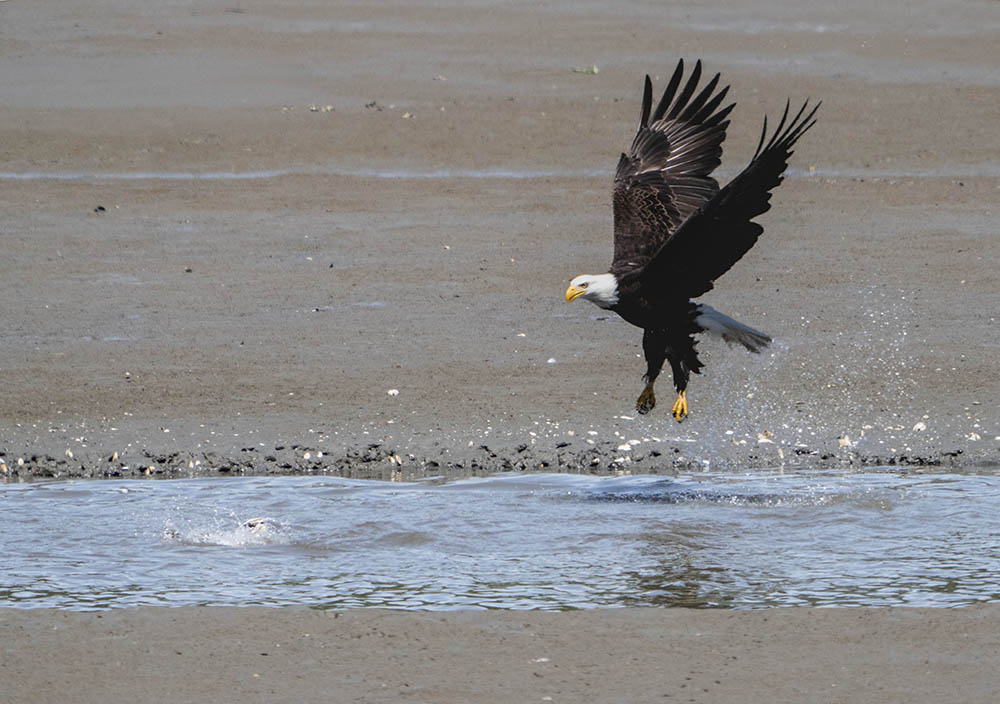
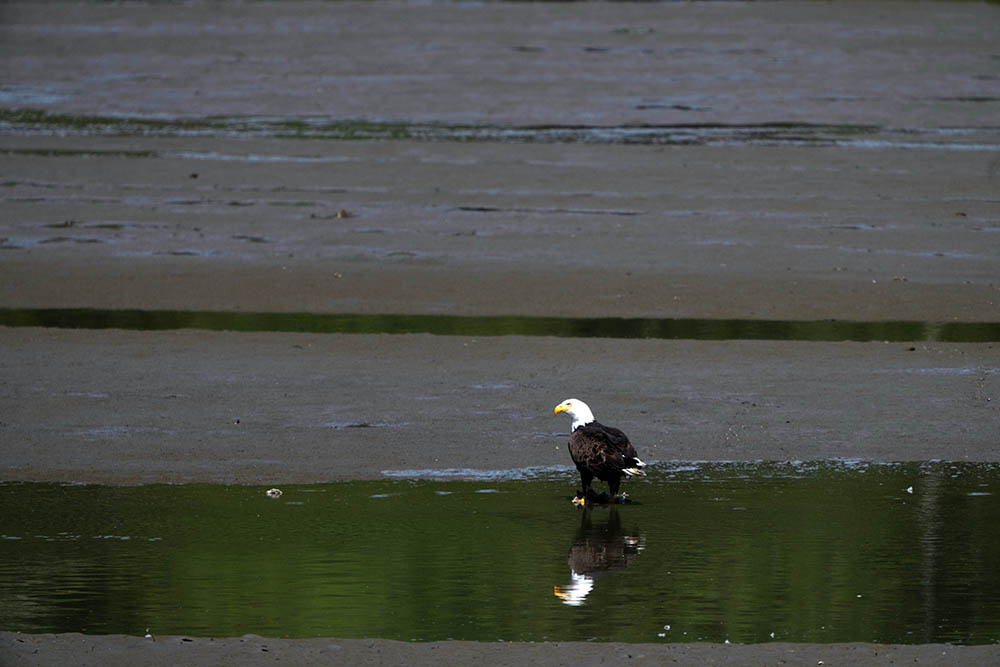
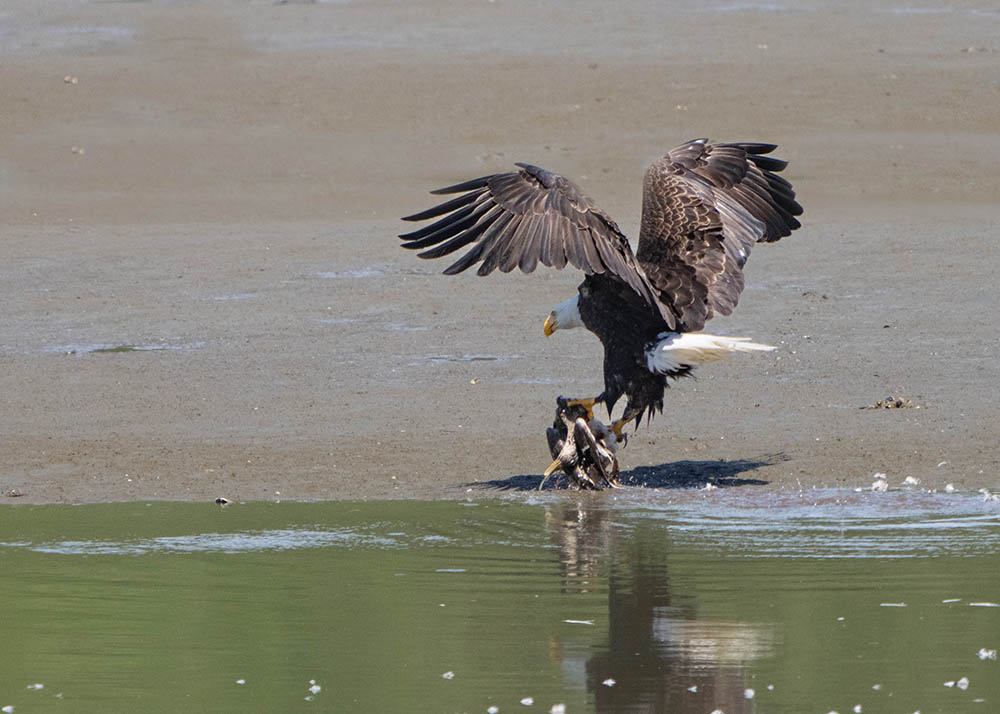
I had a pretty amazing experience several days ago. I got to observe 3 bald Eagles attacking a Mallard. They all worked together to drown the duck and then apparently left it for one of the Eagles. I don’t know if this eagle had seniority in the group or not. But he’s the one who got final prize. I will tell you that I think the exposures could have been better and I’ve done what I could to preserve them without using AI. It’s my experience getting the detail on the white plumage and the dark plumage at the same time it’s difficult with these massive birds. I look forward to hearing your critiques and suggestions on ways I could improve these images. There are 13 or 14 images total and it looks like I’m going to have to post them in two separate sessions here. So the rest will have to come tomorrow. If possible please try to view large
I added these images numbers seven through 14. Is just more of the story.
Hope this is OK?
Critique Style: Standard
The photographer is looking for thoughtful feedback on the image as a whole, especially around the areas noted below.
Feedback Focus: Artistic + Technical
About This Image
As I explained earlier, This is a cooperative venture between these bald Eagles hunting the Mallard. I’ve seen behavior played out previously. Only wish I could have gotten a little closer.
Feedback Requested
I thought we could put in more than five pictures. In order to tell the whole story, I think all the images need to be together.
Technical Details
Camera: SONY ILCE-1
Lens: FE 200-600mm F5.6-6.3 G OSS + 1.4X Teleconverter
Focal length: 840mm
Shutter speed: 1/2500s
Aperture: f/9
ISO: 2500
Wow what an interesting series David to see this poor duck being hunted like this. I don’t think I’ve witnessed this in the wild much less been able to capture such a series. Really fascinating to see this interaction of predator and prey. I think in general you handled a situation with harsh light well as I only see a few images with blown out whites as far as I can tell. I use blinkies to try to control white exposure but I could see that being tough to execute over these frames.
How fortunate, David, you were not only able to witness, but photograph, this slice of the “wild kingdom”. Your images definitely tell a story and it’s interesting only one eagle seemed to benefit from the group effort. Well done.
A very cool story, David, and an interesting set of images. I think it would help if you had all the images labeled and arranged in chronological order and if you happen to have a frame with all three eagles in it, that would be very helpful to bring the story together. As for exposure, I always shoot manual on eagles and regularly check that the whites are just under being blown. However, that’s when I deliberately go out to shoot them. In grab shots like these, there often isn’t timne for such niceties, so congratulations on being alert enough to capture this event.
David, this is an awesome observation and it’s special that you’ve managed to get a good set of photos. Three birds working together is amazing. I’ve watched a Bald Eagle grab a coot and was fascinated that it took two passes, one to knock the prey silly and a second to grab it and fly away.
Thank you all for your comments. This was a pretty impressive experience for me. I shot over 800 images during the time the action occurred. At 20 frames per second, it’s pretty easy to take a lot of pictures. The Sony A1 can do 30 frames per second but culling all these images. It’s not easy. What do I miss in going from 30 to 20 frames per second probably not as much as you would think and it does make it a little easier to be selective.
I realize that your expression, “poor duck“ just shows compassion for the duck. But this is life and bald eagles. Need to eat. They can’t go out to McDonald’s or the local supermarket. I see this type of action play out frequently but spending as much time as I did with these creatures was unusual. I have gone through a lot of my images and find that I had only one other image where the bald eagle had caught another duck . This year, there seem to be more bald eagles in my neighborhood, which is a good thing for bald eagles. There may be a nest closer to my home than previously, but I don’t know for sure.
By the way, this is perspective, I have at most in four ball eagles together in my area. If you have been to Alaska or even British Columbia, there is considerably more density in these birds. In Alaska, I probably saw 20 or 30 together. I was really surprised and not ready for how wild it is in Alaska.
Impressive series and my guess is that something was wrong with that mallard. I think that you handled the whites and darks well and these images suit nature documentary rather than pure art. And that’s fine by me. These types of photos document the reality of nature and you were able to get the events captured. Well done…Jim
Hi Dave
The series of frames is very interesting. Eagles and Ospreys are hard to expose correctly. At a recent Eagle Workshop, it was stressed that manual exposure is the only way to help the whites under control and also get good black detail. Also, use a spot meter to set a gray scale point. I found this worked about 70% of the time.
Peter
Ps In the series, I was told to use the wet sand as the gray value.
Very interesting story. One wonders why the duck stayed in the middle of so much trouble. I guess flying away was not a solution. Nice capture and congrats for selecting the best views out of so many frames.