The photographer is looking for generalized feedback about the aesthetic and technical qualities of their image.
Description
This photograph was taken at 6:30pm
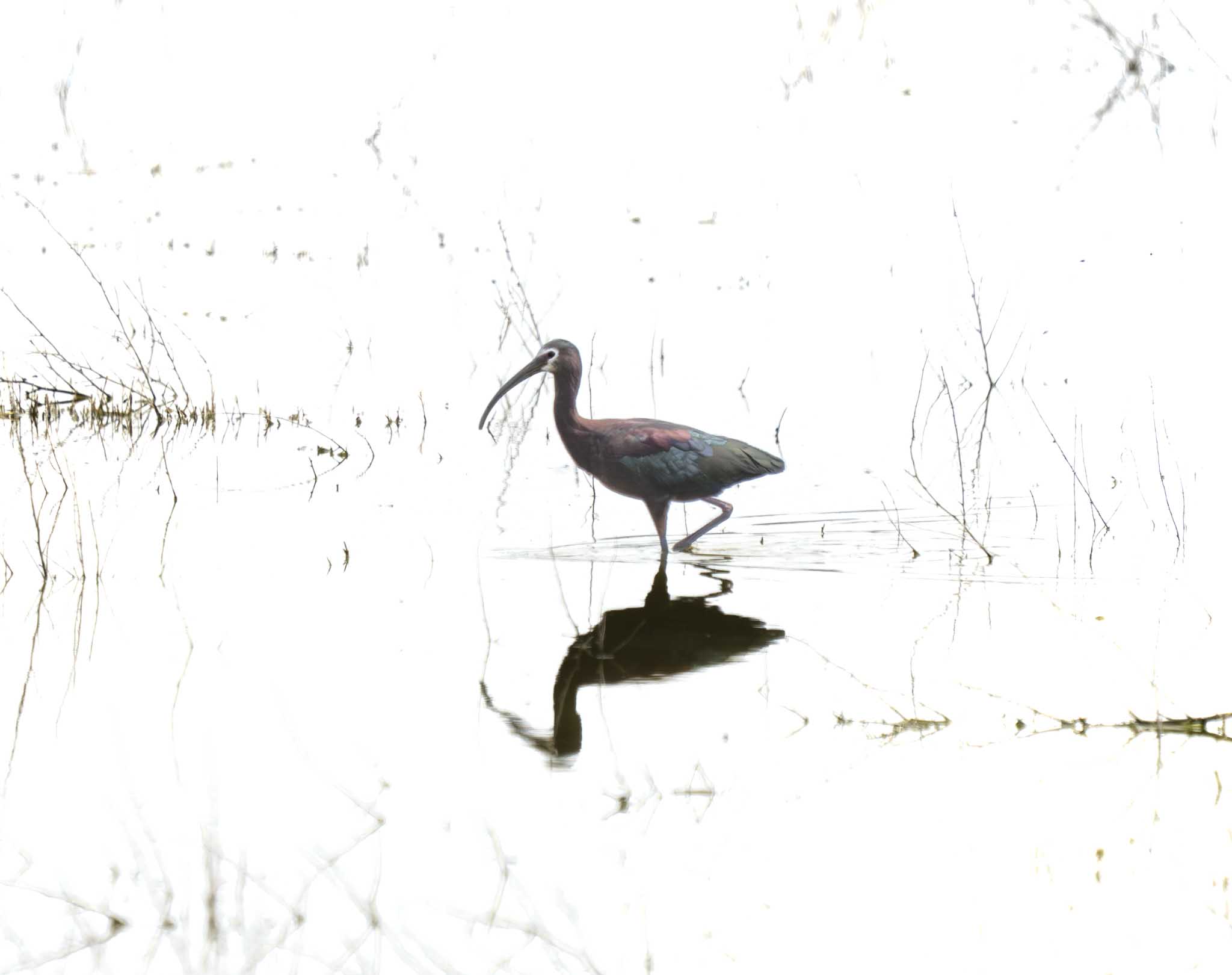
I loved the reflection of the bird in the water and the way one leg was arched. It looked like an elegant pose.
Specific Feedback
Does anyone have experience editing a white faced ibis? This was a challenge for my editing skills. The bird is so dark but when you zoom in, it has such a variety of colors.
Technical Details
This photo was shot at 550mm f6.3, shutter speed 1/5000 sec, ISO 400
Hi Alice and welcome! I also like the pose of the ibis and their colors. I saw and photographed a few on a trip recently to southern Louisiana. Such beautiful birds.
This image has a strong high key look which is fine if that is what you were after even though I think the color on the ibis could be better defined.
This reminds me first of the importance at the moment of taking a photo to “expose to the right” meaning taking the brightest image possible without blowing anything out (overexposing). To accomplish this, I set my camera to show blinkies (the canon nomenclature is highlight alert notification). Once this is set, on playback any overexposed areas will blink. I then fix my settings so any blinkies are just barely not showing. This lets me know I’m not overexposing anything and that I will have the best chance of lifting details out of the darker parts of the image in post processing. So in this particular image you could use settings that would expose for the brighter areas (the water) and then in post processing lift the shadows as needed to best show what detail and color you can on the bird. I don’t know if you find that helpful but that is my technique for recovering dark areas and maintaining overall exposure.
I like the reflection in this image also. I think a better composition would be to have the bird more right in the frame and not in center. An intriguing image.
Hi Allen,
Thank you so much for taking the time to look at my image and offering feedback on it. I’ve been admiring your morning swamp tour, all your photos are of the highest quality.
In my defense I will say that this bird was taken on my first bird photography outing with a rented lens (Sony 200-600). I’m mainly a landscape photographer and dabble in abstracts. I’m going to Namibia in June so I’m doing a crash course on wildlife.
I checked my histogram and it is mostly mid-tones. However I do like high key and I think I took the background too far in that direction. That said I am going to start my editing over from the beginning and see if I can make some improvements. I’m not real proficient in PhotoShop and I’m not sure masking in Lightroom is up to the standards required for birds…or maybe I just need more practice. Regardless, it’s all fun and enjoyable.
Again, thank you for your welcome and your constructive input.
~Alice
Thank you for your reply Alice. Please feel free to repost your redo here for any additional advice.
Another option would be to post an unedited jpeg of this photo and I could try a version using that. That’s up to you of course.
Welcome again to NPN.
Alice, these High key pictures can be tricky. My technical approach is to shoot in Manual Mode measuring first an even exposed area.
By doing this you should get a properly exposed bird and the blown out surface does not matter.
My approach is very useful when you are shooting birds in flight and bright and dark backgrounds change very quickly.
I find the blurred reeds at close and far distracting. It can be erased quite easily.
Hi Armin,
I think birds in general are tricky. I did use manual mode and left the ISO on manual.
You are right about the reeds, I meant to clean up around the edges and I will look for reeds that don’t add to the composition.
Thank you for your suggestions, I really appreciate it.
Alice
I’ve been working on the image and had to walk away from it for a while. Right now I have a chromatic aberration that is driving me nuts.
I will consider your generous offer to edit.
Thank you
Alice
Allen, if you are up to editing my White Faced Ibis I would really love to have some help. I’m attaching the original as a jpeg. If after looking at the original image and you want to bail out, I will completely understand.
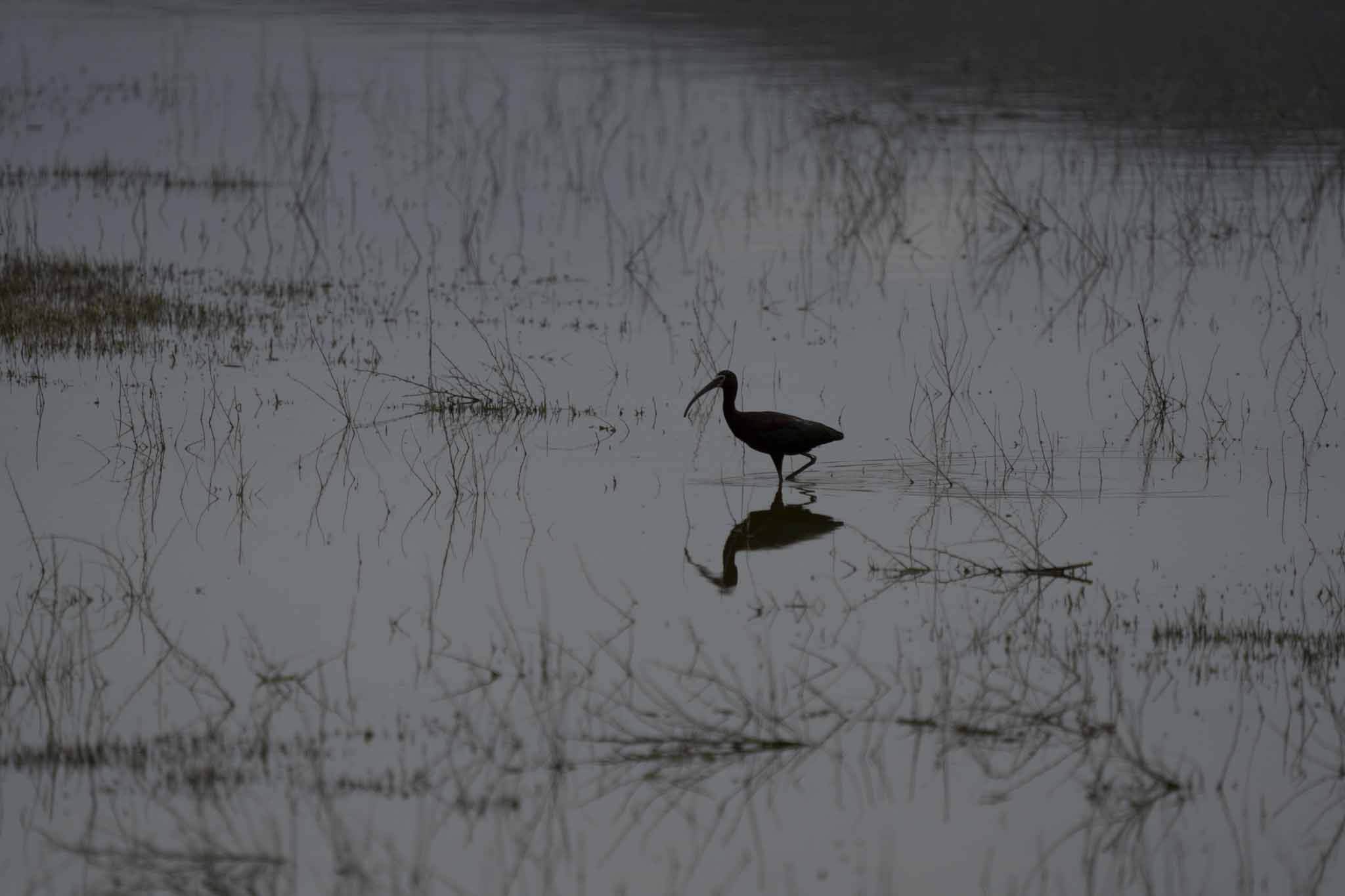
Thanks Alice. Looking at the original image, I would have thought the original vision of the capture was a rather low key look at the low light of around sunset rather than the high key that was originally processed. So I will emphasize the importance of first envisioning the creative intent at the time of original image capture. If your thought was to go high key, I would agree with the approach of @armin in exposing fully for the bird and let the surroundings go high key (overexposed) in camera.
If the intent was more to show an image with a fully exposed bird and more subtle surroundings, then I would recommend the technique I originally explained, expose to the right without blowing anything out. This should give you the brightest water possible without overexposing and hopefully leave room in post processing to raise the exposure on the bird enough for a proper exposure. To accomplish this, I think we can look at your original settings for some leeway in the future. I don’t know what camera you are using but ISO 400 is quite low for today’s camera bodies especially given the advanced noise reduction applications that do a marvelous job of minimizing noise and maintaining detail. I use DXO PureRaw and my understanding is the noise reduction in Adobe Camera Raw and Lightroom also work very well. With my crop sensor Canon R7, I can safely use ISO 6400 combined with DXO PureRaw and produce clean images with nice detail. These applications open up a whole new level of possible low light shooting. So I think with a higher ISO and shutter speed a bit slower than 1/5000s (say 1/2000s in this case), a brighter image could be safely captured that would show bright enough water and allow for raising of shadows in post processing. And btw, I also agree with Armin in using manual mode for consistent exposures.
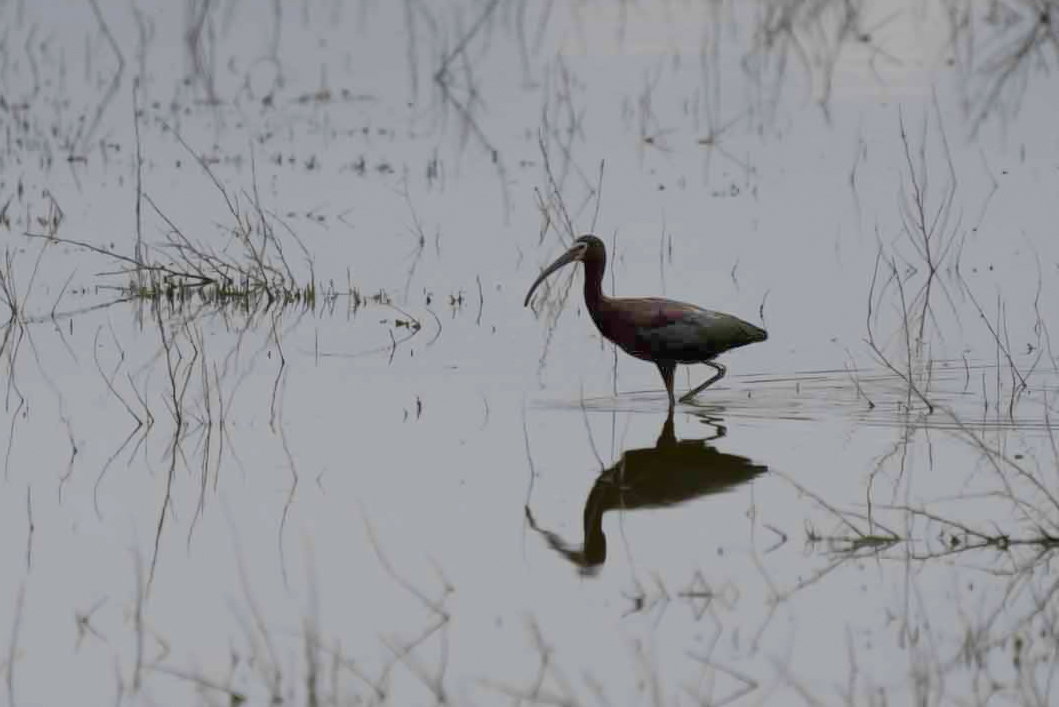
I did still say I would try a hand at processing the original image. To do the best job, I would need the full size Raw file but I went ahead and did the smaller version of the jpeg that you posted (thank you for doing that). I did this all in Photoshop. I selected the bird, chose inverse, and raised the exposure on the water. I then selected just the bird and raised shadows just on that. The final result is far from ideal but I can see the challenge you had in trying to produce a high key image from the original and exposing properly for the bird as well. See below for the processed image but I’ll reiterate that I think the key takeaways are what I stated above. I hope you don’t mind me analyzing your image and making suggestions like this but those are my thoughts.
I so appreciate your feedback and taking the time to help me with this image. At the time I did not have high key in mind. This outing was my the first time photographing birds and I was using a rented Sony 200-600 mm. Because I usually shoot landscapes I’m used to exposing to the left, but I can see that I should, at least in this instance, exposed to the right for the water. This is big ahah for me, so thank you. I do use the blinkie feature on my camera for over exposure, which is very helpful. I also see that my shutter speed was too high and my ISO was too low. I was shooting in manual with ISO on auto, but I think with such a high shutter speed, the ISO dropped. Talking with you about these specific issues is very helpful. My motivation is my upcoming trip to Namibia and having the opportunity for seeing lots of birds along the coast line. I will keep practicing.
Thank you so much
Alice
Hi Alice …Welcome to the NPN. Great place to be. !!! I looked at you image several times before making a comment. I really like the simplicity and the way you have the background washed out. Makes the bird pop out. This image could go B&W … Very cool image… I like the style. Welcome again !!!
Alice, kudos for digging into difficult captures! I like what @Allen_Sparks did with the image. I use LR but rarely mask there – I prefer the ability of PS to edit masks, as they are never perfect. But a lot of the tonal range of modern cameras can be brought out with the simple Shadows and Highlights sliders in LR, after balancing the Exposure with a good look at the histogram. And its latest noise reduction is amazing. Then I go to PS as needed for cloning and more detailed masking, as well as dodging and burning with soft-edged masks drawn with a brush in Quick Mask mode then a Curve created with the mask. And the healing and remove tools are superb. But there are many ways to edit these days and the best one is the one you know best.
Good luck with your Namibia trip – it is a wonderful location! And when it comes to bird photography, Murphy’s 67th corollary says you never have enough glass. Long lenses are getting lighter and easier to manage – worth looking into the offerings. A 100-500 with a 2X is practically glued onto my full frame Canon R5, and I often crop to 50% or even much more.
Diane, thank you so much for your comments. My PS skills are lacking and I’m trying to learn more about selecting, masking, etc. because I know I can do more with PS than in LR. However I’m also watching a lot of birding tutorials, trying to improve my chances of getting a decent capture while in Namibia. I think I will concentrate on improving my birding photography and then after my trip in June, I’ll take on PS. My brain is on over heating!!
I love your work, so again, thank you for your comments.
Alice
A fine job bringing out the colors in this ibis in post processing, Alice. I do like the framing of Allen’s alternative as I don’t think you need as much habitat as in your original post. The wading pose is excellent.
Thank you Dennis! I agree with you regarding Allen’s crop, I like it too.
I noticed that you shoot Sony and use the 200-600mm lens. I shoot with a Sony a7Rv and I rented the 200-600mm lens for a week when I went on my bird outing and got the Ibis shot. I usually stick to landscapes. Birds are another thing all together. My motivation is my upcoming trip to Namibia where I will have many bird and wildlife photo opportunities. I’m going to rent the lens again for that trip. It’s a lot of lens for me, I’m used to a 70-200 with 1.4 converter. I’ve been lifting weights to get ready :-/