Weekly Challenge
The photographer is looking for thoughtful feedback on the image as a whole, especially around the areas noted below.
About This Image
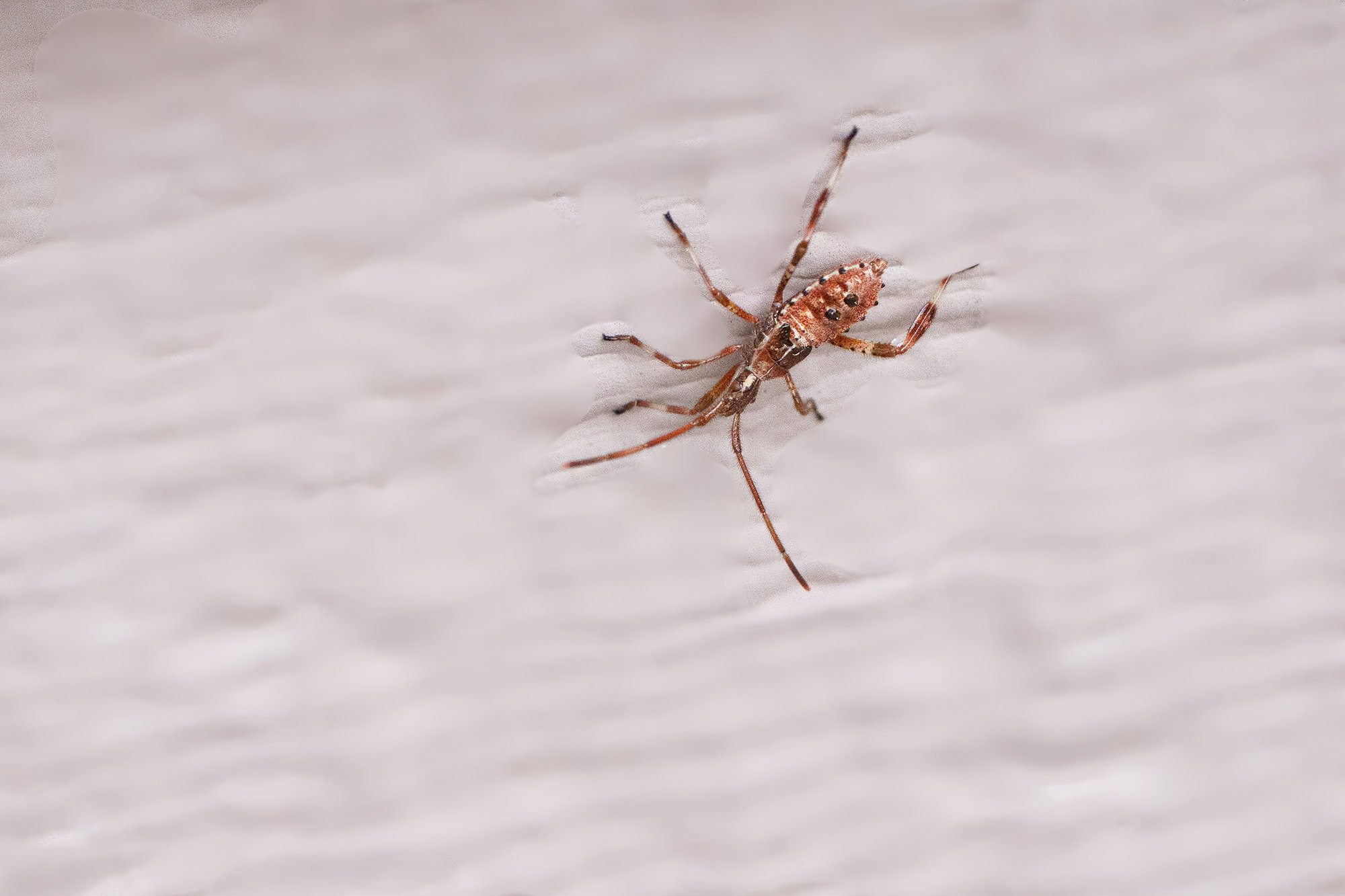
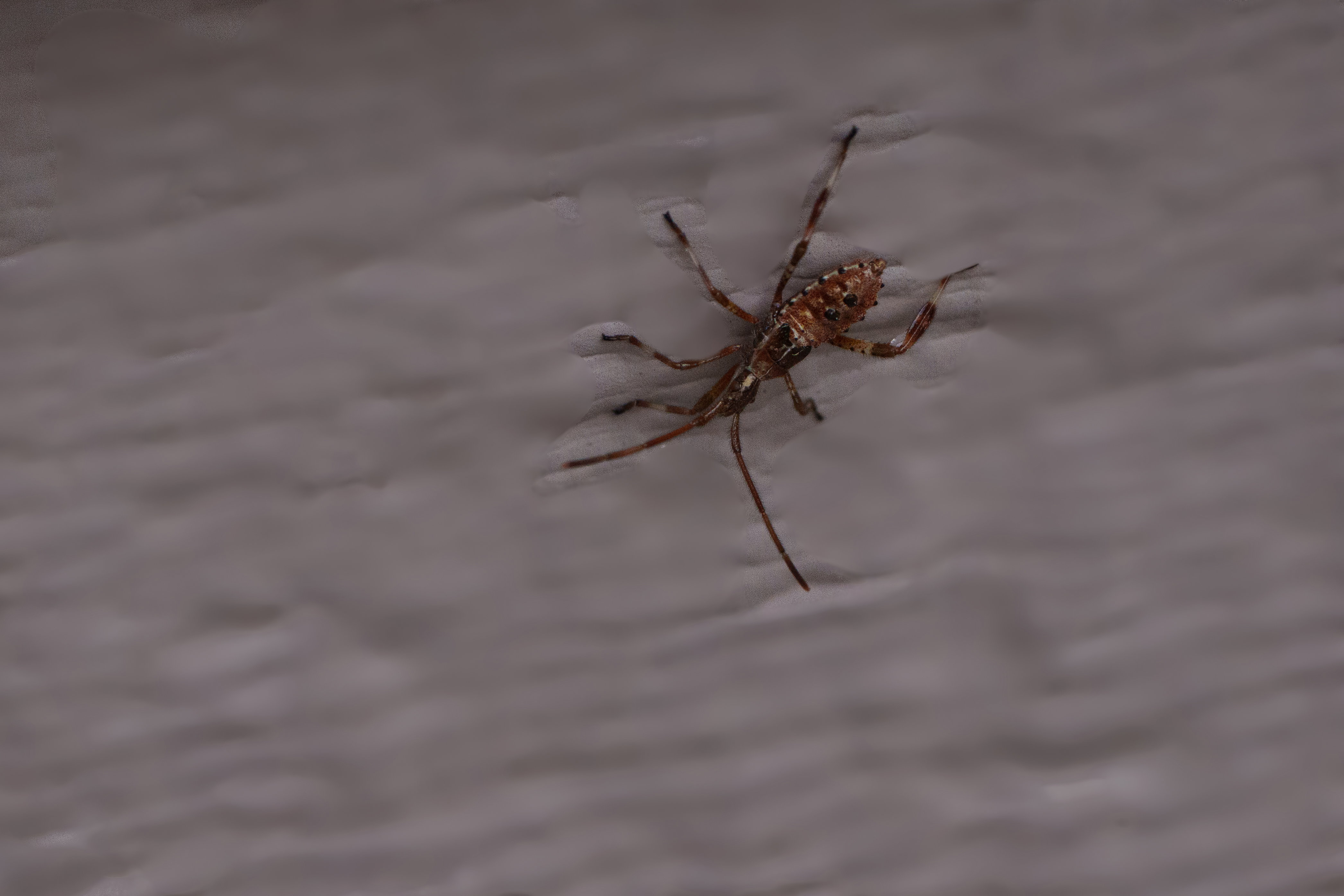
I am no bug expert so I’m not sure if the information about this creature is correct. I used Windows-11 Co-pilot to look it up by image so I hope it’s correct. I was going to go back into my archives to find another photo to submit but as luck would have it I was coming back into the house from my patio and this creature was on the wall. Curiosity got the best of me so I took three quick photos of it because I’d never seen anything like it. This is the one that made the cut.
I am no good at post-processing so the only things done to this are cropping of a 60.2MP original file and I tried to blur the background using the Ai feature in LrC.
This insect is a nymph of the Jagged Ambush Bug (assassin bug), Nymph/Phymata pennsylvanica, characterized by its spiny, segmented body, and raptorial forelegs. It’s a predatory insect that waits to ambush prey.
A quick note about me. My professional photographic background is studio portrait photography. But it was part-time only and I held down a full-time job as a quality assurance analyst for a major student loan organization for 20 years followed by another 10 years with a major pharmecutical and medical diagonistic device manufacturer. When I retired from the 8 to 5 I did a little more portrait photography and event photography as an opportunity freelancer before I fully retired. Since retiring almost 10 years ago, other than portraits and sports photography of my grandchildren, (8 now), I’ve turned to shooting landscape, wildlife and general nature photography.
Feedback Requested
Provide any feedback you wish. I would like any feedback about how to use the masking features in LrC to perform basic adjustments like background blur. I know a little about using the basic panel but anything more sophisticated is beyound my scope of knowledge.
Technical Details
Camera: SONY ILCE-7CR
Lens: FE 100-400mm F4.5-5.6 GM OSS
Focal length: 400mm
Shutter speed: 1/2500s
Aperture: f/5.6
ISO: 2500
Used LrC (Lightroom Classic) to paint a background using the built-in Ai functionality. I realize it’s poorly done and I’m sorry.