The photographer is looking for thoughtful feedback on the image as a whole, especially around the areas noted below.
Feedback Focus: Artistic + Technical
About This Image
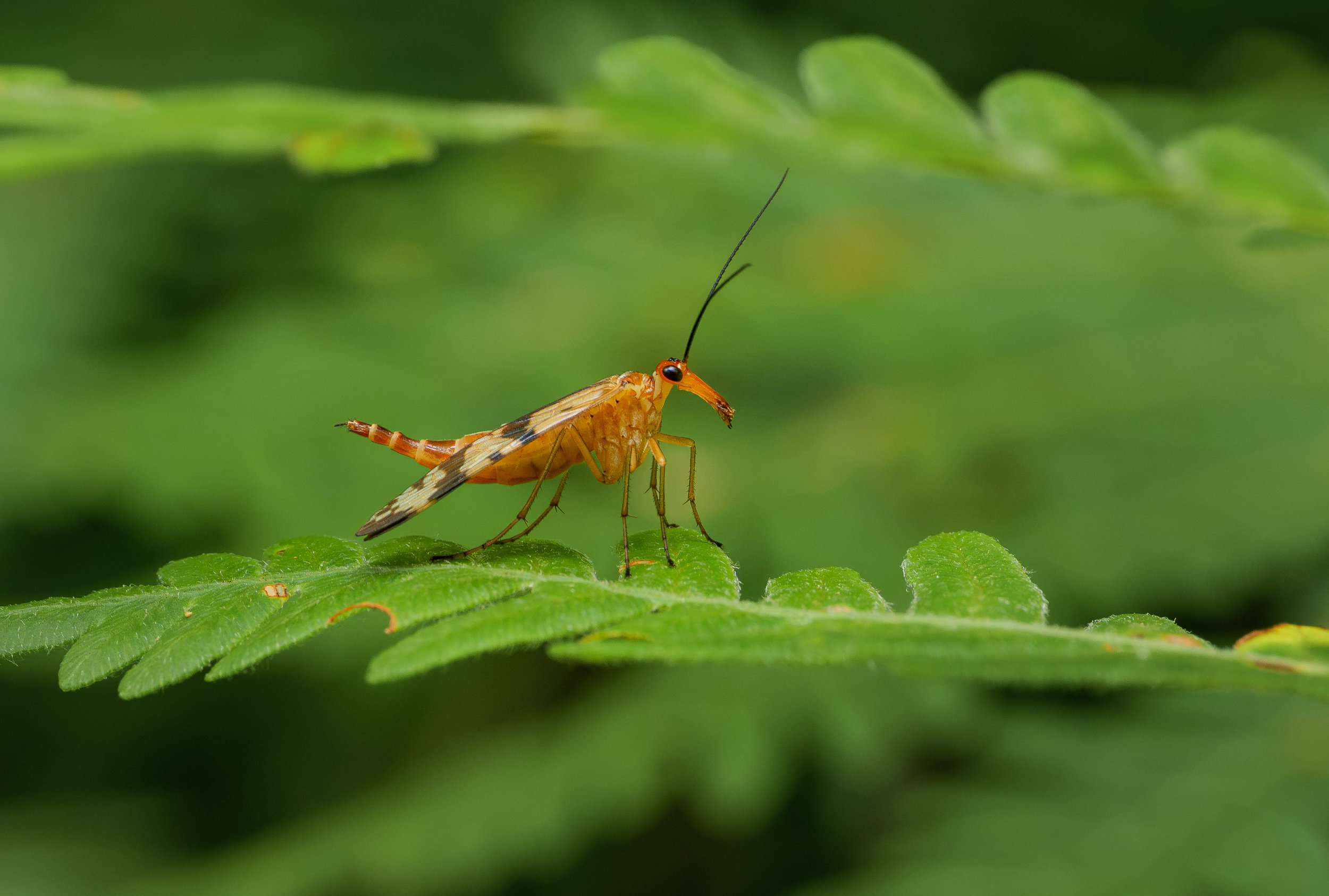
You know when you’ve got a subject in your viewfinder and you just know it’s going to be a good shot? That’s how this went for me today. I’ve heard of Scorpionflies before (Panorpa spp.), but have never seen one, much less got the opportunity to photograph one. So when this little lady made an appearance in the bracken when I was after Dragonflies, I felt really privileged to be at the right place at the right time. And with the right lens.
She is about 3/4 of an inch long and was pretty stealthy. When you first see one, the markings make you think Deer fly, but it’s bigger and isn’t circling your head looking for a target. Instead they alight and then sit for a bit to assess the meal situation. This one was aware of me, but intent on her purpose and let me get the tripod even closer.
Feedback Requested
It’s a fairly large crop, but nothing too insane. Thoughts on processing, etc. are welcome.
Tripod/handheld: Tripod
Focus method: manual w/focus peaking
Filters: polarizer
Technique: crossed fingers - upped ISO so I could get a slightly faster shutter speed because I needed to stop down a bit with this lens.
Conditions: cloudy, but with occasional direct sun.
Processing software: Lr
Major adjustments: global adjustments to even out the dynamic range. denoise & sharpening. Mask for insect and boosted saturation, exposure, texture - inverted to take down the same. Cropped and rotated. Some distraction removal.
Kris: Many kudos to you for this capture. We get similar critters in our garden on occasion but I haven’t seen one in a while. Also want to commend you for mentioning your use of the polarizer. If you can get away with the light loss I think you do get better colors and certainly inhibited reflections. Great find and remember, luck happens to the well prepared.>=))>
Thanks @Mark_Seaver & @Bill_Fach - that face is something isn’t it? Reminds me of some Weevils. And yeah, a polarizer has been a useful tool for a lot of my macro work.
What a great find and capture! The kind of unique bug I am often looking for in our garden here. Love the composition with a feeling of being between leaf fronds with the supporting green background. The bug really pops and detail is fabulous. Terrific!
Thanks @Allen_Sparks & @JayD - she was a pretty patient model despite my rustling the ferns with the tripod and all. The new macro lens has amazing optics and so as long as you can focus precisely, the detail is really great.
This is a nice look at a scorpionfly. The greens are rich, but not overwhelming. The use of a polarizer cut down on bright reflections and produced some ideal color pop. The crop is fine and shows where scorpionflies live. The best place to look for scorpionflies is at the edge of a forest or woods with plenty of plant growth on the forest floor…Jim
Thanks so much @Jim_Zablotny - Bracken is a sensitive fern so it won’t be this green for much longer, but there was so much activity in it I was amazed. I must stop by more thickets to see what is going on. Thanks for the info about Scorpionflies - they are so interesting. Well, bugs are anyway, but you know.
This is tip-top, Kris. I love shots with strong and complementary color contrasts like this. And you fitted the insect so neatly between the parallel fronds. Your work really paid off here with a fascinating shot.
I am so behind and I’m sorry to be so late. This is such a great image. You’ve got all the good comments already, so I’ll just add my appreciation of the image. Colourful, but not overdone. I love the supporting bracken.
Thanks @Mike_Friel & @Glenys_Passier - the colors did come through rather nicely as the camera pretty much nailed the wb. And she does look rather at home, doesn’t she?
Thanks @Diane_Miller - Scorpionflies are fun little creatures and surprisingly still, at least this one was. The males do indeed have bulbous butts that curl over like a scorpion’s. Didn’t see one of those, but I imagine that they would be a little scarier, like Ichneumon wasps compared to regular wasps.