The photographer is looking for generalized feedback about the aesthetic and technical qualities of their image.
Description
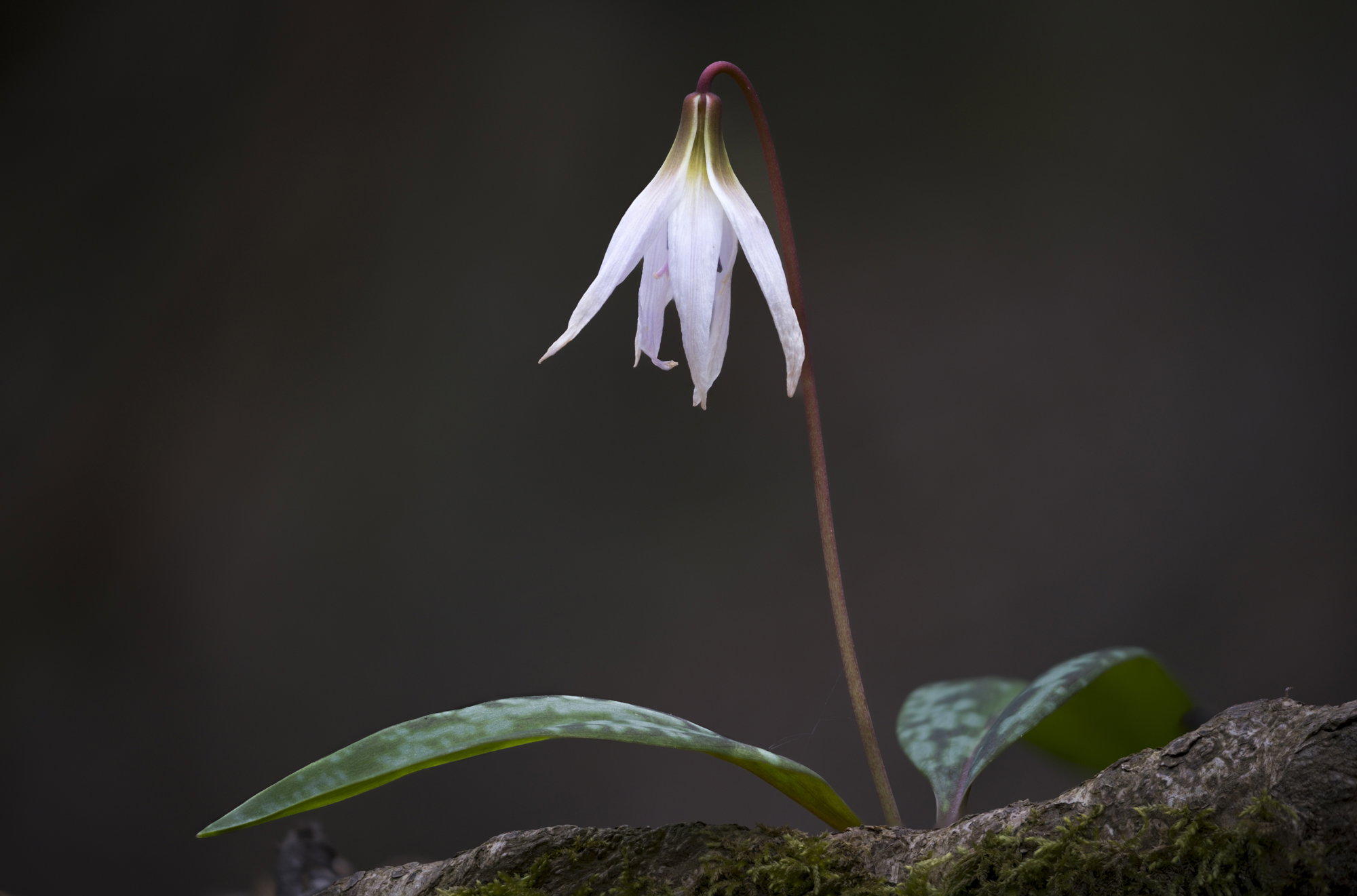
A Dogtooth violet (Erythronium dens-canis) in the understory of the woods around Turin (Italy). These flowers are one of the early spring manifestations, together with Anemones and Snowdrops, in northern Italy at the foot of the Alps… I used some focus stacking, but opted for keeping the background leaf not in full focus.
Specific Feedback
Any feedback is welcome
Technical Details
Fuji X-H2 and 80/2.8 macro, focus stacking, f/2.8, ISO 200, 1/105 sec, Lightroom + Helicon Focus
Beautiful job on this flower, Antonello. I think a large part of focus stacking is picking a good place to quit and having enough depth of field in the the individual shots (or at least the last one) to get a pleasant drop off in the sharpness. This is an excellent example of doing it right in my opinion.
The dog-tooth violet name is used here as well though locally people seem to prefer “fawn lily” for the spots on the leaves.
Thanks Dennis! I am rather new to focus stacking and am experimenting various options… Thanks also for the name - somehow more poetic fawn lily than dogtooth violet…
I enjoy trying to photograph our species here in Korea. It’s always difficult to get a clean BG - you did that so well here. Also to wait for the wind to stop blowing. As for composition, I’d suggest adding a little canvas to the top and also cutting a bit from the right so the flower is not so high and central - but this is probably a matter of personal taste. A delightful sign of Spring!
Antonello: Something like, “Oooooooh” came out of my mouth when this opened in the full view. I like all of your decisions, including your DOF choice. I’m finding myself using Helicon for controlled focus and not 100% sharpness throughout. Your comp works for me as does the lighting. Superb capture of a beautiful flower. >=))>
Lovely!! I think you made a good choice with limiting the focus stack where you did. These are so difficult to photograph to get both the leaves and flowers as the leaves are so close to the ground. Excellent job there! I agree with having a bit more canvas on top. Ours are yellow and the petals stand out more and curl up at the tips – I’m wondering if this one is a bit past its prime?
Joining in the chorus of compliments here - really nice job. The local species of this early type of lily is called Trout lily because the leaves resemble trout. Funny the names we come up with for them. Do the leaves of this species totally disappear after it blooms? Trout lilies do which is good because they are all over the lawn and it irks my weirdo husband. LOL.
I like the diagonals in the leaves and the ground and how well they work with the angle of the stem. The drooping petals contrast nicely in how enervated they present versus the tension in the stem and leaves.
I’ll try to add a little space at the top and cut on the right side, to see how it feels! Thanks
And yes, this flower has definitely past the more “flamboyant” period of its life - I like flowers in their late stage, maybe because I am myself not that young anymore…
I attach another picture (just a test for the subsequent focus stacking) of a flower in its full bloom. I think there can be variants with slightly different color intensities.
And yes, the lifecycle of this plant is very rapid and all the plant parts above ground disappear before summer… Only the underground bulb remains, as far as I know.
Antonello, you did an excellent job of photographing this small flower. Around here, the vast majority of them are bright yellow. Are most of yours white or did you search for this one? My guidebooks say that our version is native to the Eastern half of the USA. Is this one introduced or is it these case (that’s often true) where similar names are used for similar looking species (especially flowers) worldwide. Again a fine view of this flower.
Mark, I checked on a mixture of guides and internet, and it turns out that what we call “dog’s tooth” is Erythronium dens-canis , a typically Eurasian species. The “fawn lily” or “trout lily” is instead typical of North America, it is always Erythronium but a different species… The Eurasian ones are white to blue-violet depending on the individual and probably the stage of development. It is not a rare plant but with a rather local distribution. Those around my village are typically white…
It is rare in Korea, where it needs an undisturbed, damp environment at fairly high altitude. I’ve only seen two places where it grows, in March-April.
Antonello, your full flower post is excellent on it’s own. Where I like that you’ve included the leaf. Those dark blue stamen are very striking and they coordinate well with the pastel blue/white petal. Our “Trout Lilies” will be blooming in 2 -3 weeks…