The photographer is looking for generalized feedback about the aesthetic and technical qualities of their image.
Description
Last June I visited Hurricane Ridge in Olympic National Park with @Steve_Kennedy with the sole purpose of doing macro photography on wild flowers that were hopefully just starting to blossom since much of the snow was now gone. We found perfect conditions as there was still deep snow in some of the shady spots, but several types of flowers were starting to bloom where the sun had melted the snow. This particular flower, Erythronium montanum AKA avalanche lily is known to bloom early in the spring. According to a search on Google “in Native American culture these flowers are a herald of spring and a symbol of renewal”.
Specific Feedback
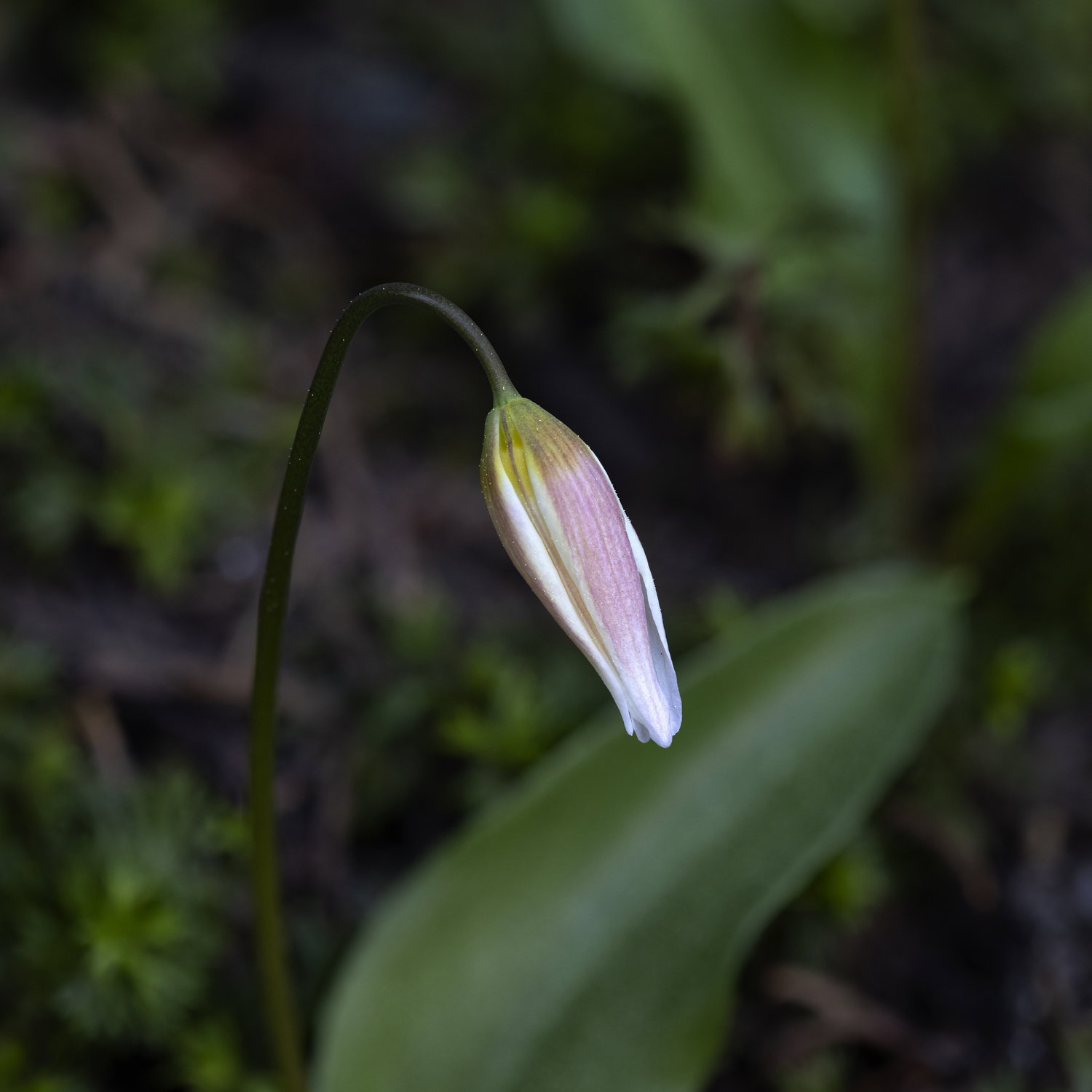
I did a forty image focus stack with this image because I wasn’t sure at the time how I wanted to crop it and how much I wanted to have in focus. In the end I decided to center the bud and only use about 6 of the images to put the flower bud in sharp focus and blur everything else. I would love any comments/suggestions about how I processed and cropped the image.
Technical Details
Canon R5 with Canon L F4.0 180mm macro lens on tripod
ISO 400, 180mm, F/5.0, 1/200sec
40 stacked images using the auto features of the Canon R5
Images were stacked using Helicon Focus, and processed in LR, PS and sharpened in Topaz Photo AI.
Interesting image of still another species of Erythronium! In a different post it was discussed about the (northern) Eurasian species, the North American fawn/trout lily, and the “japonicum” species in Korea… I noticed that the leaves of this one (which seems to be at the beginning of the flowering period) do not have “spots”, is this typical or do the spots appear later?
Image-wise, in my opinion you could perhaps cut a little the upper part as it does not add much to the picture.
This is a sweet, gentle image. I would (as suggested) crop the top. Also, I suggest the one bright disconnected leaf at the top be darkened to match the rest of the foliage. Lighter areas will grab your eye and we want viewer’s eye to stay on the flower, not be drawn up to that leaf. Otherwise, nice image, it allows me to breathe, sit with the flower and ponder.
Thank you @Antonello_Provenzale for your feedback! I have zero expertise in plant identification, so I went to a group in Facebook to help me. First, I have many other photos of what I think are the same flowers and they are plain white with no spots. Second, in the response on Facebook another variety of Erythonium was mentioned called Erythonium americanum and they were described as being bright orange with black spots.
Thank you @Cheryl_Kaiser for your feedback. After looking more closely at this image 9 months after I took it I wish I had spent more time composing the image.
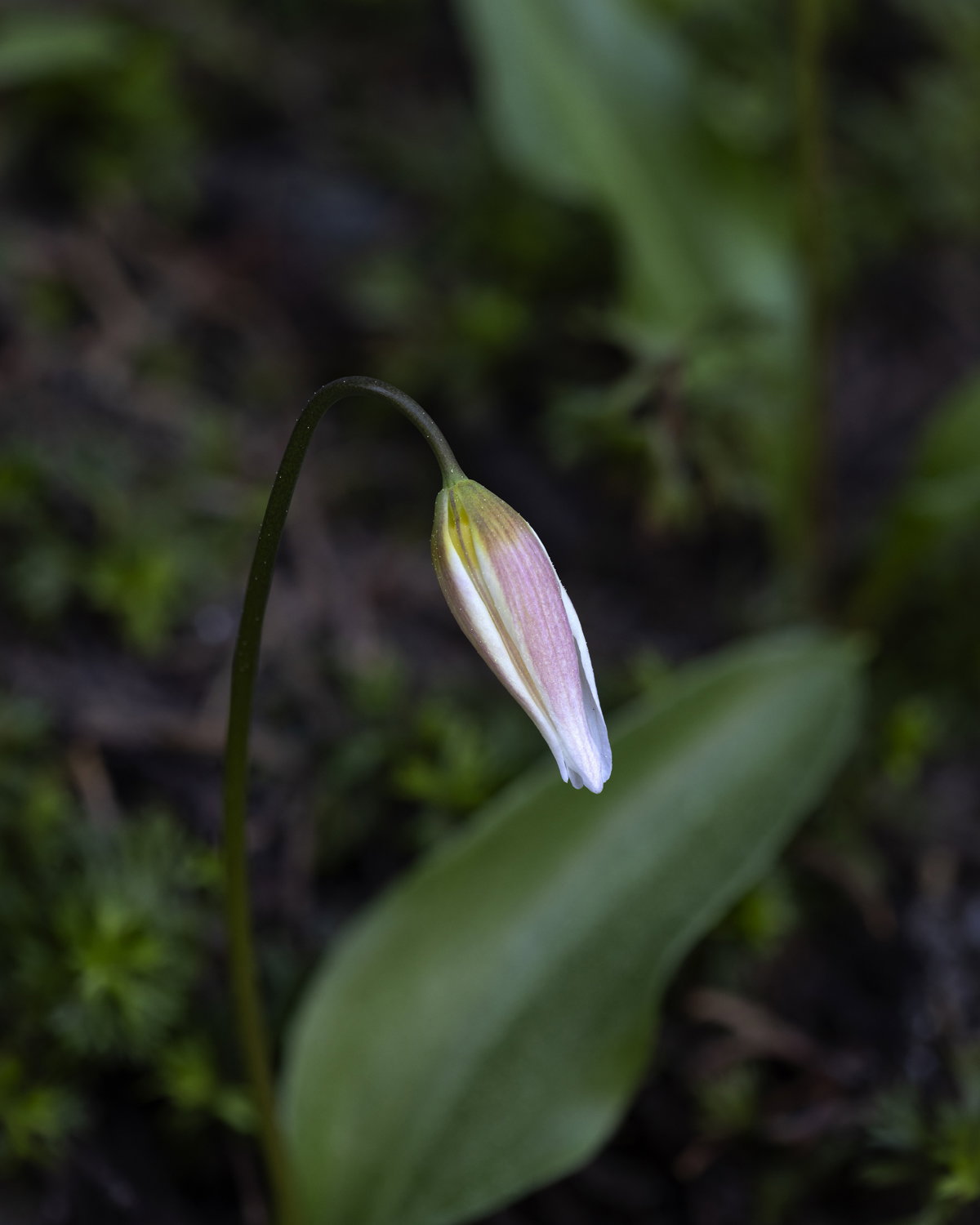
Hi Willem! This is a very fine image of the avalanche lily bud. Good choice to limit the number of images in the stack - having only the bud in sharp focus works well. You got the light and details just right, IMHO. I think your comp is good, and would be a little bit better in maybe a 4 x 5 format, similar to Antonello’s suggestion. I also agree with Cherly’s suggestion about darkening the leaf on the top of the image. Well done!
This makes me think I should go back and look at my images from that trip, though I don’t think I have any this nice. I got rather distracted after that trip and never took the time to really see them properly. Let’s do another shoot when you get back to Bellingham.
A pleasing look at the bud, Alexander, which shows nice detail and I like the curved stem. I could see a fairly tight crop to really put the bud and stem front and center.
Thank you @Steve_Kennedy, @Allen_Brooks and @Shirley_Freeman for your nice suggestions. I have reposted the image in a 4X5 format and with darkening of the top leaf. I agree that these changes make the image better.
A beautiful image of this bud, Willem. I really like the repost and the decision to limit the number of images in the stack was excellent.
On Lilies in the Pacific NW of the US (wet side of the mountains), there are two species of “fawn lilies” a white and a pink, both with blotches or spots on the leaves. There are also two species of lilies in the mountains, this avalanche lily, which is white and a Glacier lily, which is yellow. All are in the genus Erythronium. Neither the glacier nor Avalanche lily have the mottling on their leaves. Lots to choose from. The fawn lilies are lowland plants usually in forested riparian areas.
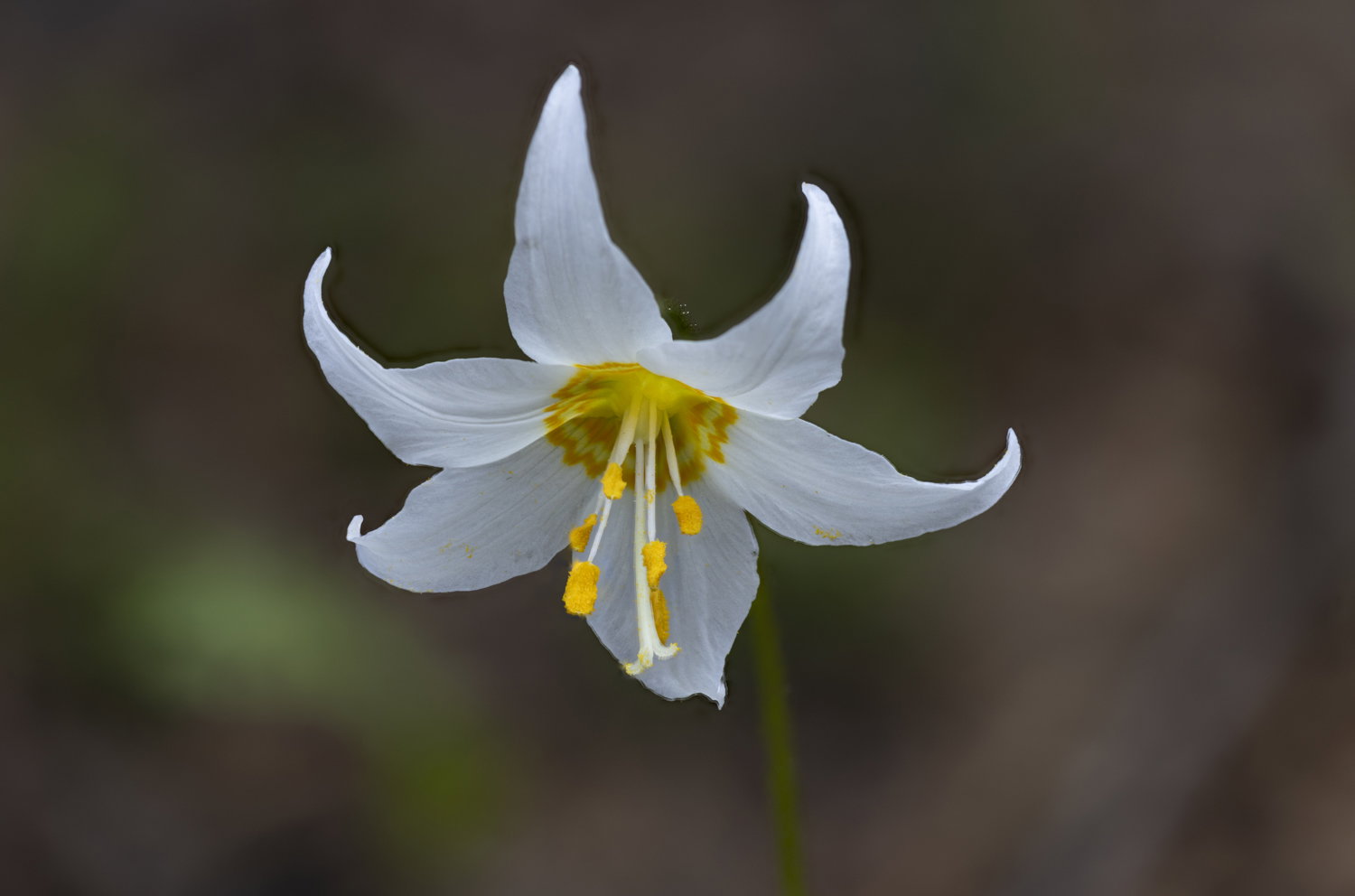
Thank you @Dennis_Plank for that information! Attached is an image which is a stack of 24 images. Unfortunately, I missed the point in the flower which was closest to my camera, i.e. the pedal at the top of the flower. I feel confident after your note that this is an Avalanche lily.
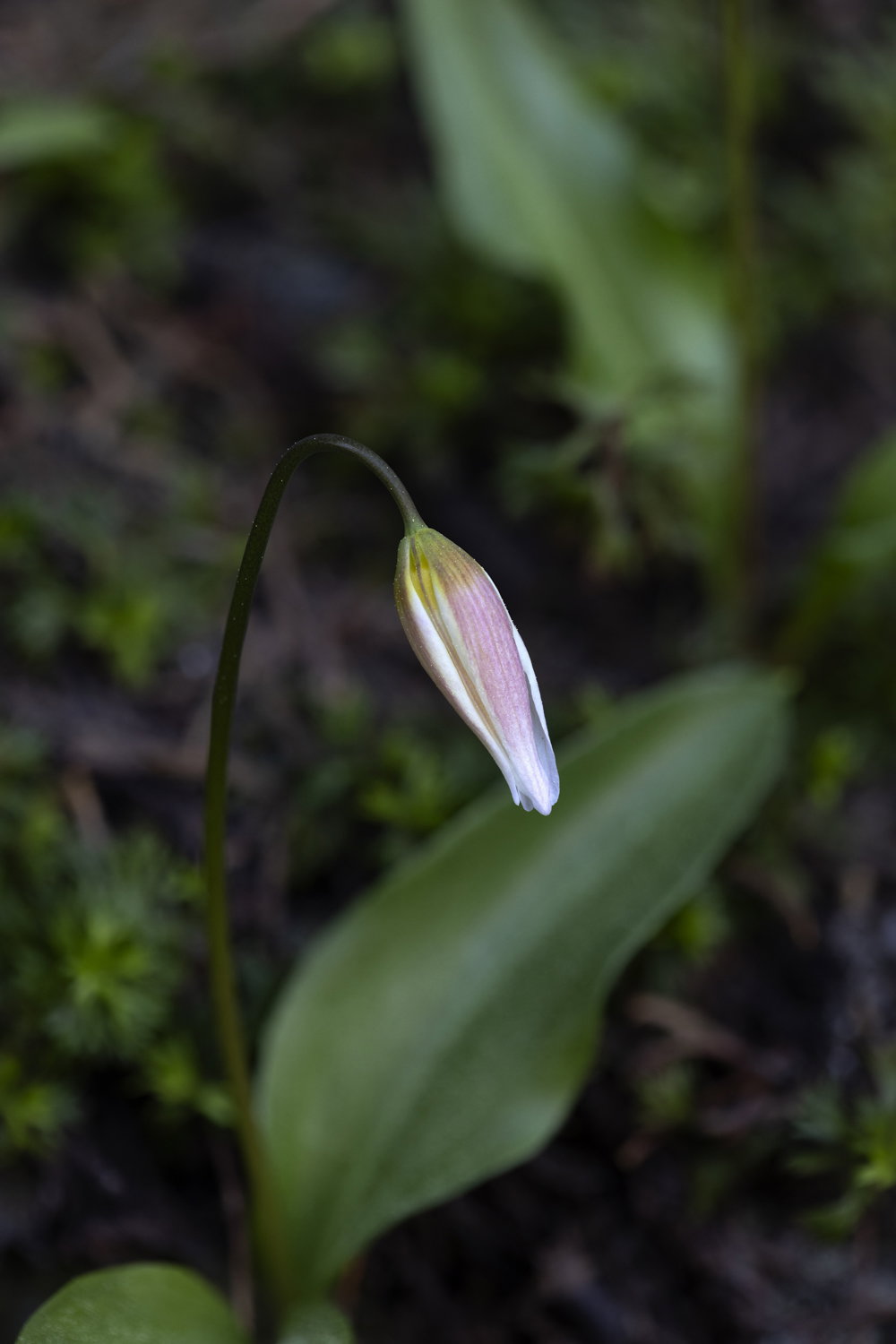
Willem, the bud views look very good. The subtle colors in the bud are wonderful, while the mix of green and dark in the background adds nicely. I think you could crop even more from the top (maybe to 1:1). In addition to losing the background at the top, a tighter crop hides the fact that the upper leaf is a leaf, at 1:1, that leaf becomes just another somewhat soft, green spot.
Willem: My apologies for being so late to this but I did want to add my kudos. I like the tighter crops and thin you could even go tighter. I’ve only been to Hurricane Ridge once and did get a few flower images but yours is excellent and makes me want to go back. Nicely done. >=))>
@Bill_Fach thank you for your reply! Me too! After doing a deep dive into my images for the weekly challenge I see so many things I wish I had done differently.