The photographer is looking for generalized feedback about the aesthetic and technical qualities of their image.
Description
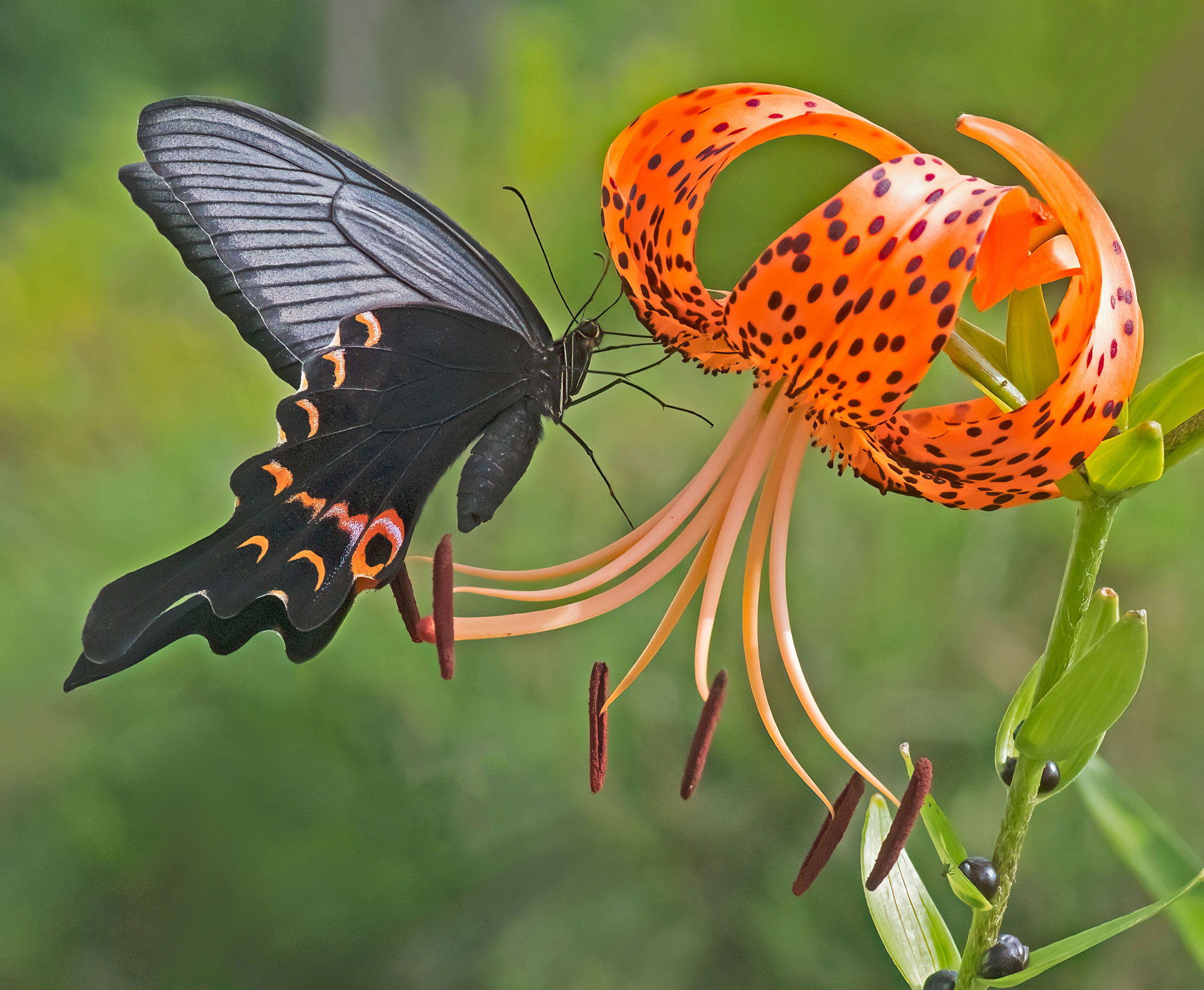
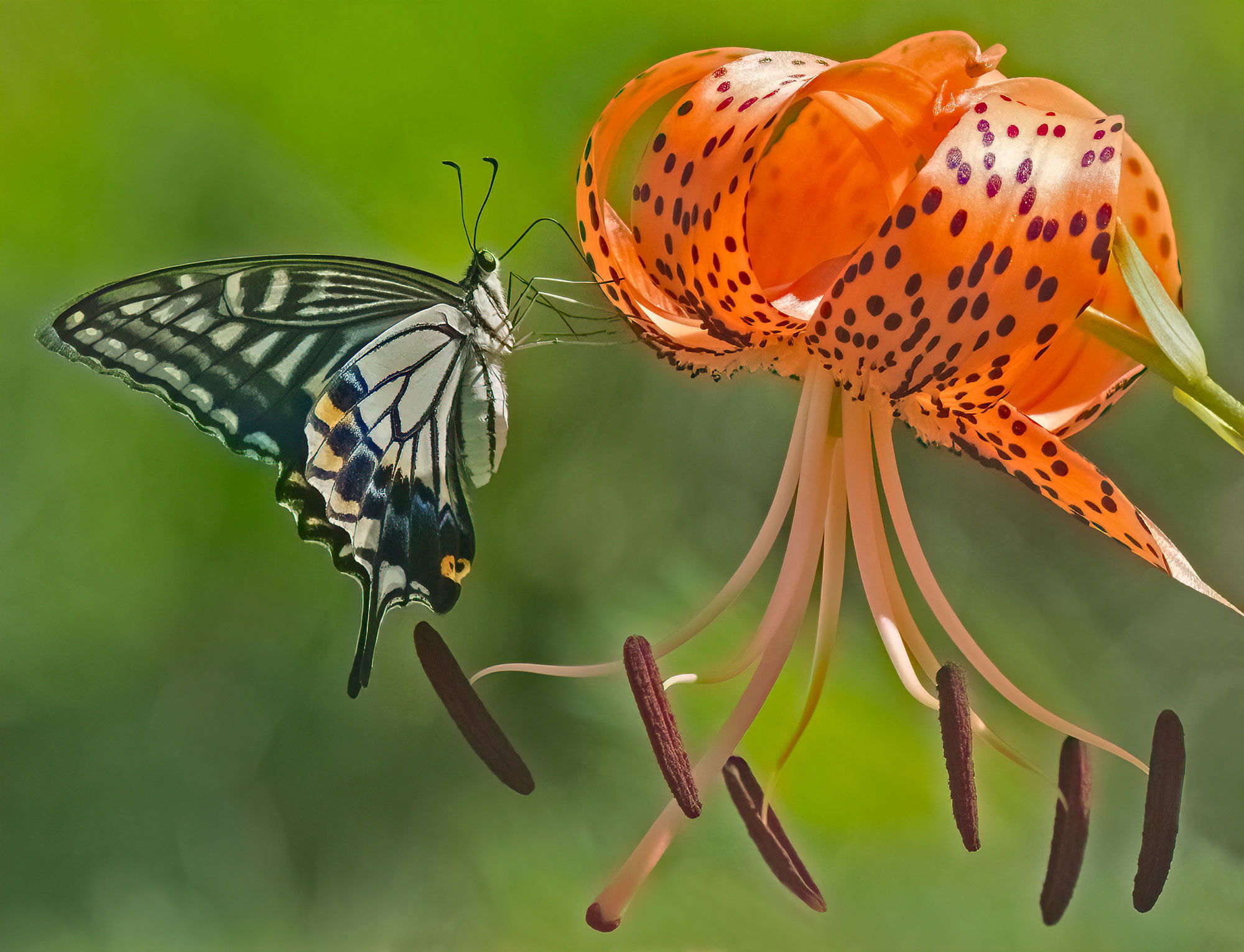
The Tiger Lily and Swallowtails are a pollination team. The nectar of the flower is located precisely so that the wings of the butterflies accumulate lots of that maroon pollen from the stamens to carry on to another flower. In 24 hours the flower will fade, but the pollen is dense, and a weaker, older butterfly will pick up plenty on its hindwings. The first one above is a Long-tailed Spangle (yesterday), the second a Xuthus Swallowtail (today, on a later bloom). I had to watch out for them, as they had plenty of zinnias to visit nearby, but at 8.30 in the morning, this was the flower of choice. (Note the bulbils, the small black bulbs in the first photo. They produce clones of the parent, but need 4 years to fully develop into plants)
Specific Feedback
All comments very welcome.
Technical Details
1: D500 + 105mm macro 1/2500 f9 ISO 4000
2: Same, with 1.4 TC added 1/5000 f7.1 ISO 3200
Denoise, tonalities in PS; Nik Viviza2 used to enhance the second butterfly. Cropping and gardening.
Oh my, Mike, these are gorgeous (butterflies and flowers. I appreciate the story that goes with it too. I didn’t realize that the BF’s pollinated other flowers by getting it on their tails. Both are excellent shots.
Mike, what gorgeous photos and stories you shared here. I love the BG and the color contrast between the butterflies and flowers. The details are impressive. The Swallowtail, however, offers a bit more contrast in its body than the Long-tailed Spangle. I guess the black-on-grey colors almost make that butterfly appear flat. What a dream it must be to have those in your garden! Excellent photos.
Nature is so clever. Thanks for illustrating this so well with these beautiful duos. So interesting how they place themselves to feed. I wonder if you could bring the blacks down a touch in both butterflies. The contrast doesn’t seem to match the flower. Other than that…these are really fun and show their interactions well.
Both images are utterly gorgeous, Mike. I really appreciate the natural history lesson as well. I never knew about the bulbils on the lilies. Do they fall to the ground when the plant goes into senescence for the winter?
Mike, if I may make a suggestion, in the future you might consider adding the edits side by side instead of replacing the original photos. With the large number of images we see dailly, I must confess that I cannot remember the difference you added in these edits without seeing the originals. I find it is often rewarding both for the viewers and the artist to compare the before-and-after shots. You might be familiar with the process, but if not, here’s a short reminder on how to do that.
(1) Just click the pencil icon to modify that title first. Add +rework or +re-edit to the very first line of your post that shows the title.
(2) To add the re-edited image next to the original one, you’ll click on the pencil icon at the bottom of the original post. You are then taken to the edit mode of your entry. I would suggest placing the cursor at the very top before the original image. That way, the re-edited photo will be the first we see. Please make sure you do not remove the original image. If you want, add some text after the re-edited and original images. That will help viewers know which image they are looking at, if not completely obvious.
Thanks, Egidio. I do apologize for my laziness. Normally I do what you have suggested, but occasionally, if the change is minor, I don’t bother. In this case, as there were two images and I only made a small change to the blacks, I didn’t add the originals. Next time I’ll be more diligent.
@Dennis_Plank - I just moved the plants (in a pot) and all the bulbils fell off - this could be because of the exceptional heat this summer. Anyway, I’ve planted them and will see what if anything happens later.