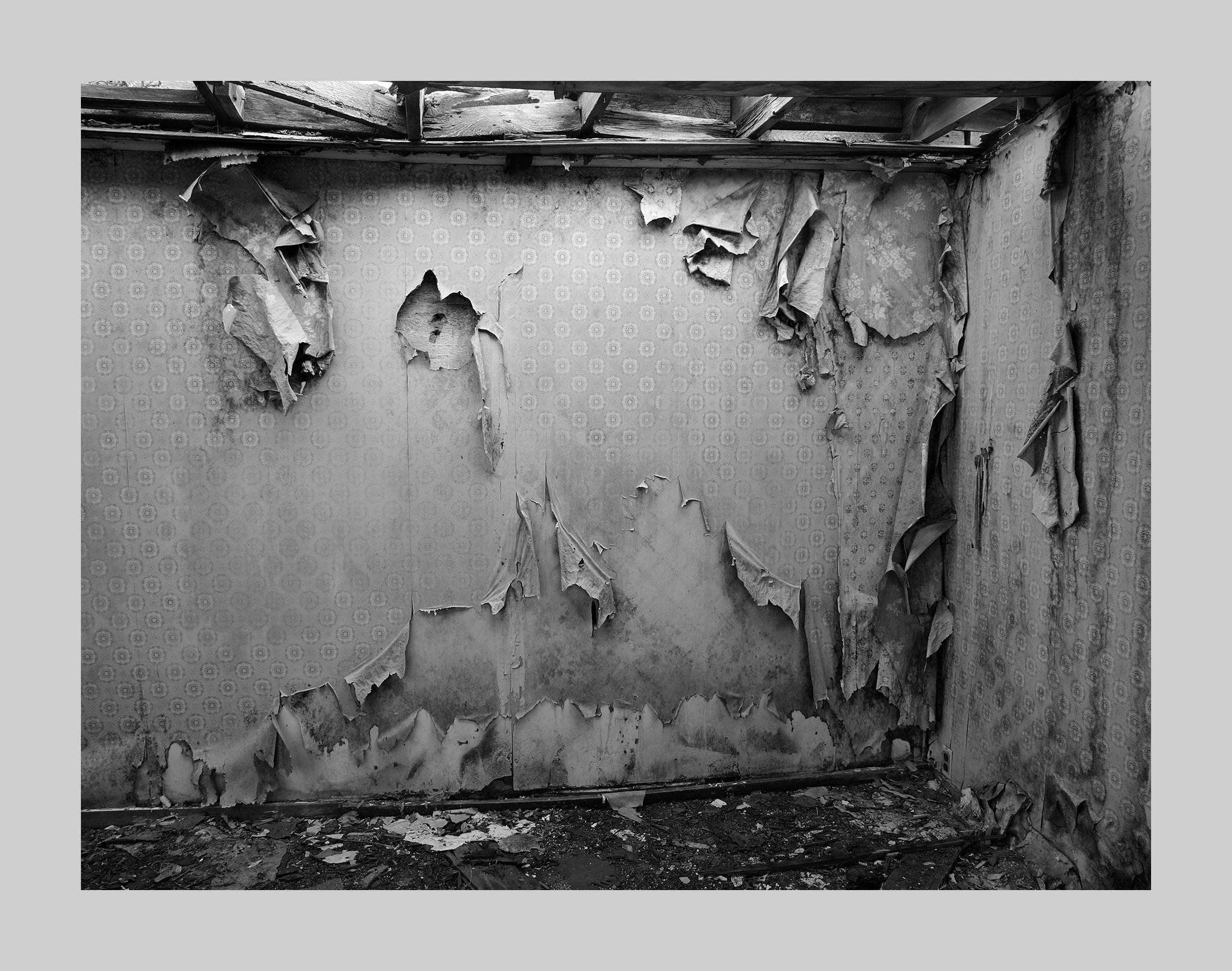
Please share your immediate response to the image before reading the photographer’s intent (obscured text below) or other comments. The photographer seeks a genuinely unbiased first impression.
Questions to guide your feedback
How do you interpret this image? I’m curious if it will be same as mine.
What is your emotional reaction?
Do you see any beauty at all in this image or is this just a downer?
Would you ever consider making such a image yourself?
Do you think this image should be interpreted to begin with?
Other Information
Please leave your feedback before viewing the blurred information below, once you have replied, click to reveal the text and see if your assessment aligns with the photographer. Remember, this if for their benefit to learn what your unbiased reaction is.
Image Description
This was shot in 2015 and only now did I see it as a black and white. It’s the inside of an abandoned building off highway 20 that is now boarded off. I took a series of shots here in trying to work on compositions but in the process lost sight of the spirit of the place. I tend to do that. Now I realize that my first impression was the best.
When I see something like this, I first think of “abanded”, but then also immediate go to images in my mind of places liky Bodie, Rhyolite (NV) or any other abandoned, dilapidated building found along Highway 58 between Bakersfield and Barstow, and further to Needles… There are stories behind these walls, but I usually don’t dwell beyond wondering why these places stopped flourishing.
To your image, I love the tones presented as they really speak to the mood of despair and abandonment… (how many times can I say that word…) I’m also liking that you’ve included enough of the floor and ceiling to impart a bit more of the story and emotion. Well done!
Oh, to one of the questions:
For me, not a downer at all - just wonder… what preceeded this state? Could have been lots of joy, who knows. Beauty? well, not like nature beauty, but life
I don’t think this would come across the same way in color but the B&W version feels like something from the 50’s. Your tonal values are terrific particularly in the drooping wallpaper and ceiling joists. I LOVE the way you’ve angled the image (more noticeable along the bottom floor) which shows to me that you really took your time framing this up. The composition is well thought out. As far as your title, “Not Sure,” well I’m sure that this is a terrific photograph. A photo can be a downer or tragic (many of the best photographs ever taken are of tragic or downer subjects) which to me takes an image like this to a whole new level. This looks like it could’ve come from a National Geographic magazine and you can insert whatever dialogue you want because it tells so many stories. The viewers mind can truly go to many different places in their thoughts about what this is or what it’s not and what it all means. I can’t believe you’re not sure about this one. One of your best!!!
1943 to be exact. The night before I watched Dreyer’s Day of Wrath. At first I thought it had overly dramatic usage of light. But then I picked it up later and decided the usage of light was masterful. And I’m sure that affected my processing as the original image was more neutral emotionally. When in doubt go dark, lol.
Glad you noticed that. I usually move in and make image about texture and tonal values. Here it would be just one wall or part of the wall. But I remember how I pulled back from that urge and realized it’s full potential when I included the rafters up top. I decided that they changed what the image was about.
My first reaction was “why?” Then a feeling of despair is what I felt. Then I thought is must smell of damp mold, and the floor might give way as it is probably rotted from all the rain that has fallen through the open ceiling. Then I thought - why is Igor going into such dismal places in the first place?
As a photo, those feelings above is what it conveys to me anyway. From a technical perspective, such a subject is accentuated by the B&W treatment. Color might work if it has that old Kodacolor pallet that down plays the color saturation.
When I see images such as this, I always wonder, “how did it get to this point?” Where did the people go, why was this left to decay? And there are all sorts of stories suggested when going down that path.
The strong directional light coming from above is very interesting to my eye. My complaint is that the wall isn’t angled enough. Moving the camera to the left would make the horizontals more angular, leaving the one strong vertical line of the corner. As is, the almost horizontal ceiling line across the back wall is too serene for me. I want to be more uncomfortable.
I might suggest a bit (more?) of dodging throughout the lower half; the tones seem very similar compared to the upper third of the image.
Igor, I’m not sure what you mean by interpreting the image. I’m seeing what I think of as a modern ruin–a not-very-old structure that’s dilapidated and decaying.
My emotional reaction to it isn’t to be depressed. It’s a reminder of how ephemeral we and our structures are. To me that’s not depressing. It’s just how things are.
Do I see beauty? The wallpaper makes me think of the people who decorated the place. There’s a beautiful human impulse lurking in the history of what I’m seeing.
I’d consider making such an image and have. I’ve hung around all kinds of ruins.
“Do you think this image should be interpreted to begin with?” Again, I’m not sure what “interpreted” means. I think images should be experienced. Discussing photos doesn’t bother me but it’s an attempt to translate a visual medium into words . It can’t be done very well and I don’t think it usually gets us very far.
Igor, my first thought is of the b&w from the 1920s - 1940s, where the photographers were telling stories about how real people lived (e.g. Dorothea Lange and Robert Frank). I see at least 3 and maybe a 4th layer of wall paper peeling off. That says that a lot of living went on here at some point in the past. The bits of light and the bare rafters at the top tell me that there was more structure above that is now gone. This does leave me wondering what happened and how long ago was it. The beauty is in the story.
How do you interpret this image? I’m curious if it will be same as mine.
I see a sense of time, maybe a little bit of loss, but it’s the very nature of things. It’s a home, someone cared enough to use lovely wallpaper (looks 1940s to me). Something happened. Nobody else lived there. There is a spare beauty in that story.
What is your emotional reaction?
I think it’s a combination of curiosity and somber reverence. I wonder what happened, whether their lives were full and happy or tragic and full of despair. But I wonder. I don’t see despair automatically. Perhaps they moved to a place where water was more plentiful, or family and friends closer.
Do you see any beauty at all in this image or is this just a downer?
Do I see beauty here? I guess we would need to define beauty. It’s life, time, decay, and that has to be beautiful or what else is there? Hopefully, love lived there.
Would you ever consider making such a image yourself?
Yes, and I have. In the Palouse area of Washington state, there are dozens of abandoned homes. About 8 years ago, we wandered into several of them. In one, there were coveralls hanging on a nail, a newspaper from 1947, and an not-yet-cashed “social insurance” check in an opened envelope Payable to a woman’s name, for the reason: “Aged.” It was haunting and fascinating. What happened? Was it related to the war? Did her husband die and she moved in with family or into a care facility? How did this house stand unoccupied for 70 years with nobody staking a claim to the house or the land? Is water too scarce? Memory too difficult?
Do you think this image should be interpreted to begin with?
This is an interesting question, and it’s also the reason I wrote so much above. To interpret such an image is to interpret humanity. I think if we don’t witness and interpret such things, we lose our own humanity. To me, this is a Naturalistic image. I suppose we could analyze and interpret it in a disrespectful way, but the image itself does not seem disrespectful. You allowed us to witness the remnants of someone’s life long after they left. I think we can interpret it with empathy, if not anticipatory sympathy.
This is an interesting image, Igor. I’d go with sad as the feeling I get from this and most other images of decay. In this case there’s a touch of reminiscence mixed with it and it has some elements like the multiple layers of wallpaper that make me think of the people who once lived there-or perhaps the succession of people. Yes I’d take images like this-our camera club had a field trip last October to a derelict hospital. There’s a group trying to restore it who offer tours billing it as haunted to raise money for potential restoration. I found that I enjoyed it and it got my creative juices flowing.
I have to add this comment because it’s just so good.
One of my Russian friends said it reminded her of the Ipatiev House. The Ipatiev House is where czar Nicholas II and his family were murdered by the Bolsheviks in 1919. They were summoned downstairs to ostensibly have a family picture taken and then on command the pistols were drawn and the butchery began. I’m told the house and room may still be visited with all the holes and cracks in the walls.
Never in my wildest dreams did I see this comparison. But in a way it makes perfect sense.
Fascinating, and well seen! My first impression is sadness, but that is mixed with delight at the lighting and the patterns of the decay. In addition to a larger view (which I doubt I would have done well), I would have shot many smaller compositions. The tonalities you have brought out are marvelous!!
I often like images that convey opposite messages at the same time. Even though I’ve criticized images here on NPN for the exact same thing. I need do work through this a bit …
I went there for the same reason I go to shoot all my images. To be astonished, surprised. To feel a sense of wonder. To be honest I never photographed anything in there to tell a story or a historical explanation. I just looked at things as they are. Entering a place like this is like finding a box of goodies. Each one is examined separately without much thought.
Couldn’t disagree more. A story puts limits. Art is boundless. Once you interpret art as a story it becomes an illustration that serves an idea. A good work of art results in a different reaction every time you look at it. Art is not utilitarian. It has not purpose.
This reminds me of the Depression Era images by Lange, Adams, and others. The ‘story’ those images told was in the eye and heart of the viewer, while also being a documentary of those times.
You image is similar in that many different stories can be told, and each has merit in and of itself.
Your image is wonderfully done in terms of composition and tonality.
-P
Dear Igor,
My immediate reaction: I admire the soft light coming through the ceiling and falling softly on the wallpaper, and I understand why the ceiling and wallpaper are falling into disrepair; this is the work of nature. However, I keep coming back to the hole in the wall, below the ceiling: What is the story behind this hole? This must be man-made, and it leaves a question behind.
PS: Carl Dreyer is buried in a churchyard just across the street from my house in Copenhagen — I saw his grave yesterday as I walked by. As chance would have it, he was buried next to a comedian, who died after Dreyer passed away. Dreyer, the master of staged and solemn tragedy, was thus unable to control the setting of his own burial site. Another layer of tragedy?
Thank you all who have commented on this image. The response has been varied and that pretty much reflects how I feel about this image. I have written things I no longer believe about it. What my intentions were and what my reaction is now is very different.
I have struggled with this image. And yet it’s haunted me and won’t let go. My current reaction is that this image is about suffering. But it’s not totally pessimistic because light is coming down from the banners up above. That light with all its implications as at least included from the beginning when the shot was made. The interesting thing about this image is that it strikes me more now than when I made it. I’m finding that to be true and many images. The images are their own reality.
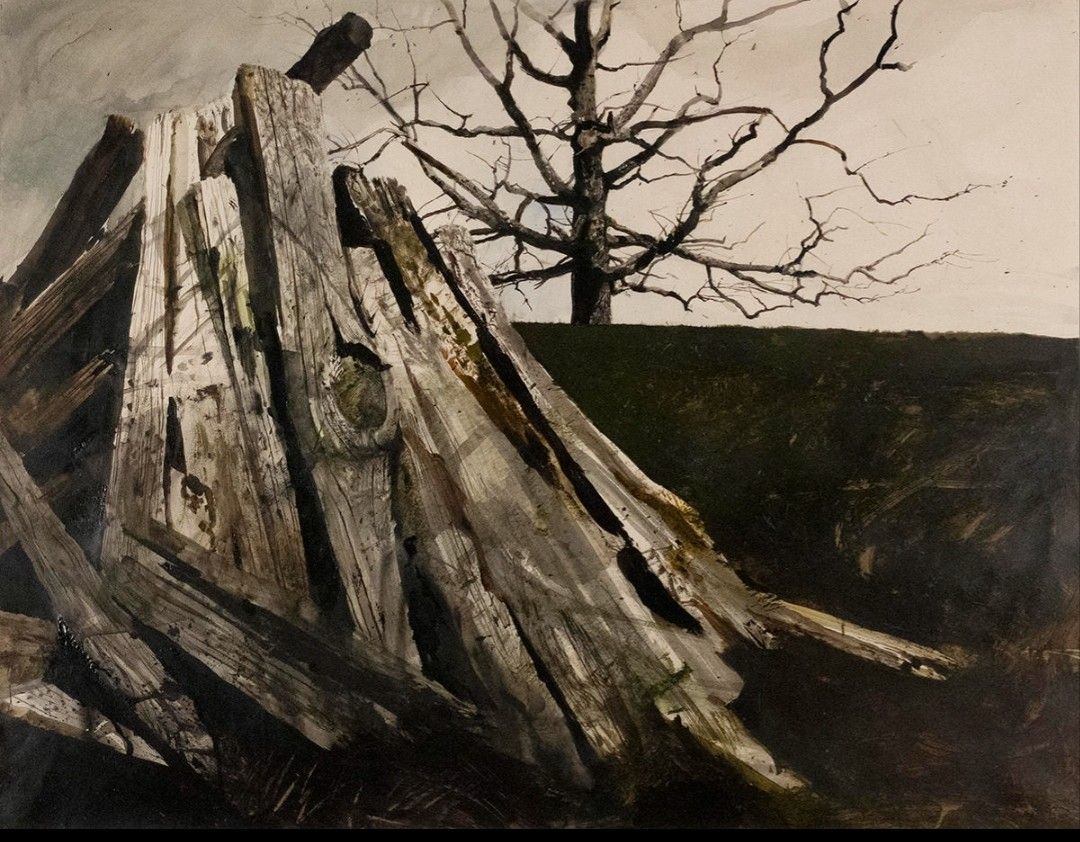
This comment has had me thinking the most. When I asked the question I thought the structure of the picture, the way it has been laid out was beautiful, as was the light. But on the other hand the whole thing feel coarse and crude. It’s as though I’ve crossed some boundary, some red line. I think that above all negative images must still be beautiful. I’m a big fan of Andrew Wyeth’s work which I find to be full of negative pathos. Yet they are still beautiful.
I’m a fan of Wyeth too. In fact, when I am near some of these abandoned houses, I think of his painting “Public Sale.” It’s as if nobody showed up for that.