The photographer is looking for generalized feedback about the aesthetic and technical qualities of their image.
Description
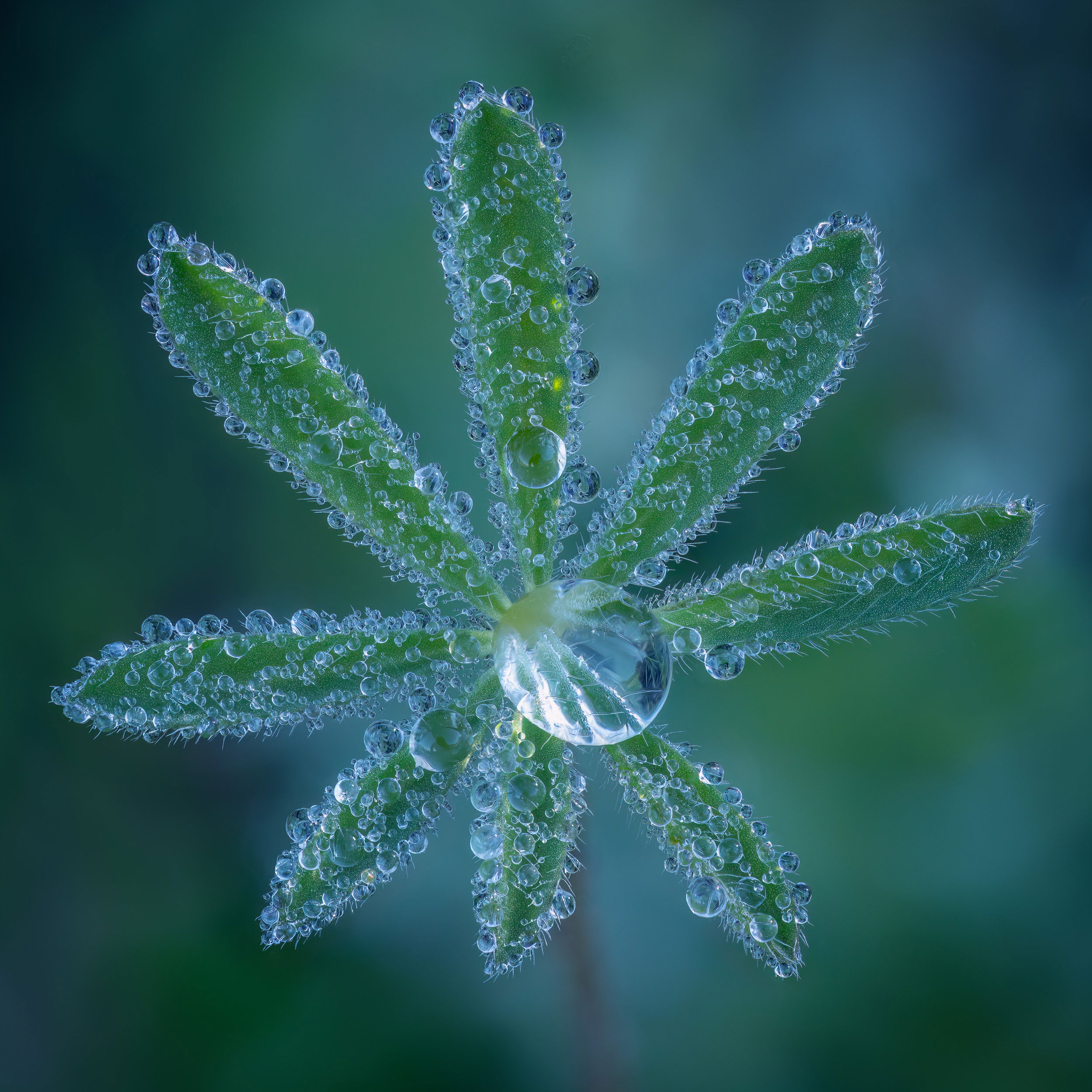
It cleared off last night after some nice rain and I went in search of dewdrops. The small native Lupine are just coming up and this one is half an inch in diameter. It is a focus stack and I liked small parts of many of the individual images, but decided on the full stack, mostly because I couldn’t decide which of the cropped pieces I liked best.
Specific Feedback
All comments welcome!
Technical Details
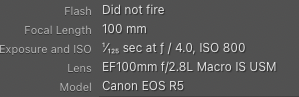
Stack of maybe 20. Minor global tonal tweaks in LR and into Zerene. Then into PS for Topaz NR (minor) a little edge cleanup and a crop to 37% of the original pixels.
Critique Template
Use of the template is optional, but it can help spark ideas.
Vision and Purpose:
Conceptual:
Emotional Impact and Mood:
Composition:
Balance and Visual Weight:
Depth and Dimension:
Color:
Lighting:
Processing:
Technical:
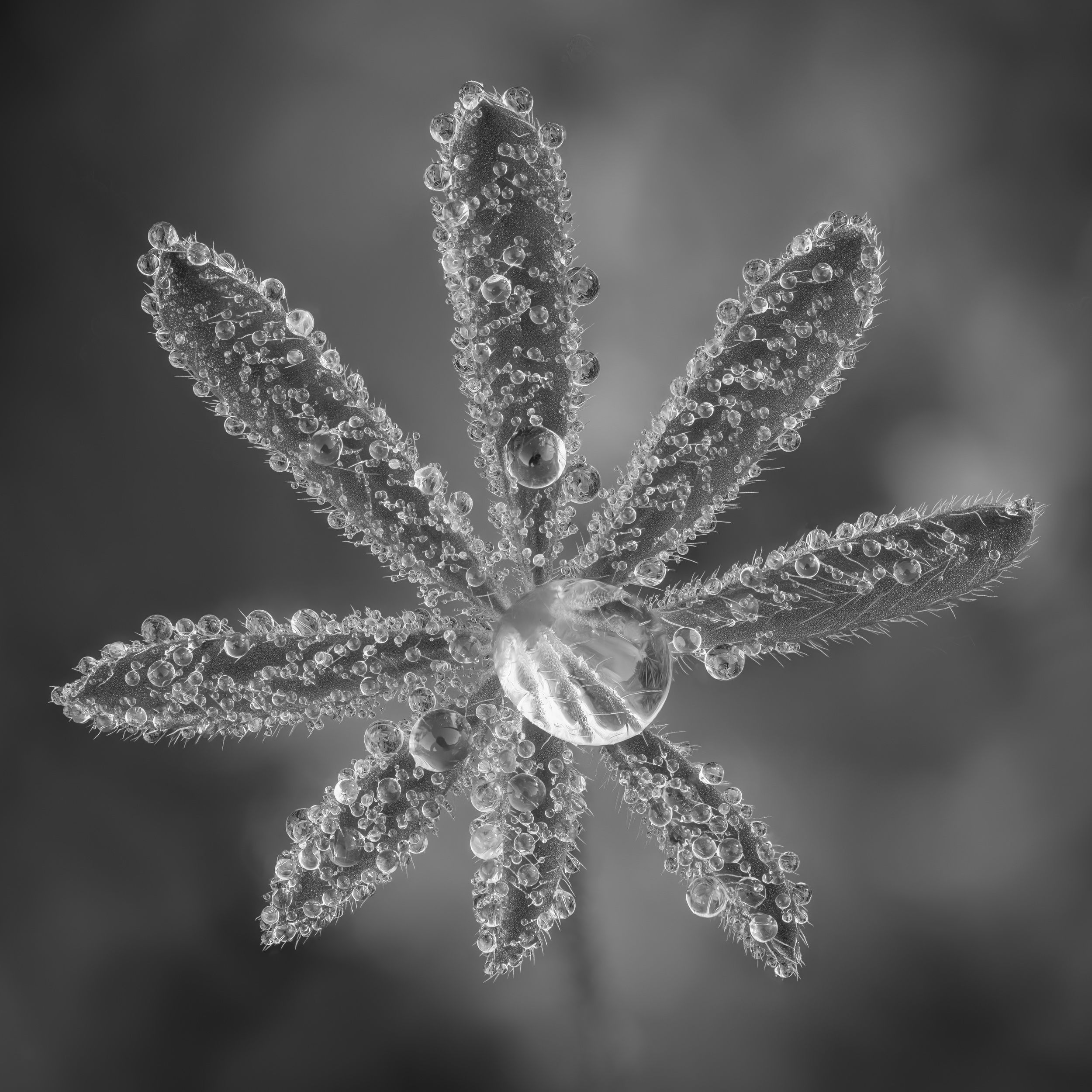
A great subject for this gorgeous macro, Diane. It shows very well how some drops, like the large central one, magnify, while all those ones around the edges refract and look like those glass paperweights that you shake to see the snow falling! I do like how we can just make out the stalk too. You might reduce the brightness in the central drop a wee bit - but it does illustrate the light source, so it’s no big deal.
Thanks, @Paul_Breitkreuz and @Mike_Friel! And now I’m wondering, for the first time – is the magnification because the drop is so big (how big does it need to be?) or because it is centered? And why do the smaller ones refract instead? Is it because they have a more distant BG?
This image just came up and it caught my attention. . Wow !!! The size of the water drop. Amazing. Great macro shot. I love the detail and looks like little lines in the waterdrop. I really like the little things this image presents. The different sizes of the drops. The lines in the larger drop makes me wonder What is That ??? A reflection ??? Very cool.
Diane, this is an excellent look at this lupine leaf covered in drops.
For water, assuming a sphere, that makes every drop a ball lens, the focal length of that lens is about the same as the diameter of the drop. The difference between what you see in the big drop vs the small drops arises because the big drop will be creating roughly parallel light from the surface it’s sitting on while the small drops are acting as lenses for what’s in the distance behind them. Note that only the drops on the edges show what’s behind the leaf, with all of the drops sitting on the leaf showing details of the leaf. If you look at most of the single images from your stack you should not see clearly the background, only when your camera is focused at the same point as the ball lens do you get a clear picture through the ball (which is, of course, what the stacking software picks to save).
Thanks, @Gill_Vanderlip and @Mark_Seaver! These seedlings were everywhere and most of them had dewdrops like this. It was a tiny wonderland! I tried to capture several in a frame but the details were overwhelmed. I had the tripod legs splayed out almost flat.
Lupines are wonderful at collecting water and this is a great example of that, Diane. The stack worked beautifully to bring out all the detail and leave the background nicely blurred. A wonderful image. I could really see this blown up to enormous proportions somewhere.
Thanks, @Balan_Vinod and @Dennis_Plank! I moved on after shooting this but I don’t think the drop lasted long as a slight breeze was just starting. (Setting up a focus stack of almost any subject triggers air movement.) It’s probably the tiny hairs on the Lupine leaves that hold dewdrops so well?
I wasn’t happy with the colors here – the blues and greens aren’t well separated and going to a warmer cast (even with Temp in the raws) didn’t give a color I liked. It was in the shade, which maybe made things difficult. And it feels underexposed. So I tried B/W and like the result – posted above.
Diane, this is excellent eye candy for me, especially in the B&W. It is hard to believe that the flower itself is only about a half inch. Great job capturing all the little droplets so sharply on such a tiny flower. Excellent job!
Thanks, @Dennis_Plank, @JulieEdwardsViola and @Shirley_Freeman! Insane might be right – I never keep the source files for a stack but I have on this one (so far) as some parts of some of them looked fascinating at 50% or 100% views.
And there were even smaller baby clover leaves festooned with smaller droplets. I night try for them the next foggy morning.
Diane: Here I am tardy again but despite being such a color junkie I actually prefer the B&W with this subject although the colors look fine to me. I love the refractions and glad that @Mark_Seaver beat me to the punch on the optics lesson. Wonderful subject, wonderful image. >=))>
Thanks, @Bill_Fach! I’m loving the B/W too. And apologies for not thinking to include you on the optics question – a second opinion is always a good idea!
I am completely blown away by this image, Diane! What stupendous details in every droplet, every petal…the miniuscule hairs and fine “follicles” on the petals and leaves! The clarity of each and every drop and when blown up the reflections in each droplet, too! I’m so impressed! It’s like your lens is attached to an electron microscope!!! You are incredibly talented.
Thanks, @lori and @Glenys_Passier! It was wonderful to discover this. Conditions were just right for these dewdrops to form, with virtually no air movement, very high humidity and slowly cooling temperatures overnight. This morning I thought there might be another chance but there was a bit more air movement and the dew was not this amazing. I did a few images but they won’t be this interesting.